
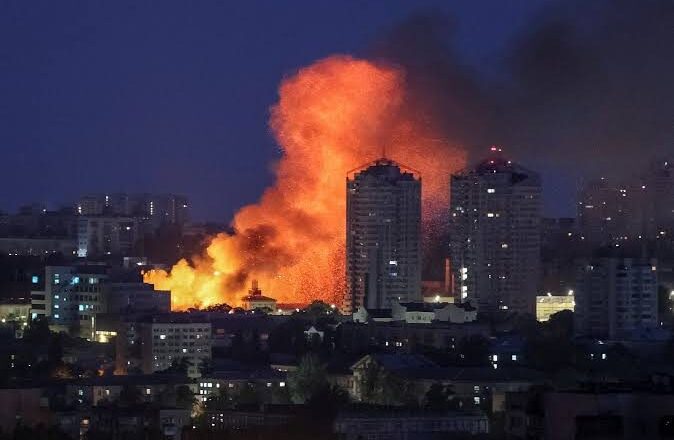
An analysis of modern air defence, directed-energy systems and strategic autonomy. The Russia–Ukraine war has reordered the economics of air power: a cheap, mass-produced drone can now impose disproportionate cost on a far more sophisticated defender. This assessment measures where India stands — Akashteer, the DRDO–BEL D4 counter-drone architecture and the 30-kilowatt Mk-II(A) laser — and what still separates a demonstrator from fielded laser warfare.
Assessment by Brigadier Niladri Shankar Mukherjee, Sena Medal, Vishisth Seva Medal (Retd) · Executive Director, CENERS-K · 4 September 2026
Executive Summary
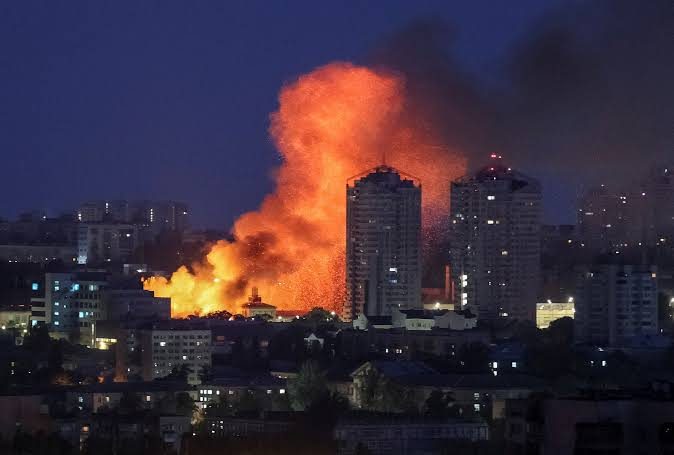
- Cost asymmetry. The Russia–Ukraine war has reordered the economics of air power: a technologically inferior, mass-produced drone can impose disproportionate cost and damage on a technologically superior defender, and Russia’s mixed missile-and-drone salvos have grown roughly threefold in scale between 2022 and 2025.
- Integration over individual weapons. Modern air defence is no longer a question of individual weapons but of an integrated “kill web” — sensor, network, command, AI, weapon, and re-engagement — in which speed and quality of integration matter more than any single platform.
- A demanding threat environment. India’s threat environment is unusually demanding: high-altitude Himalayan terrain, deserts, dense urban centres, long land borders and coastline, and adversaries fielding growing drone and missile inventories, as demonstrated during Operation Sindoor in May 2025.
- Credible foundations. India has built credible foundations — the indigenous Akashteer command-and-control system, the DRDO–BEL D4 counter-drone architecture, and the 30-kilowatt Mk-II(A) laser directed-energy weapon demonstrated at Kurnool in April 2025 — placing it among a small group of nations with high-power laser capability.
- An economic answer, not a silver bullet. Directed-energy weapons offer a compelling economic answer to drone saturation — near-instant engagement, low cost per shot, and a magazine limited only by power and cooling — but are not a substitute for missiles against cruise or ballistic threats, and remain vulnerable to adverse weather.
- The critical gap. Integration and scale: lasers must move from demonstrator to fielded system, be embedded as automated “shooters” within Akashteer, extended to naval platforms, and backed by a deep domestic industrial ecosystem — the decisive edge will lie in the AI-driven software that decides which weapon engages which target, at what moment, and at what cost.
The Russia–Ukraine war has fundamentally altered the global understanding of modern warfare. Tanks, artillery, aircraft, and infantry remain indispensable, but they now operate beneath a dense and increasingly lethal technological canopy of drones, loitering munitions, cruise and ballistic missiles, electronic warfare systems, precision-guided weapons, and increasingly autonomous sensors. The battlefield is becoming a continuous contest of detection, identification, targeting, strike, interception, and adaptation.
This transformation is most dramatically visible in the air domain. A relatively inexpensive first-person-view (FPV) drone can destroy a multi-million-dollar armoured vehicle. A loitering munition can attack critical infrastructure hundreds of kilometres away. Swarms of inexpensive one-way attack drones can saturate sophisticated air-defence networks. Precision-guided missiles can be combined with decoy drones to exhaust the defender’s most expensive interceptors. The war has therefore generated a new military paradox: the weapon that is attacked may be cheaper than the weapon used to defend against it — but this cost equation is increasingly becoming unsustainable for the defender.
By 2025, Russia’s major mixed missile-and-drone salvos had risen from roughly 100 munitions per wave in 2022 to nearly 300, with intervals between major attacks falling dramatically. On some occasions, individual Russian waves involved hundreds of Shahed-type drones alongside cruise and ballistic missiles. By 2025 the war was also characterised by the use of millions of battlefield drones and thousands of long-range one-way attack systems. War is no longer fought only on the battlefield; the battlefield itself is now covered, observed, mapped, and attacked from the air continuously.
The questions confronting military establishments worldwide are therefore no longer whether drones, missiles, and precision munitions will dominate future conflicts — they already do. The more urgent questions are how a nation can manufacture such systems at scale, protect itself against drone swarms, defeat an enemy missile attack economically, integrate all sensors and weapons into one operational architecture, and whether directed-energy weapons — particularly high-energy lasers — can change the economics of air defence. For India, these questions are no longer theoretical. The country’s strategic environment demands answers: its adversaries possess substantial missile inventories, expanding drone capabilities, and growing technological sophistication. The challenge is not merely to acquire individual weapons — India must create an integrated system for drone warfare, missile warfare, electronic warfare, precision strike, and directed-energy defence. The development of laser warfare must be understood within this larger transformation.
The New Architecture of War
The conventional image of war involved distinct battle zones: aircraft operated overhead, artillery fired from depth, tanks manoeuvred on the ground, and infantry captured territory. The emerging architecture is fundamentally different. Today, a battlefield can be visualised as a digital kill web: sensor, data network, command system, artificial intelligence, weapon, damage assessment, and re-engagement, in continuous loop. A soldier carrying a radio-frequency detector may spot a drone; a radar tracks it; an electro-optical system identifies it; artificial intelligence classifies it; an electronic warfare system attempts to jam it; and if jamming fails, an interceptor, gun, or laser destroys it.
The importance lies not in any individual component but in the speed and quality of integration. The Russia–Ukraine conflict demonstrates that a technologically inferior system can impose disproportionate costs if it is inexpensive, mass-produced, and rapidly adapted. A cheap FPV drone can attack tanks, artillery positions, supply vehicles, and infantry; a long-range one-way attack drone can strike oil installations or air bases; decoy drones can force defenders to expose radars or waste interceptors. The most important lesson is therefore not that drones will replace conventional weapons — they will not — but that they have transformed the conditions under which all these systems operate. The battlefield has become increasingly transparent, making concealment difficult and creating what may be called the “permanently observed battlefield.”
The Global Race for High-Technology Drones and Loitering Munitions
Virtually every serious military power has now concluded that unmanned systems must be produced in large quantities and at relatively low cost, for four converging reasons:
- Political cost reduction. A drone can conduct reconnaissance or attack without placing a pilot or soldier directly in danger — an important advantage in an era of high casualties and rising political sensitivity to them.
- Unfavourable economic exchange ratios. Firing a sophisticated surface-to-air missile against a relatively inexpensive one-way attack drone is strategically irrational if the engagement occurs repeatedly.
- Industrial scalability. By the second half of 2025, Russia’s Shahed launches alone had risen to approximately 5,000–6,000 per month according to CSIS analysis, bringing annual launches to around 55,000. Quantity itself has become a military capability.
- Rapid adaptability. Battlefield experience changes design requirements quickly — when jamming becomes effective, manufacturers improve navigation, introduce fibre-optic controls, or increase autonomy.
Countries are therefore increasingly attempting to establish complete domestic ecosystems spanning airframes, propulsion, batteries, electro-optical systems, navigation, communications, artificial intelligence, explosives, swarm software, and electronic warfare protection. The strategic issue is no longer simply acquiring a drone from abroad; it is acquiring the capacity to design, modify, and manufacture drones during wartime.
The rise of the drone–missile salvo
The most dangerous evolution is the integration of inexpensive drones with expensive missiles. A modern attack may be designed in layers: a first wave of drones intended to expose radars, reveal air-defence positions, confuse operators, exhaust ammunition, and create multiple simultaneous threats, followed by a subsequent wave of cruise or ballistic missiles aimed at targets that have become vulnerable. CSIS described this development as a “new salvo war,” in which large mixed waves of drones and missiles are deliberately sequenced to test and saturate Ukrainian air defences — producing a mathematical asymmetry in which the attacker’s advantage scales with the number of targets, speed, complexity, and dispersion, while the defender must match it with detection, classification, prioritisation, interception, and cost efficiency. This is why the future of air defence cannot depend solely upon expensive missiles.
The Other Side of the Revolution: The Race to Defeat Drones
If the first race is to acquire drones, the second is to defeat them. Counter-drone warfare is becoming a major military discipline built on five layers:
- Detection. Radar, electro-optical, infrared, acoustic, radio-frequency, and passive surveillance systems.
- Identification. Determining whether an object is friendly, hostile, civilian, decoy, reconnaissance, or attack.
- Soft kill. Electronic warfare to jam links, disrupt navigation, or spoof systems.
- Hard kill. Guns, interceptor drones, surface-to-air missiles, fragmentation munitions, high-power microwaves, and high-energy lasers.
- Command and control. Deciding dynamically which weapon should engage which target.
India and the Imperative of Integrated Drone and Missile Warfare
India’s requirements are particularly demanding, spanning high-altitude Himalayan regions, deserts, dense urban environments, long land borders, extensive coastline, offshore installations, and critical national infrastructure. Security planners must simultaneously account for small commercial drones, military reconnaissance drones, armed UAVs, loitering munitions, cruise missiles, ballistic missiles, low-flying aircraft, and future hypersonic threats.
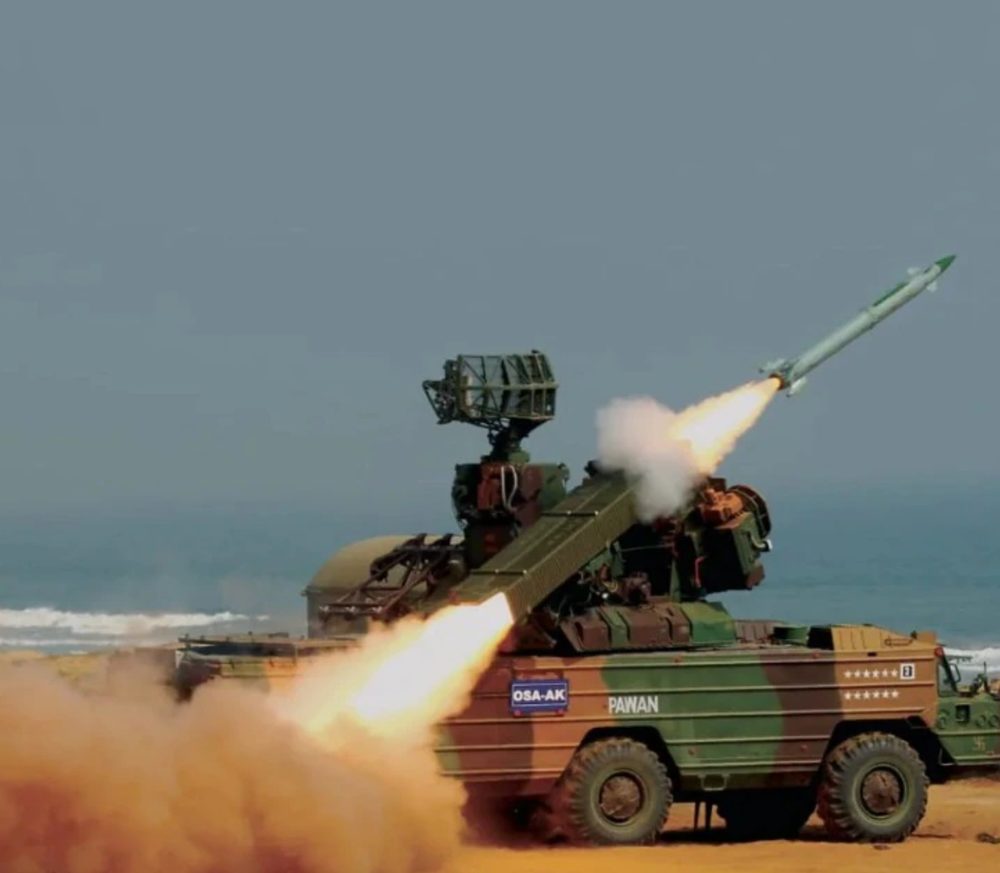
Recent operational experience has reinforced this point. During Operation Sindoor in May 2025, official Indian accounts stated that Pakistan attempted attacks on numerous military targets using drones and missiles, and that these threats were neutralised through an integrated counter-UAS grid and air-defence systems employing Akash, Pechora, OSA-AK, and low-level air-defence guns. India’s indigenous Akashteer system is central to this concept, serving as an automated air-defence control and reporting system designed to integrate surveillance and engagement capabilities across the Army, Navy, and Air Force.
The D4 anti-drone system: an important Indian foundation
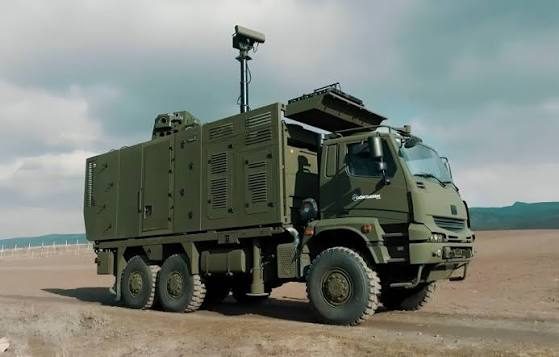
India’s Directed Energy Weapon programme has developed alongside this broader counter-drone effort. The DRDO–BEL Anti-Drone System (D4) illustrates the integrated approach modern warfare requires. According to Bharat Electronics Limited, the system can conduct real-time search, detection, tracking, and neutralisation of micro and small UAVs through both soft-kill and hard-kill means, incorporating radar, electro-optical systems, RF detection and jamming, GPS spoofing, and a laser-directed energy weapon. This represents a fundamental transition in Indian thinking: the laser is not being developed merely as a standalone weapon, but as an integral component of an automated counter-drone architecture.
Why Laser Warfare?
The strongest argument for laser weapons is the economic problem created by drone warfare. A high-energy laser offers five major advantages over conventional interceptors:
- Speed of engagement — the beam travels at the speed of light, reducing engagement delay to target tracking and dwell time.
- Precision — energy can be focused directly on vulnerable points such as airframes, sensors, or antennas.
- Low cost per engagement — eliminating the unfavourable economic exchange ratio of firing expensive missiles at cheap drones.
- Deep magazine — engagement capacity is limited primarily by available electrical power and cooling rather than physical missile storage.
- Reduced collateral damage — avoiding the broad fragmentation patterns of traditional interceptor warheads.
However, lasers are not magic. Atmospheric conditions such as rain, fog, dust, smoke, turbulence, and humidity can degrade beam effectiveness. Consequently, lasers will not replace missiles entirely; rather, they will form part of a layered architecture in which electronic warfare, guns, lasers, and missiles share the load based on threat profile.
Where Does India Stand Today?
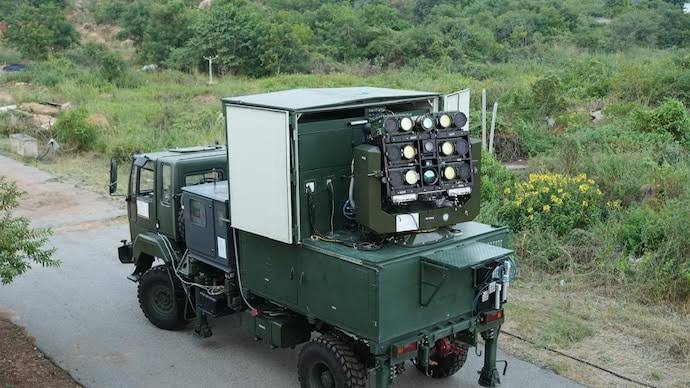
India has moved decisively from laboratory research toward credible demonstration and initial operational capability, structured across five milestones:
- Technological foundation. DRDO’s Centre for High Energy Systems and Sciences (CHESS) and industrial partners have mastered laser generation, beam combining, optical systems, and precision tracking.
- 30-kilowatt demonstration. Publicised April 2025 trials of the indigenous 30-kilowatt Mk-II(A) Laser-Directed Energy Weapon at Kurnool demonstrated the successful engagement of fixed-wing drones and swarm targets, disabling surveillance sensors and antennae at ranges up to several kilometres.
- Counter-drone integration. The D4 system demonstrates successful conceptual embedding of lasers within operational networks.
- Industrial ecosystem. India possesses strong foundational capabilities in optics, electronics, software, and advanced materials that can feed a robust defence-industrial base.
- Distance from missile defence. India is not yet at the stage where lasers can replace conventional missile defence against cruise or ballistic missiles, and requires a progressive evolutionary path.
Laser Warfare Readiness Matrix
Where India’s directed-energy programme stands against the demands of the emerging threat environment.
| Dimension | Current Indian status | Outstanding gap |
|---|---|---|
| Counter-drone lasers | 30 kW Mk-II(A) demonstrated at Kurnool (April 2025) against fixed-wing UAVs and swarms | Not yet fielded at scale across forward bases and critical infrastructure |
| Counter-drone architecture | D4 system operational across Army, Navy and Air Force, combining soft-kill and hard-kill layers including laser DEW | Laser component still a minority of engagements; RF jamming and guns remain primary |
| Command and control integration | Akashteer proven in Operation Sindoor, fusing radar, missile-unit and airborne sensor data | Lasers not yet embedded as automated “shooters” within Akashteer’s engagement loop |
| Naval and higher-power systems | Foundational optics, beam-combining and tracking expertise established at CHESS | No fielded ship-based laser; higher-power mobile systems remain in development |
| Missile and salvo defence | Layered ground-based air defence (Akash, Pechora, OSA-AK, LLAD guns) proven effective | Lasers cannot yet substitute for missile interceptors against cruise or ballistic threats |
The Road Ahead: From Laser Demonstrator to Laser Warfare
India’s next objective should be the creation of a national directed-energy architecture across five progressive stages:
- Operational counter-drone lasers. Field mobile and fixed-site systems to protect military bases, ammunition depots, airports, and critical infrastructure.
- Higher-power mobile lasers. Scale power and range against larger UAVs and resilient loitering munitions.
- Naval laser systems. Deploy ship-based lasers to leverage warship power generation and supplement point-defence capabilities along India’s extensive coastline.
- Integration with Akashteer. Embed lasers as automated “shooters” within joint military command networks.
- High-power strategic systems. Develop higher-energy systems over the long term while avoiding premature jumps past intermediate power milestones.
Artificial intelligence and the future of laser warfare
Because human operators cannot manually respond efficiently to dozens or hundreds of simultaneous incoming drones, artificial intelligence will become indispensable for target detection, classification, threat prioritisation, sensor fusion, and weapon assignment. The decisive edge will ultimately reside in the software orchestration that decides which target should be engaged by which weapon, at what moment, and at what cost.
Conclusion: India at an Important Technological Threshold
The Russia–Ukraine war has transformed conventional warfare into an intense contest dominated by unmanned systems, precision weapons, and networked sensors. India’s progress in directed-energy weapons — highlighted by the 30-kilowatt Mk-II(A) trials and the D4 counter-drone architecture — indicates that the nation has moved firmly into serious technology development. The next decade must focus on rapidly fielding operational counter-drone lasers, scaling power progressively, integrating into joint networks, and building a deep industrial ecosystem. The ultimate contest will be decided not by laboratory power outputs, but by whether an operational commander can seamlessly detect, discriminate, and neutralise threats using the most cost-effective weapon available.
Sources. Bharat Electronics Limited, “Anti-Drone System” (BEL); Center for Strategic and International Studies, “The New Salvo War,” 31 July 2025; Center for Strategic and International Studies, “The Geography of Coercion: Russian Missile and Drone Campaigns in Ukraine,” 7 July 2026; Defence Research and Development Organisation, “Akash Prime” and “Akash Weapon System” (DRDO); Department of Defence Production, Ministry of Defence, “Anti-Drone System” (Government of India); Press Information Bureau, Government of India, “Air Defence Capabilities: Tech as the First Line of Protection” and “Akashteer,” May 2025; Royal United Services Institute, “NATO Should Not Replace Traditional Firepower with ‘Drones’,” 4 August 2025; Reuters, “Enter the Kill Zone: Ukraine’s Drone-Infested Front Slows Russian Advance,” 17 July 2025; Deccan Herald, “India test-fires laser-directed energy weapon system, joins select group of nations,” 13 April 2025; Deccan Herald, “Operation Sindoor | Indian Army’s home-grown Akashteer air defence systems block Pakistan’s air adventure,” 14 May 2025; Daijiworld, “India’s indigenous ‘D4’ anti-drone tech foils Pakistan’s drone strikes on Western Front,” 10 May 2025.
Note on figures. The photographs in this assessment are credited to their original publishers in each caption and are reproduced here for analytical illustration.