
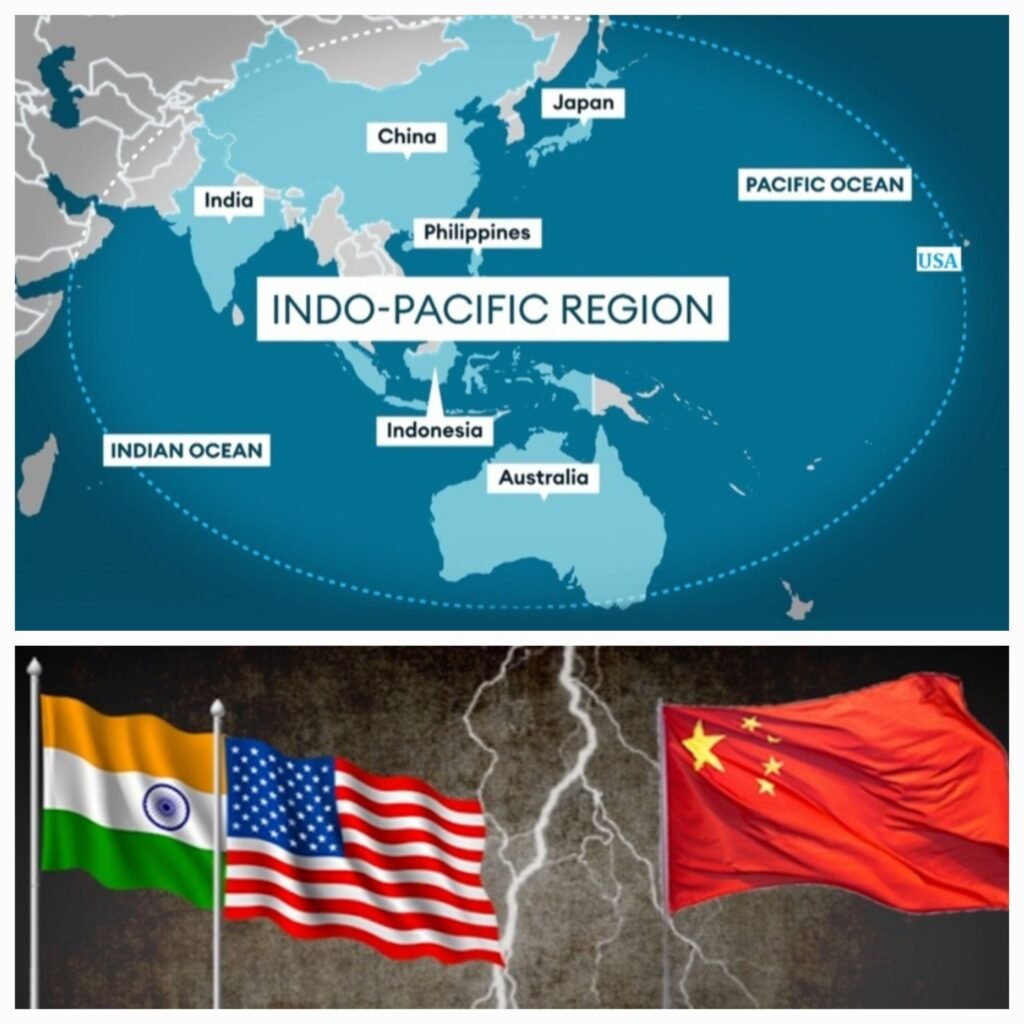
India and a Stable Indo-Pacific: Managing Strategic Footprints and Maritime Security
Abstract
Atreyee Mitra
Throughout history, the maritime domain has been a crucial space in establishing new and emerging powers shaping regional dynamics and the larger security architecture. The great power competition today is no different. The emergence of the Indo-Pacific as a new geographic space—bringing together the Indian and the Pacific Oceans—represents the new strategic reality of the twenty-first century. The Indo-Pacific therefore is a new domain in India’s foreign policy engagements, representing a shift in New Delhi’s strategic and security environment—expanding its threats solely from its continental borders to its maritime space.
India’s active involvement in the Indo-Pacific region reflects its recognition of its increasing significance in global affairs. The region has witnessed significant geopolitical shifts over the years, characterised by changes in power structures, economic interdependence, and emerging security challenges. In response to this dynamic environment, India has recalibrated its approach to regional security. As New Delhi’s regional influence grows, its approach towards bilateral and multilateral security mechanisms is a crucial barometer of its strategic priorities. India has established its evolving role in shaping the security architecture of the Indo-Pacific through its diplomatic manoeuvring and multilateral engagements.
This article argues that as a rising power with its own ambitions to carve out a strategic space, India’s foreign policy in the Indo-Pacific seeks to retain a free, open and inclusive regional order. This article delves into the security position of India with the escalation of Chinese involvement, along with threats emerging from Pakistan and a destabilized Bangladesh, and sees to what degree bilateral and multilateral arrangements help India to solve its security concerns in this region. In the short and medium terms, this means forming soft-balancing coalitions and limited hard-balancing relationships. The article will identify India’s Indo-Pacific approach and its direct impact on New Delhi’s security environment. This paper would analyse India’s role in a stable Indo-Pacific by addressing maritime security concerns. It has three objectives: to understand how the region fits into India’s foreign policy, to identify the traditional and non-traditional security concerns prevailing in the region, and to analyse how India deals with these concerns. The author argues that India’s quest to leverage its geostrategic location to emerge as an Indo-Pacific actor faces multiple challenges, which create a clear divide between the country’s political rhetoric and action on the ground. The author would critically examine these contradictions to better situate India’s security role in an increasingly fluid Indo-Pacific region. The article would use the conceptual framework of Role Theory to map the changes in India’s security role. Along with that, this article seeks to answer the question of what role India could play in the region to incentivize the regional security dynamics.
Key words: India, Maritime Security Concerns, Indo-Pacific
Introduction
Throughout history, the maritime domain has been a crucial space in establishing new and emerging powers shaping regional dynamics and the larger security architecture. The great power competition today is no different. As India and Australia recently recognized, “many of the future challenges are likely to occur in, and emanate from, the maritime domain” underlining the re-emergence of the maritime space as the theatre for geopolitical competition. The rise of China across the Indian and Pacific Oceans challenges the security umbrella established at the end of Second World War and strengthened after the end of the Cold War. The emergence of the Indo-Pacific as a new geographic space—bringing together the Indian and the Pacific Oceans—represents the new strategic reality of the twenty-first century.
The Indo-Pacific concept has emerged as a significant geopolitical framework underlining the interconnectedness of the Indian and Pacific oceans, spanning from Eastern Africa to the western Americas. This concept reflects a deliberate change from traditional Asia-Pacific towards a more inclusive and regional construct encompassing vast maritime regions (Scott 2018). The Indo-Pacific region is the focal point of global geopolitical and geostrategic ambitions, and it is a construct centred on the interconnectedness and interdependence of oceans. This region at the confluence of oceans is the home to more than half of the world’s population and a cluster of global economies carrying an estimated 65 percent of world trade and contributing 60 percent of global GDP which mould the current geopolitical trajectories. It aims to address evolving power dynamics and rise of new regional players and involves collaborative efforts among countries to combat piracy, terrorism, and other trans-national threats (Chaturvedy 2020). Geopolitically, the region has been witnessing China’s growing belligerence, which in turn has helped tie together the varying perceptions and priorities of the stakeholders in the region and beyond. The vital sea lane with choke points such as the Strait of Hormuz, Malacca, and Bab-el Mandeb, are choke points that are extremely crucial as global trade and energy flow through them, and a firm hold in this region would allow countries to secure and control these trade flows. The littorals and island countries and developing states also play a significant role in the region’s security dynamics by allowing reach and sustenance to the navies of the regional and extra-regional powers for patrolling and protecting sea lines of communication (SLOCs). These imperatives of being a part of the regional security architecture and ensuring supply chain protection have influenced the regional and extra regional powers to revise their strategic orientations. These strategic configurations have shifted global attention from Asia-Pacific to Indo-Pacific. The former represents Asian countries in the Pacific Ocean region, formulated primarily from an economic perspective. At the same time, the latter has evolved as a strategic and economic domain associated with maritime security and cooperation. Thus, the Indo-Pacific framework emphasises free, open and inclusive Indo-Pacific which is based on the principles of rules-based international order, freedom of navigation and overflight, and ensuring peaceful resolution of disputes in accordance with international law, the United Nations Convention on the Law of Sea (UNCLOS) (Watanabe 2019). The Indo-Pacific extends beyond geographical boundaries and incorporates strategic, economic and security dimensions.
India’s role in the Indo-Pacific is considered crucial by countries such as Australia, Japan, and the United States. However, despite New Delhi’s presence in the Indian Ocean, maritime security has actually remained outside of India’s strategic interests, concerns, and thinking, due to its continental threats. The Indo-Pacific therefore is a new domain in India’s foreign policy engagements, representing a shift in New Delhi’s strategic environment—expanding its threats solely from its continental borders to its maritime space. As Canberra, Paris, Tokyo, and Washington, DC continue to support and promote a stronger Indian role in the Indo-Pacific; this paper highlights New Delhi’s security perceptions, challenges, and opportunities in the region. In recent years, India has cultivated a ‘maritime mind-set’, prioritising its oceanic neighbourhood to secure national interests. Indeed, India’s ‘maritime identity’ is evident in the reference to Mahan’s works in the bibliography of the Indian Navy’s 2015 strategy document titled ‘Ensuring Secure Seas: Indian Maritime Security Strategy’.[1] At the core of India’s evolving maritime foreign policy is its dependence on the Indian Ocean for trade, security, and foreign policy aspirations, especially in the context of a rising Indo-Pacific.
The paper identifies three specific elements of India’s Indo-Pacific approach. First, it underlines the Indo-Pacific as an opportunity to expand its footprint across the region while facing significant capacity and capital constraints. Second, it places partnerships at the core of India’s Indo-Pacific interests. While collaborations with bigger powers such as Australia, France, Japan, and the United States have provided a greater platform for New Delhi to expand its diplomatic and security footprint, its relationship with island nations will shape India’s role in the Indo-Pacific. Due to the geographic proximity of the island states—both Maldives and Sri Lanka, and to a greater extent Mauritius and Seychelles—to India, their foreign policy choices will have a direct impact on New Delhi’s security environment. Finally, although the Indo-Pacific presents new opportunities to India’s great power ambitions, India’s priorities and significant investments will remain in the Indian Ocean. In addition, the Indo-Pacific presents new opportunities to India’s power ambitions, allowing India to extend its influence beyond the region and affirming India’s position as a net security provider and protector of maritime commons. Yet the currency of the Indo-Pacific idea lies also in its framing by key regional actors—not least the United States, Japan, Australia and India—as a space of shared values: ‘free and open’. Characterisations within and beyond the region of China as an order challenger have galvanised efforts to defend and consolidate a liberal order across the Pacific and Indian Ocean space. ‘Freedom and openness’ therefore represent a counterstrategy to China’s expanding regional and global influence and stand as values upon which the security and prosperity of the Indo-Pacific depend.
In examining these three elements of India’s Indo-Pacific policy, managing a stable strategic footprint the paper sheds further light into its new geopolitical challenges and strategic dilemmas while deliberating emerging opportunities and options to address its developing security threats and challenges.
- India and the Indo- Pacific
The Indo-Pacific region has become the epicentre of a geopolitical contest, with major powers vying for influence and seeking to shape the regional architecture. India’s strategic location, with its growing economic and military power, makes it a key player. India’s maritime mandala[2]and the interplay between the concentric oceanic circles-is characteristically different from a continental one, which presupposes an ordered alignment of friends and foes with focus on states outmanoeuvring each other. Instead, the current maritime landscape privileges cooperation rather than contestation, for mutually beneficial gains. The Indo-Pacific, seen through a maritime prism, necessitates a strategic preoccupation characteristically different from a purely continental one. The Indo-Pacific is increasingly becoming the world’s economic hub and, in parallel, maritime commerce is the new currency of power, rather than the conquest of land.
In the post–Cold War era, the absence of strategic competition in the Indian Ocean allowed New Delhi to not only play a prominent role but also ensure a favourable and secure Indian Ocean for its strategic interests. India’s Indo-Pacific strategy is evolving as a central pillar of its foreign and security policy, focusing on securing its interests in a region marked by growing competition, economic opportunities, and strategic challenges. With its geographic positioning, economic ambitions, and security imperatives, India views the Indo-Pacific as vital to its aspirations as a global power. The Indo-Pacific places significant importance on India by highlighting the country as a key player in the twenty-first century. As countries like Australia, Japan, and the United States began to define the Indo-Pacific as the new theatre for strategic competition, New Delhi came to assume a central role in their respective policies. The rise of China and its expanding economic, political, and military engagements, from Europe and Africa to Asia and the Pacific, were shifting the strategic realities for Canberra, Tokyo, and Washington, DC. The emergence of China as an additional and perhaps an alternative security provider compelled India to review its foreign policy choices under the government of Prime Minister Narendra Modi. China’s economic growth, combined with its military modernization, continues to widen the strategic and capacity gap with India. As a result, Beijing is able to offer substantial economic projects and military assistance in South Asia and the Indian Ocean region. India’s own approach toward the Indo-Pacific is shaped by a new strategic environment coinciding with the rise of China, particularly in the Indian Ocean region and South Asia. While priorities and capabilities remain different, Beijing’s expanding presence across the Indo-Pacific presents a common strategic challenge for Canberra, New Delhi, Tokyo, and Washington. Faced with new geopolitical challenges in its area of strategic influence, the Indo-Pacific—as promoted by Australia, Japan, and the United States, and with considerable importance placed on India—presented an unexpected opportunity for India to play an increased role. As India began to face these challenges in the Indian Ocean and South Asia, New Delhi adopted an Indo-Pacific strategy to manage a rising China in the region while strengthening partnerships to address this new security environment. In doing so India had to find a balance between its emerging geopolitical competition with China and its renewed partnerships with the West. New Delhi’s Indo-Pacific strategy therefore emerged as an opportunity to expand its presence while leveraging partnerships to address its capacity constraints in securing its strategic interests.
‘India’s Indo-Pacific Vision’ was laid in Prime Minister Modi’s Keynote Address at Shangri La Dialogue held in Singapore in 2018 wherein he iterated that Indo-Pacific was a ‘natural region’ which was home to multifarious opportunities and vast potential. He added that India’s understanding of the Indo-Pacific was positive which was based on the principles of inclusiveness, ‘openness and ASEAN centrality and unity’ (PIB 2018). India’s vision aligns with its foreign policy objectives of strategic autonomy, regional leadership, and a rules-based international order (Mukherjee 2021). One of the major initiatives which encapsulate the vision is SAGAR, emphasising sustainably growing economies, regional collaborations and security throughout the region (MEA 2017). India’s understanding of Indo-Pacific also underlines the significance of multilateralism, through active engagements in regional forums such as ASEAN Regional Forum, the East Asia Summit, and IORA. These platforms promote dialogue, cooperation and collective action on the Indo-Pacific vision, hence, reinforcing India’s commitment (Pant 2019). The Indian Navy’s “Ensuring secure Seas: India’s Maritime Security” document highlights the necessity of robust and competent navy, as it would help to guarantee unhindered movement of ships and ensures security (Indian Navy 2015). In similar patterns the Indo-Pacific framework is reflected in India’s strategic partnerships and diplomatic visits.
India, in this context, is pursuing an approach of strategic autonomy, leveraging its partnerships and actively engaging in regional initiatives to promote its interests and contribute to a stable Indo-Pacific. India aims to utilise its geographical position and strengthen its maritime capabilities in order to establish influence and securing interests in the Indian Ocean Region (IOR) in the face of increasing geopolitical competition and strategic re-alignments. This requires a delicate balancing act, as India seeks to maintain good relations with the United States while not isolating China as it tries to resolve current border conflicts, all while safeguarding its own sovereignty and security. India’s participation in the Quad allows it to cooperate with like-minded nations on security issues, while its Act East policy strengthens its ties with Southeast Asia. India is also enhancing its own military capabilities and deepening its defence partnerships with countries like the United States, France, and Russia to ensure its security and strategic autonomy in this competitive environment. While cooperative engagement is central to India’s Indo-Pacific strategy, it also faces a complex security environment that necessitates a robust defence posture. India must contend with territorial disputes, military standoffs, terrorism, cyber threats, and the destabilizing effects of climate change. This requires a multifaceted approach that balances military modernization, diplomatic efforts, and economic resilience. Additionally, India’s adoption of Indo-Pacific has strengthened its regional and global influence especially since it aligns with India’s vision of a free, open, and inclusive Indo-Pacific (Scott 2018). India’s efforts to push for bilateral and multilateral initiatives have led to facilitating of joint naval exercises such as JIMEX, RIMPAC, MALABAR, MILAN, SHAKTI, capacity building in terms of operability and sharing of intelligence, leading India to significantly improve its maritime capabilities (MEA 2021). A few instances of it are India navy carrying out coordinated patrols, presenting hydrographic maps to partner countries to manage and explore marine resources, sharing logistics and setting up coastal radar installation for enhancing domain awareness (Kumar 2019). The Indo-Pacific faces a multifaceted array of challenges, particularly with the assertive rise of China vis-à-vis the development of Belt and Road Initiative (BRI) in 2013, China’s territorial claims in the South China Sea, its ‘debt trap diplomacy’ and its renewed tensions with Taiwan. However, the Indo-Pacific presents numerous opportunities to enhance regional connectivity, engage in blue economy initiatives and prioritise the sustainable use of ocean resources
In tracing India’s Indo-Pacific discussion, this paper underlines three key points shaping New Delhi’s new foreign policy approach. First, the Indo-Pacific is a theatre of opportunity for India that allows New Delhi to leverage partnerships to address a new strategic and security environment. These partnerships form the core of India’s Indo-Pacific policy, allowing New Delhi to significantly expand its strategic and diplomatic footprint through collaborative initiatives. Second, while New Delhi’s partnerships with Western powers help India address its capability gaps and are an important aspect of its Indo-Pacific approach, island nations and smaller littoral states have played a bigger role in shaping India’s new security environment. Increasing collaborations between China and island states such as Maldives, Mauritius, Seychelles, and Sri Lanka threaten India’s assumed role of a security provider driving the Sino-Indian competition in the maritime domain. The importance of these islands’ geographic location, long forgotten in post–Cold War geopolitics, has re-emerged in New Delhi’s strategic thinking. This also marks the emergence of maritime security in India’s strategic collaborations, an aspect otherwise dominated by threats from its continental borders. Third, despite expanding collaborations across the Indo-Pacific, the Indian Ocean is and will remain the primary theatre for New Delhi’s strategic interests. While India will continue to increase its global engagements, New Delhi will invest its resources and capital primarily to elevate its strategic advantages in the Indian Ocean and South Asia.
- India’s Approach to the Indo-Pacific Region- Navigating Maritime Security and Multilateral Connectivity Groupings
In the early stages of its Indo-Pacific discourse, India’s primary challenge was defining and laying out New Delhi’s approach to the new construct. While New Delhi today has become a key pillar of the Indo-Pacific architecture, it initially struggled to define the concept within its political framework as Australia, Japan, and the United States announced their visions and strategies. New Delhi eventually embraced the concept and put forward its own vision through Modi’s speech at the Shangri-La Dialogue in 2018. Modi’s 2018 Shangri-La address provided a framework for India’s Indo-Pacific priorities, as well as its concerns and challenges. The speech confirmed India’s geographic definition of the Indo-Pacific as being “from the shores of Africa to that of the Americas,” providing a broad physical boundary for its initiatives. While Modi put forward many elements of India’s Indo-Pacific vision, four key points stood out. First, at the core of the speech was the importance of partnerships and the benefit of collaborations. Modi’s speech weaved together the importance of partnerships in India’s Indo-Pacific approach, explaining its shift from isolation to active engagements in its recent foreign policy outreach. Second, while it was important for New Delhi to put forward its willingness to work with its partners and recognize the value of strategic partnerships, it was equally important to distance itself from any kind of groupings or “alliances of containment.”[3] This was a particularly important message for India’s smaller neighbours and partners concerned about getting caught between a Sino-Indian or Chinese-U.S. geopolitical rivalry. For the middle powers and smaller nations, New Delhi perhaps wished to position itself as the lead player in stabilizing a hostile environment through cooperation and innovative solutions in an era of new great power competition. Third, India acknowledged the emergence of a new security architecture through “shifts in global power” and as “foundations of the global order appear shaken.”[4] That new order should be free, open, and inclusive, with strong values and principles that respect law, dialogues, rules, customs, and norms. New Delhi’s emphasis on these very principles was also the foundation of its expanding partnerships in the region, signalling that while it accepted the emergence of a new order, it supported one that is based on rules and norms. Fourth, India extended its support to regional architecture and groupings as one of the pillars of the new order. New Delhi placed ASEAN at the heart of its Indo-Pacific vision, pushing forward its own preference for a multipolar world. In New Delhi’s view, if architecture of the world order was changing, India must be one of the founding pillars of that new architecture. The Indo-Pacific provided the platform for New Delhi to pursue its global strategic ambitions. As is noted by the MEA, “Through the Indo-Pacific construct, India envisages a greater role for itself in the wider region.” This lies at the heart of India’s interests and priorities in the region.[5]
It is relatively accepted today (primarily among Western nations) that the Indo-Pacific has no set strategy to contain China; the containment concept has largely been driven by China’s rise and its aggressive expansion.[6] Along with the other Indo-Pacific nations, India realized a need to balance a rising China and also play a leading role in the region.[7] While the Indo-Pacific as a whole presented a new set of opportunities and a platform to raise India’s security profile, India was equally wary of being seen as part of a Western nation–led coalition to push back against China. In retrospect, India’s goal was clear: to use the Indo-Pacific as a tool to advance its strategic interests and respond to a changing security environment. For New Delhi, the Indo-Pacific offers choices that strengthen its strategic position. India’s Indo-Pacific concept had to be a balancing strategy dictating a careful consideration of its political and diplomatic collaborations and the scope of such engagements.
- Maritime Strategy and Naval Capabilities
The maritime strategy of India is based on free, open and inclusive Indo-Pacific wherein the main goal is to ensure security of sea lines of communication to protect India’s national interests. If India’s MEA is leading New Delhi’s diplomatic efforts, the Indian Navy is leading the military effort in realizing India’s Indo-Pacific vision. The navy considers the IOR its area of responsibility and home theatre.[8] For this, India has been modernising its navy and a recent instance of it is the commissioning of INS Vikrant in 2022. It is the ‘largest ship built in the maritime history of India’ and the first indigenous aircraft carrier (PIB India, 2022). Another major milestone is the commissioning of INS Vagir under Indian Navy’s Project 75. It is the fifth stealth Scorpene class Submarine with ‘long range guided torpedoes’, ‘anti-ship missiles’, and ‘state of art SONAR’ (MoD 2023). Additionally, India also engages in maritime exercise to strengthen regional security and promote maritime governance. For instance, the JIMEX 2024 showcased their skills at both harbour and sea in order to enhance their interoperability in the ‘surface, sub-surface and air domains’ (“Japan India Maritime Exercise” 2024). Raksha Mantri, Shri Rajnath Singh at the opening ceremony of the 12th edition of the MILAN Exercises in 2024 put forth India’s resolve to the ‘First Responder and the Preferred Security Partner in the Indian Ocean Region’. In addition to this he reiterated that India’s understanding of peace does not merely mean absence of conflict but rather incorporated ‘security, justice and cooperation’ (MoD 2024). Furthermore, Indian Navy’s modernisation efforts also include converting the warships’ propulsion systems from steam to diesel and the conversion for INS Beas which is a Brahmaputra-class frigate began in April 2024 and is expected to take approximately two years to complete (Dutta 2024). Another initiative is the commissioning of the first squadron of the newly inducted MH-60R Seahawk, an anti-submarine and anti-surface warfare platform. This is yet another step towards modernisation especially in light of China’s aggressive assertions in the Indian Ocean Region (“MH 60R SEAHAWKS” 2024). In addition to this, the Ministry of Defence recently signed a Rs. 2890 crore contract with Hindustan Aeronautics Limited for the midlife upgrade of the Dornier patrol aircraft of the Indian Navy which would enhance the operational capability of the Indian Navy by incorporating maritime surveillance, electronic intelligence, development of maritime domain awareness along with secondary roles of ‘search and rescue, casualty evacuation and communication thinking’ (“MoD signs 2890” 2024). Additionally, India also worked on modernising its maritime air power by integrating cutting-edge aerial platform. For instance, the induction of P-8I Poseidon provided India with the ability to deter any hostile incursions in the IOR (Mahajan, 2024). Similarly, MiG-29K aboard INS Vikramaditya ensures Indian Navy’s ability to conduct carrier-based operations. The development and induction of INS Vikrant, India’s second indigenous aircraft carrier in 2022 expands India’s ability to conduct blue-water operations (Peri 2024). India is also trying to acquire HALE drones such as Sea Guardian from the US to monitor and secure strategic sea lanes (“MQ-9B drones will provide”, 2024). India has responded to the increasing naval presence of China’s People’s Liberation Army Navy with operationalising air field in Car Nicobar, Campbell Bay and Agatti in Lakshadweep (Lok Sabha 2023).
With such efforts, India continues to play a fundamental role in shaping the maritime landscape of the Indo-Pacific through forming strategic partnerships and actively engaging in multilateral forms. India’s consistent commitment to enhancing its naval capacity underscores its efforts to free, open, and inclusive Indo-Pacific. In the maritime domain, the Indian Navy has taken a twofold approach in its Indo-Pacific initiative. The first part of the approach is to create Maritime Domain Awareness (MDA) across the Indian Ocean. MDA is an initiative that aims to provide information on all developments and movements across the Indian Ocean, helping to create trends and identify challenges to better inform policy and military choices. Awareness and correct information shape a clear and required set of actions to secure India’s strategic interests. The second part of the approach is to expand and maintain India’s naval presence to maximize its outreach and visibility and to increase operational experience across the domain. If MDA creates a picture that identifies threats and challenges, presence allows the navy to respond and shape new developments. Thus, the three key aspects of India’s maritime security efforts include:
- Maritime Domain Awareness: Enhancing maritime domain awareness through surveillance, patrolling, and information sharing. Strategic positioning, accessing facilities of strategic partners and intelligence sharing can enhance the MDA capabilities through strategic engagements.
- Regional Cooperation: Deepening cooperation with regional partners through joint naval exercises, information sharing, and capacity-building initiatives.
- Information Management and Analysis Centre (IMAC): Strengthening India’s maritime domain awareness and contributing to regional initiatives like the Indian Ocean Rim Association (IORA) and the Information Fusion Centre for the Indian Ocean Region (IFC-IOR).[9]
The absence of Chinese naval bases in the Indian Ocean (with the exception of its logistics facility in Djibouti) has long been considered a challenge for Beijing’s ability to maintain and, more important, sustain its military presence in the Indian Ocean. This in turn has proved advantageous for New Delhi. Combined with the lack of operational experience in the IOR and limited presence, the Indian Navy is confident of its superiority in this time of strategic conflict with Beijing. China’s Malacca Dilemma, which Beijing has been systematically reducing, is India’s operational strength.[10] But the lack of India’s overseas military bases creates a fundamental and logistical challenge in New Delhi’s ability to sustain continued presence under its MBD (Mission Based Deployment). India must take steps to create deterrence and increase the costs for Beijing if the latter chooses to engage in a strategic maritime competition and confrontation. While India might not have the necessary resources to respond to Chinese expansions in the IOR, it can utilize its maritime partnerships to address some of its resource constraints. The strategic use of island territories i.e. the Andaman and Nicobar Islands is one such step.
- Economic and Developmental Initiatives: Central Pillar of India’s Indo-Pacific Strategy
India’s regional strategy is significantly influenced by its developmental initiatives such as SAGAR initiative which prioritised a collaborative approach to foster sustainable economic growth and enhancing maritime connectivity. The Sagarmala programme was primarily aimed at modernising ports, facilitating connectivity, coastal community development and it comprises around 839 projects which would require the projected investment of approximately Rs. 5.8 lakh crore. These projects are being implemented using array of financing mechanisms such as grants in assistance and public-private partnerships.
The Sagarmala programme has already achieved substantial progress, wherein a total of 262 projects have been completed under the five pillars of the project which costed approximately rupees 1.4 lakh crore. Overall, Sagarmala is a comprehensive and ambitious initiative aimed at enhancing India’s maritime capabilities and infrastructure by driving economic growth along India’s coastline. Although India opted out of regional Comprehensive Economic Partnership in 2019 owing to apprehensions over adverse effects it would have over local sectors, India still maintains its commitment to trade with RCEP countries on bilateral and multilateral levels. In December 2022, the India-Australia Economic Cooperation and Trade Agreement came into force which sought to remove tariffs on substantial amount of traded goods to enhance trade between nations (Department of Foreign Affairs and Trade, Australia 2022). Additionally, India-Japan Comprehensive Economic Partnership Agreement (MoFA Japan 2023) which was signed in 2023 and India-ASEAN Trade and Investment Work Plan 2021-2025 (ASEAN 2023) further highlight India’s proactive and efforts to safeguard its economic interests. Another such developmental initiative is the Supply Chain Resilience Initiative (SCRI) which was launched in 2021 by India, Japan and Australia to enhance the resilience of supply chains, especially in the Indo-Pacific region in light of Covid-19 pandemic and apprehensions over dependence on China. This primary goal to expand supply chains options was to provide resources to infrastructure development and improve digital trade facilitations. It is through initiatives such as India-Japan Industrial Competitiveness Partnership (IJICP) in 2023 and the Australia-India Critical Minerals Investment Partnership (CIP), launched in 2022 that India can ensure the stability of its supply chains and posit itself as a significant player in the Indo-Pacific.
Furthermore, Humanitarian assistance and Disaster Relief (HADR) Efforts are the foundation of India’s strategic soft power in the Indo-Pacific cemented on the principle of ‘Vasudhaiva Kutumbakam’ which means ‘world in one family’. These efforts include disaster prevention, providing amenities, and airlift and sealift operations during natural disasters such as earthquakes, floods, storms etc. In 2023, India emerged as a leader in HADR through numerous operations such as the Operation Dost in Türkiye earthquake (2023), Operation Karuna in Cyclone Sitrang (2023) in Myanmar, Operation Kaveri after the overthrow of the Sudanese government in 2021 and continued humanitarian assistance in the form of shipment of food items and medicines in Afghanistan and Ukraine (Times of India 2024). Therefore, India’s HADR efforts respond swiftly to natural disasters and address conflict zones as well. India’s continued focus on infrastructure development through programs such as Project Seabird and capacity building along with disaster response has bolstered India’s role in the IOR. India has now emerged as the ‘the first responder and preferred security partner’ in the region (“Raksha Mantri Shree Rajnath Singh” 2024). In addition to this, India’s active participation in the multilateral forums like the Quad, IORA and ARF has positioned it as a significant HADR contributor in the region. A recent instance is that of Exercise Tiger Triumph 2024 which was a bilateral tri-service HADR Amphibious Exercise between India and the US (“Ex Tiger Triumph” 2024). India’s contribution to HADR efforts in the Indo-Pacific and the world in general has improved it disposition in the Indo-Pacific and the global stage. It has enhanced its influence and promoted it as a reliable partner in times of crisis. It has helped India to use HADR efforts as its soft power through operations such as vaccine Maitri and above all it has enhanced regional stability and reaffirmed India’s commitment to a free, open and inclusive Indo-Pacific.
It was through increasing collaborations and new partnerships that India was able to expand its presence in an effort to increase its role in the wider region. Australia, France, Japan, and the United States emerged as New Delhi’s natural partners and became the pillars of India’s Indo-Pacific partnerships. New Delhi then extended its collaborations to other key players, including the continent of Africa; the nations of Indonesia, Oman, and Singapore; and organizations like ASEAN and the European Union. An emerging group of critical partnerships are those that India has with island communities across the Indian Ocean, the Pacific Ocean, and reaching as far as the Caribbean. India’s management of its relationships with Iran, Russia, and the United Arab Emirates will to a great extent shape both its own priorities and the larger security architecture. While China remains a key player in ushering in this new architecture, Beijing’s ambitions undermine New Delhi’s strategic interests. As such, managing Sino-Indian competition will be at the forefront of India’s strategic challenges. Although the efforts are slow and at times ad hoc, New Delhi has attempted to build up its diplomatic and strategic presence across islands in the Indo-Pacific. India’s island diplomacy is, however, new and requires better understanding and streamlined efforts going beyond cultural ties and diplomatic outreach. Nevertheless, the recognition of the islands’ geographical importance underlines the shift in New Delhi’s strategic interests and ambitions in the Indo-Pacific.
Simultaneously, India increased the frequency of its collaborations with its key partners—Australia, France, Japan, and the United States—in the Indo-Pacific. Alongside this increase in diplomatic outreach to new regions, New Delhi was coordinating with its friends and partners to identify new initiatives and challenges across the Indo-Pacific. Bilaterally, India continues to engage with its key partners at the highest level as regards the number of exchanges and annual dialogues. Additionally, there are a number of annual exchanges at the working level on a variety of topics, ranging from counterterrorism, cybersecurity, and space to science and technology. Leaders of these five nations consistently meet on the side-lines of international forums and summits across the globe. India also hosts maritime security dialogues with key partners to discuss regional and global security issues, holding annual Maritime Security Dialogues with Australia, the European Union, France, Japan, Myanmar, the United States, and Vietnam in 2019.[11] New Delhi is also looking to address non-traditional security threats and promote sustainable developments through initiatives for a blue economy and ocean development. These initiatives are crucial in addressing security threats faced by island nations and littorals across the Indo-Pacific. Furthermore, there are trilateral meetings, such as those of India, Japan, and the United States, and of Australia, India, and Indonesia, as well as quadrilateral ones. Ministerial-level leaders of Australia, India, Japan, and the United States met for the first time as the Quadrilateral Group, or Quad, in 2019.[12] Members of the Quad have also met at the senior official level since 2017. At bilateral level, New Delhi’s relationship with these partners focuses on leveraging resources and capacity to address its own challenges and capability gaps. India’s objectives with its primary partners are to coordinate and better address common challenges and threats, providing a platform to offer solutions and initiatives and presenting itself in a leadership role. Through its Indo-Pacific initiatives, along with partnering with nations to secure its strategic interests, New Delhi is now actively presenting collaborative initiatives to address regional challenges, such as infrastructure development and non-traditional threats, among others. At a broader level, these partnerships help India secure strategic interests, offer options to mitigate its own capacity challenges, and lend credibility toward its role and profile as a world leader in the wider geopolitical competition.
India, as a democratic nation, has devised various forums like Security and Growth for All in the Region (SAGAR) and IPOI to endorse for a free and open Indo-Pacific. India’s engagement with its Indo-Pacific partners is based on multiple platforms, like bilateral, plurilateral, or multilateral, and a host of other domains, like the blue economy, maritime connectivity and security, disaster management, and capacity building. In the present-day world, India plays a defining strategic role in the Pacific, East Asia, and Southeast Asia. SAGAR a “consultative, democratic and equitable” doctrine that works with regional organisations like BIMSTEC (the Bay of Bengal Initiative for Multi-Sectoral Technical and Economic Cooperation), ASEAN and IORA (the Indian Ocean Rim Association) to promote cooperation and create an environment of peace and stability. It associates naval security with economic development and emphasises the significance of coast guard agencies in littoral states for counter-piracy actions by non-state actors. It will enhance collaboration in trade, tourism, and infrastructure with respect to climate change issues and also promote sustainable development in the region. The SAGAR doctrine is a proactive foreign policy and a strategic move to guard India’s national interests by enhancing its bilateral ties with IOR littoral states. Secondly, Sustainable Development Goals and Rule-Based Order at Sea support India’s indispensable role of inclusive growth in the Indo-Pacific region. India’s focus on the blue economy, sustainable use of ocean resources for economic growth, improved livelihoods, and preserving the health of the ocean ecosystem is a progressive step towards leading the world in the right direction. Thirdly, India’s aim to become a net security provider in the Indian Ocean region has initiated with the following steps: A. exported the first “Made in India” warship to Mauritius, B. To participate in building coastal surveillance networks in the Seychelles, Maldives, Mauritius, Bangladesh, and Sri Lanka, C. Aims to expand its reach to other South-East Asia and Africa nations. Fourthly, India has made extensive efforts to promote its “Act East Policy” and considers ASEAN countries as a milestone for promoting regional cooperation. The relations between China and some East Asian countries in the South China Sea are turning sour. Hence, India can encash this opportunity to intermediate and promote maritime cooperation. Fifthly, India’s approach towards Indo-Pacific under the IPOI is to establish a safe, secure and stable maritime domain. “India’s IPOI does not envisage a new institutional framework but will rely on the Leaders-led East Asia Summit process, its framework and its activities.”[13] Subsequently, few East Asian Summit countries have shown their interest in leading various pillars of the IPOI for instance; Australia will lead on Maritime Ecology, Japan on Connectivity, Indonesia and France on Marine Resources, Singapore on the Science, Technology and Academic Cooperation and United Kingdom on Maritime Security. Sixth, India has also established itself as an early responder in the area of humanitarian assistance and disaster relief. The Coalition for Disaster Resilient Infrastructure augments such efforts, along with those of the International Solar Alliance targeted towards renewable energy. India has collaborated with its partners in the Indo-Pacific and Quad to fight the pandemic and there is a huge potential to further strengthen this cooperation in coming years. Seventh, Indo-Pacific Regional Dialogue (IPRD), an international annual conference of the Indian Navy, reviews opportunities and challenges that arise within the Indo-Pacific. Finally and most importantly, the Ministry of External Affairs has created a new division, the Oceania Division, to focus exclusively on South-East Asian nations, Pacific Island states, and the larger Indo-Pacific, a harbinger that highlights the government’s focus on the Indo-Pacific region.
Thus, to sum up, India is increasingly engaging in regional trade agreements and economic initiatives to boost its economic growth and influence in the Indo-Pacific. Key points include:
- Indo-Pacific Economic Framework (IPEF): India is an active participant in IPEF, which aims to deepen economic ties among Indo-Pacific nations with a focus on areas such as supply chain resilience, clean energy, and digital trade[14]
- Free Trade Agreements (FTA): India has signed several FTAs with regional partners, including ASEAN, South Korea, Japan, and Mauritius to promote trade and investment.
As India continues to explore new collaborations with its partners, it stands to gain from similar function-driven initiatives in the Indo-Pacific. To sum up India’s Maritime Connectivity Initiatives in the Indo-Pacific:
- Sagarmala Project: Launched in 2015, Sagarmala is India’s flagship program for port-led development. It aims to modernize India’s port infrastructure, enhance port connectivity, promote coastal economic zones, and develop inland waterways. This project is crucial for boosting India’s trade and economic growth, ultimately strengthening its presence in the Indo-Pacific.
- Security and Growth for All in the Region: Announced in 2015, SAGAR outlines India’s vision for a peaceful, stable, and prosperous Indian Ocean Region. It emphasizes cooperative measures for maritime security, disaster response, and sustainable development. This initiative underscores India’s commitment to working with regional partners to address common challenges.
- Indo-Pacific Oceans’ Initiative: India proposed the IPOI in 2019 as a collaborative effort to address maritime challenges and promote sustainable development in the Indo-Pacific. The initiative focuses on seven pillars, including maritime security, maritime ecology, maritime resources, capacity building and resource sharing, disaster risk reduction and management, science, technology and academic cooperation, and trade connectivity and maritime transport.
- Bilateral and Multilateral Partnerships: India is actively engaged in bilateral and multilateral partnerships to enhance maritime connectivity. For instance, India is collaborating with Japan on the Asia-Africa Growth Corridor, which aims to improve connectivity between Asia and Africa. India is also part of the Quadrilateral Security Dialogue with the US, Japan, and Australia, which focuses on promoting a free and open Indo-Pacific.
- Capacity Building Assistance: India provides capacity building assistance to littoral states in the Indian Ocean Region to enhance their maritime capabilities. This includes training programs, technical assistance, and joint exercises. By strengthening the maritime capabilities of its neighbours, India aims to create a more secure and stable regional environment.
- Disaster Response and Humanitarian Assistance: India has emerged as a key provider of disaster response and humanitarian assistance in the Indo-Pacific.
- Blue Economy Initiatives: India is actively promoting the sustainable development of the blue economy in the region, including through initiatives like the International Solar Alliance and the Coalition for Disaster Resilient Infrastructure, which seek to address climate change and enhance resilience.
- Challenges to India’s Indo-Pacific Security Strategy
India’s position in the Indo-Pacific is characterised by complex geopolitical dynamics especially with respect to the meteoric rise of China in the form of its increased military presence in the region and establishment of military bases such as the Djibouti. This assertiveness poses a crucial challenge to India’s strategic interests in the Indo-Pacific (Cheng 2019). Additionally, China’s increasing strategic foothold in the Indo-Pacific is characterised by its aggressive territorial claims in the South China Sea, its expansion through initiatives such as Belt and Road Initiative and China-Pakistan Economic Corridor. China’s increased presence in India’s immediate neighbourhood in the form of ‘String of Pearls’ undermines India’s influence but most importantly the presence of US in the Indo-Pacific and its rivalry with China pushes India to maintain a balance between forming strategic partnerships with the US and simultaneously protecting its strategic autonomy in the region. The potential for Pakistan to become a full proxy for Chinese influence in the region adds another layer of complexity to India’s strategic calculus.[15] Pakistan’s ability to leverage Chinese support, particularly in its military modernization efforts, could significantly impact India’s strategic posture in the Indo-Pacific. This necessitates that India carefully consider the possibility of coordinated actions between Pakistan and China when formulating its security strategies. The evolving dynamics in Afghanistan also have implications for India’s maritime security in the Indo-Pacific. The instability in the region could disrupt trade routes and energy supplies that pass through the Arabian Sea and the Indian Ocean, further complicating India’s security environment. Moreover, the potential for increased Chinese influence in Afghanistan, particularly through economic and infrastructure projects, could further challenge India’s strategic interests in the region.
Another challenge for India is to ensure maritime security in the Indo-Pacific region; however, India is faced with piracy and terrorism, especially in the Mozambique Channel and Bab el Mandab that require comprehensive maritime security measures and international cooperation. The Indo-Pacific region remains a fertile ground for violent extremist organizations (VEO) that exploit social and economic vulnerabilities to recruit and operate.[16] These extremist networks exploit the region’s complex geopolitical landscape, porous borders, and diverse societies to spread their extremist ideology and conduct attacks. India has been a target of these groups. Furthermore, India’s security initiatives are also complicated by non-traditional threats such as illegal fishing, human trafficking, and environmental degradation in the form of oil spills and marine pollution. The Indo-Pacific region is a key transit route for the global drug trade, with Afghanistan and Myanmar being major sources of narcotics. These illicit substances fuel addiction, crime, and violence in India and beyond.[17] Drug trafficking also provides a financial lifeline for these insurgent groups, enabling them to acquire weapons and carry out attacks.[18] To counter this threat, India has strengthened its anti-drug efforts through increased surveillance, regional cooperation, and international partnerships. For instance, in 2024, India made its largest ever offshore narcotics seizure, intercepting a fishing boat coming from an Iranian port with 3,300 kilograms of drugs, including heroin and methamphetamine.[19] This demonstrates India’s growing capabilities in maritime interdiction. The region is also a hub for human trafficking, with vulnerable individuals being exploited for forced labour and sexual exploitation. This illicit trade preys on the region’s economic disparities and porous borders. Countries like Thailand, India, Nepal, Cambodia, and Myanmar serve as both source and destination countries for victims. Women and girls are often trafficked for domestic servitude, forced marriage, and sexual exploitation, while men and boys are frequently subjected to forced labour in industries such as fishing, construction, and agriculture.[20]
Substantial challenge is also presented by economic and trade barriers in the region. India’s trade imbalance with China exacerbates its economic vulnerabilities. In 2023, the bilateral trade between India and China reached $136.2 billion but despite the immense trade volume, the trade deficit exceeded $99 billion (“India’s growing trade” 2024). Therefore, it is high time that India emphasises strategic measures to address this deficit by focusing on trade diversification and sustainable economic growth. It is also important to understand that India’s capability to traverse the intricate geopolitical landscape of the Indo-Pacific also depends on its internal and external impediments. Its foreign policy effectiveness is significantly influenced by domestic political stability and economic robustness. India’s political structure is such that it sometimes might lead to policy fragmentation or delays since the decision-making processes in India are impeded by the necessity for consensus among diverse political actors and are impacted by shifts in government priorities (Mitra, 2017). Simultaneously, the strategic capabilities of India are also influenced by its growth trajectory and resource allocation. While it is true that India has become one of the fastest-growing economies it still has to deal with resource constraints, income inequality, poverty, etc. Although India’s defence budget has steadily increased over the years from rupees 4.71 lakh crore in 2020 to rupees 6.21 lakh crore in 2024 (Sagar 2024) it struggles in healthcare and infrastructure. Therefore, for India to maintain its strategic ambitions in the Indo-Pacific region efficient resource management is essential. Furthermore, India’s strategic environment is influenced by conflicts in its immediate neighbourhood. Recently there has been a significant shift in the insurgency and infiltration activities from the Kashmir region to the Jammu region of J&K. Such instances of terror require significant military and security investment in the form of intensified military deployments. India’s resources are being strained by security concerns such as the skirmishes on the Indo-Chinese border. India’s relations with China are a blend of competition and cooperation. While persistent border disputes and standoffs call for robust defence preparedness, on the other hand, the economic interdependence with China necessitates meticulous balancing to efficaciously manage both (Cheng, 2019). Thus, to establish itself as a regional power, India must balance its domestic security priorities and its regional aspirations. Lastly, India’s dependence on oil exports for its energy requirements makes it susceptible to disruptions caused by regional conflicts in West Asia. India’s strategic calculus in the Indo-Pacific is predicated on the security of maritime routes. In order to tackle such challenges and ensure an uninterrupted supply of energy, India should work on enhancing its naval capabilities and work on its diplomatic endeavours. Despite the challenges, the Indo-Pacific framework offers India a various opportunities and positions India to expand its influence and ensure its economic growth as well. First, is to strengthen regional partnerships such as Quad to coordinate on disaster response, regional security by facilitating joint exercises and intelligence sharing. India can also address shared security challenges by prioritising capacity building initiatives such as technology transfers etc. Second, India’s developing nations with ASEAN nations since the implementation of Act East Policy could boost cultural exchanges, trade, and investment within the two regions. India’s prospects in the Indo-Pacific are also predicated on its ability to adjust to changes in the strategic landscape which can be worked upon by bolstering naval capabilities and enhancing maritime domain awareness. It is crucial to integrate and incorporate cutting-edge technologies such as unmanned systems to strengthen India’s operational readiness and strategic deterrence.
Furthermore, national political considerations and concerns about protecting domestic industries have influenced India’s cautious approach to regional trade agreements. This is evidenced in from India’s withdrawal from RCEP. [21]India’s concerns centred on the potential negative impact on domestic industries and the economy.[22] Secondly, India’s limited interest in joining the Comprehensive and Progressive Agreement for Trans-Pacific Partnership (CPTPP), a free trade agreement among eleven Pacific Rim countries, including Japan, Canada, and Australia. India’s concerns stem from the potential impact on domestic industries and the agreement’s stringent standards, which could be challenging for India to meet given its current regulatory and economic environment.[23]
Finally, the volatile geopolitical landscape in India’s neighbourhood— highlighted by the ousting of Sheikh Hasina’s government in Bangladesh, the military coup in Myanmar, Pakistan’s precarious balance, Taliban control in Afghanistan, and fractious ties with Sri Lanka and the Maldives[24]—poses another set of challenges, which have spill over effects on India’s security and economic interests.[25] This necessitates that India be less irascible when neighbours complain at its heavy-handedness and devote significant resources and diplomatic efforts in its Neighbourhood First Policy to manage these relationships, potentially diverting attention and resources from its broader Indo-Pacific strategy.
- Conclusion: The Future of India’s Indo-Pacific Strategy
India aspires to be a net security provider in the Indo-Pacific, contributing to regional peace and stability through maritime security. This involves ensuring the security of sea lanes, conducting anti-piracy operations, and participating in joint naval exercises with regional partners. Secondly, providing Humanitarian Assistance and Disaster Relief (HADR) to neighbouring countries and contributing to regional disaster response mechanisms. Thirdly, engaging in capacity-building initiatives with partner nations to enhance their security capabilities. Fourthly, Deepening cooperation with regional partners through joint naval exercises, information sharing, and capacity-building initiatives. Fifthly and most important recognizing the growing threat of climate change- India has prioritized climate action and disaster resilience in its regional policies. Key initiatives for the Climate Action and Disaster Resilience include:
- Coalition for Disaster Resilient Infrastructure (CDRI): This global initiative, launched by India in 2019, brings together governments, organizations, and the private sector to promote climate-resilient infrastructure.[26]
- ASEAN-India Green Fund (AIGF): This collaborative initiative established in 2007 supports projects focused on climate change adaptation and mitigation, renewable energy, and environmental conservation.[27] These initiatives reflect India’s adherence to building regional resilience to climate change and natural disasters, recognizing their potential to destabilize the region and hinder development. Maritime Security As a major maritime power with a long coastline and a growing navy, India plays a crucial role in maintaining maritime security in the Indo-Pacific. Key aspects of India’s maritime security efforts include:
- The Indo-Pacific Mosaic: Comprehensive Security Cooperation in the Indo-Pacific
- Maritime Domain Awareness: Enhancing maritime domain awareness through surveillance, patrolling, and information sharing.
- Information Management And Analysis Centre (IMAC): Strengthening India’s maritime domain awareness and contributing to regional initiatives like the Indian Ocean Rim Association (IORA) and the Information Fusion Centre for the Indian Ocean Region (IFC-IOR). [28]
These efforts are crucial for safeguarding India’s maritime security interests, protecting sea lines of communication, and promoting a stable and secure maritime environment in the Indo-Pacific.
In conclusion, India’s role in the Indo-Pacific maritime security is a multifaceted one, characterized by both challenges and opportunities. India has been proactively engaged in a range of initiatives to enhance its regional influence and contribute to a free and open Indo-Pacific. The current era of “polycrisis”—marked by the convergence of pandemics, geopolitical tensions, and environmental emergencies— presents both challenges and opportunities for India. In response to these intersecting crises, India has adopted a proactive and resilient approach
From expanding its maritime connectivity, to advocating for freedom of navigation, to strengthening regional security cooperation, India has emerged as a key player in the Indo-Pacific. However, India also faces a number of constraints, including resource limitations, geopolitical tensions, and the need to balance its relationships with various regional powers. Despite these challenges, India remains committed to playing a constructive role in the Indo-Pacific, recognizing the region’s strategic importance to its own security and prosperity. As the geopolitical landscape in the Indo-Pacific continues to evolve, India’s ability to navigate these complexities and assert its influence will be crucial in shaping the region’s future. (Khurana, 2011) (Kireeva, 2014) (Gopal, 2017) (Schöttli & Pauli, 2014) India has been proactively engaged in a range of initiatives to expand its regional influence and contribute to a free and open Indo-Pacific. From expanding its maritime connectivity through initiatives like the International Solar Alliance and the Coalition for Disaster Resilient Infrastructure, to advocating for freedom of navigation and strengthening regional security cooperation, India has emerged as a key player in shaping the future of the Indo-Pacific. Despite facing constraints such as resource limitations, geopolitical tensions, and the need to balance its relationships with various regional powers, India remains committed to playing a constructive and increasingly influential role in this strategically important region.
Protecting SLOCs is significant for India to ensure greater regional stability and continuity of trade and resource supplies. To protect SLOCs, the Indian Navy must maintain its presence on international sea lines and be aware of all developments in and around this. Since the choke points of SLOCs are not near Indian naval bases, the Indian Navy enhanced its Mission-Based Deployment (MBDs). The waters around India offer New Delhi with the best means for unshackling itself strategically. There is unlikely to be any change in India’s “boxed-in” position on the Asian mainland, with the LAC with China beginning to resemble India’s highly militarised Line of Control (LoC) with Pakistan. The Indian Ocean, however, provides India with the opportunity to become the dominant strategic and economic player across a vast expanse of the eastern coast of Africa, West Asia, and even South-East Asia. The world’s third largest ocean should be the cornerstone of India’s Indo-Pacific strategy. While a “free and open” Indo-Pacific refers to a much larger geographical area, India’s focus should be on ensuring it drives the narrative in the Indian Ocean in conjunction with like-minded partners.
India’s engagement in the Indo-Pacific reflects its commitment to regional stability and its aspirations to be a leading force in shaping the regional order. By balancing its strategic autonomy with active participation in multilateral initiatives, India is navigating the complexities of the Indo-Pacific while upholding its longstanding principles. Through a combination of multilateral groupings and strategic partnerships, India seeks to further establish its credentials and consolidate its stature as a regional power and a reliable partner in navigating the complexities of this increasingly vital region. Thus India is managing its strategic footprints and engaging towards a stable Indo-Pacific thereby working towards maritime security.
References
- Alpers, E.A. (2021). Indian Ocean Studies: How did we get here and where are we going? A Historians perspective. Journal of Indian Ocean World Studies. 5(2). Pp314-336
- Arif, S. (2021). India’s Acquisition of the S-400 Air Defense System: Implications and Options for Pakistan. Journal of Indo-Pacific Affairs. Air University. Retrieved from https://www.airuniversity.af.edu/JIPA/Display/Article/2743750/indias-acquisition-of-the-s-400-air-defense-system-implications-and-options-for/
- Asia News International, “U.S., France, Armenia emerge as India’s Top Three Defence Export Customers,” The Hindu, October 28, 2024, https://www.thehindu.com/news/national/us-france-armeniaemerge-as-indias-top-three-defence-exportcustomers/article68805429.ece.
- Asia News International, “Sri Lankan Minister Calls India ‘Big Brother’, Thanks PM Modi for Aid,” Business Standard, February 23, 2024, https://www.business-standard.com/world-news/srilankan-minister-calls-india-big-brother-thanks-pm-modi-for-aid124022201363_1.html; Namrata Biji Ahuja, “‘India is not a Controlling Big Brother’: Bhutan PM Tshering Tobgay,” The Week, September 29, 2024, https://www.theweek.in/theweek/cover/2024/09/21/prime-ministerof-bhutan-tshering-tobgay-interview.html.
- ASEAN Outlook on the Indo-Pacific (n.d.) ASEAN. Retrieved from https://asean.org/wp-content/uploads/2021/01/ASEAN-Outlook-on-the-Indo-Pacific_FINAL_22062019.pdf
- Basu, K. (2020). India’s Economic Growth and Development: Perspectives and Challenges. Indian Economic Review. 55(1). pp1-17.
- Bhaskar, C. U. (2016). India and the Indian Ocean Region: A Framework for Regional Cooperation. Maritime Affairs Journal. 12(1). pp65-78.1.
- Blachford, K. (2022, November 9). Ocean flows and chains: sea power and maritime empires within IR theory. Taylor & Francis, 37(1), 44-59. https://doi.org/10.1080/09557571.2022.2137466
- Bommakanti Kartik, “Defence Budget 2024: A Tough Balancing Act,” Observer Research Foundation, July 24, 2024, https://www.orfonline.org/expert-speak/defence-budget-2024-atough-balancing-act.
- Chatterjee, P. (2019). Colonialism and the Indian Ocean: Trade, Influence, and History. Maritime History Journal. 12(4). pp135-150.
- Chaturvedy, R. R. (2020). India and the Indo-Pacific: Dynamics of Geopolitics and Geoeconomics. Maritime Affairs Journal, 16(2). pp115-135.
- Chari, P. R. (2019). India and Pakistan: The Cost of Conflict and the Benefits of Peace. Routledge.
- Chaudhuri, R. (2020). China’s Belt and Road Initiative and the Indian Ocean Region. Strategic Analysis. 44(2). pp103-117.
- Chellaney, B. (2017). Maritime Security and the Indian Ocean: Indian Naval Strategies. Maritime Studies. 22(1). pp89-107.
- Cheng, J. Y. S. (2019). China’s Belt and Road Initiative: Political and Strategic Implications. Journal of Contemporary China. 28(116). pp1-18.
- Comprehensive Economic Partnership Agreement Between Japan and the Republic of India. Ministry of Foreign Affairs of Japan. (16 February 2011) Retrieved from https://www.mofa.go.jp/region/asia-paci/india/epa201102/pdfs/ijcepa_ba_e.pdf
- Commissioning of Fifth Kalvari Class Submarine ‘Vagir’ at naval dockyard, Mumbai. (2023). Press Information Bureau, New Delhi. Retrieved from https://www.pib.gov.in/PressReleasePage.aspx?PRID=1893036
- Declaration of the Indian Ocean as a zone of peace – Resolution 2832. (1983). United Nations disarmament yearbook. https://doi.org/10.18356/7e9a3a5a-en
- Department of Foreign Affairs and Trade, Australian Government. Australia-India Economic Cooperation and Trade Agreement (ECTA). Retrieved from https://www.dfat.gov.au/trade/agreements/in-force/australia-india-ecta
- Dutta, A. N. (2024). With INS Beas, Navy begins converting steam-powered warships to diesel. Indian express. https://indianexpress.com/article/india/with-ins-beas-navy-begins-converting-steam-powered-warships-to-diesel-9302228/
- Ex Tiger Triumph – 24. (2024). Press Information Bureau, New Delhi. retrieved from https://pib.gov.in/PressReleaseIframePage.aspx?PRID=2015581
- Ganguly, S. (2019). India’s Foreign Policy: Retrospect and Prospect. Oxford University Press
- Geopolitics in the Indo-Pacific: Major players’ strategic perspectives. (2019). European Parliamentary Research Service, European Parliament. Retrieved from https://www.europarl.europa.eu/RegData/etudes/BRIE/2023/751398/EPRS_BRI(2023)751398_EN.pdf
- Gopal, P. (2017, January 2). Maritime Security in the Indo-Pacific: The Role of the US and its Allies. Taylor & Francis, 13(1), 27-40. https://doi.org/10.1080/09733159.2017.1321208
- Gupta Rishi, “After Modi-Xi Meet in Kazan, Will Rhetoric Be Matched by Action?,” The Diplomat, October 25, 2024, https://thediplomat.com/2024/10/after-modi-xi-meet-in-kazan-willthe-rhetoric-be-matched-by-action/.
- Gupta Surupa and Ganguly Sumit, “Why India Refused to Join the World’s Biggest Trading Bloc,” Foreign Policy, November 23, 2020, https://foreignpolicy.com/2020/11/23/why-india-refused-to-joinrcep-worlds-biggest-trading-bloc/.
- Heiduk, F. & Wacker, G. (2020). From Asia-Pacific to Indo-Pacific: Significance, Implementation and Challenges. Stiftung Wissenschaft und Politik. SWP Research Paper (Vol. 9). https://doi.org/10.18449/2020RP09
- Indian Navy. (2020). Ensuring Secure Seas: Indian Maritime Security Strategy. Retrieved from Indian Ocean Rim Association. (2021).
- International Maritime Organisation. (2021). Piracy and Armed Robbery Against Ships. Retrieved from imo.org
- Indian Ocean Rim Association. (n.d.). IORA. Retrieved from https://www.iora.int/indian-ocean-rim-association
- Introducing the Indo-Pacific Strategy. Ministry of Foreign Affairs, Republic of Korea. (n.d.). Retrieved from https://www.mofa.go.kr/eng/wpge/m_26382/contents.do#:~:text=The%20Republic%20of%20Korea’s%20Indo,and%20prosperity%20in%20the%20region
- IORA Action Plan 2020-2025. Retrieved from https://www.iora.int/en/priorities-focus-areas/maritime-safety-and-security
- Japan India Maritime Excercise – 24 (JIMEX –24) Commenced at Yokosuka Japan. (2024). Press Information Bureau, New Delhi. Retrieved from https://pib.gov.in/PressReleaseIframePage.aspx?PRID=2024261#:~:text=JAPAN%20INDIA%20MARITIME%20EXERCISE%20%E2%80%93%2024,24)%20COMMENCED%20AT%20YOKOSUKA%20JAPAN&text=Indian%20Navy’s%20indigenous%20Stealth%20Frigate,since%20its%20inception%20in%202012
- Kesnur, S. B. et. al (2021). Operational Aspects of the 1971 War in the Maritime Domain. Journal of Defence Studies, Vol. 15, No. 4, October–December 2021, pp. 181–210. Manohar Parrikar Institute for Defence Studies and Analyses. Retrieved from https://www.idsa.in/system/files/jds/11_Srikant%20B.%20Kesnur.pdf
- Khurana, G S. (2011, December 1). China’s Maritime Strategy and India: Consonance and Discord. Taylor & Francis, 7(2), 50-65. https://doi.org/10.1080/09733159.2011.641392
- Kireeva, A. (2014, July 3). Regional Strategies and Military Buildup in East Asia and Indo-Pacific: A Russian perspective. Taylor & Francis, 10(2), https://doi.org/10.1080/09733159.2014.977599
- Kugelman Michael, “India’s Balancing Act With the West as Brics Flexes New Muscles,” BBC, October 25, 2024, https://www.bbc.com/news/articles/cly2verz8ggo.
- Kumar, Y. (2019). India’s maritime diplomacy in the Indo-Pacific in pursuit of its national objectives. Distinguished Lectures. MEA Government of India. Retrieved from https://www.mea.gov.in/distinguished-lectures-detail.htm?852
- Kumar, D (2023). India-Japan strengthens ties, renew cooperation on language and bullet train project during Fumio Kishida’s visit. (20 March 2023) livemint.com https://www.livemint.com/news/india/indiajapan-strengthen-ties-renew-cooperation-on-language-and-bullet-train-project-during-fumio-kishidas-visit-11679318412626.html
- Kumar, R. (2020, August 1). India’s Strategic Interests and Partnership with Island States of Africa in the Indian Ocean Region. https://doi.org/10.1177/2347797020938996 SAGE Publishing, 7(2), 227-243.
- Lasker, R.H. (2024). India is top-tier security partner: Australia in first national defence strategy. Hindustan Times.
- Liu, H., & Jamali, A B. (2021, April 1). India’s Indo‐Pacific Strategy: A Pragmatic Balancing between the United States and China. Wiley, 36(1), 5-39. https://doi.org/10.1111/pafo.12178
- McCauley Adam, “The Most Dangerous Waters in the World, Time Magazine, accessed November 7, 2024, https://time.com/piracysoutheast-asia-malacca-strait/.
- Mahajan, N. (2024). P-8I Poseidon – Indian Navy’s Versatile Long Range Maritime Patrol (LRMP) Aircraft. Raksha Anirveda. Retrieved from https://raksha-anirveda.com/p-8i-poseidon-indian-navys-versatile-long-range-maritime-patrol-lrmp-aircraft/#:~:text=The%20P%2D8I%20Poseidon%20has,surface%20vessels%20to%20environmental%20challenges
- Marshall, P. J. (1997). The British in Asia: Trade and Dominion, 1600-1765. Cambridge University Press.
- Mattoo Shashank, “Why India is Losing Out on CPTPP,” Observer Research Foundation, January 7, 2022, https://www.orfonline.org/research/why-india-is-losing-out-oncptpp
- Medcalf, R. (2020). Contest for the Indo-Pacific: Why China Won’t Map the Future. La Trobe University Press. Melbourne, Australia.
- MH 60R ‘SEAHAWKS’ to be commissioned into the Indian Navy as the INAS 334 Squadron. (2024). Press Information Bureau, New Delhi. retrieved from https://pib.gov.in/PressReleaseIframePage.aspx?PRID=2011073
- Ministry of Civil Aviation. Government of India. (2023). Unstarred Question No. 1847. Lok Sabha. Retrieved from https://sansad.in/getFile/loksabhaquestions/annex/1714/AU1847.pdf?source=pqals
- Ministry of Defence, Government of India. (2021). Fourth Submarine of Project-75 ‘INS Vela’ Commissioned at Naval Dockyard, Mumbai. (25 November 2021) Retrieved from https://pib.gov.in/PressReleasePage.aspx?PRID=1774978
- Ministry of Defence, Government of India. (2022). Prime Minister Shri Narendra Modi commissions India’s first indigenous aircraft carrier INS Vikrant in Kochi. (2 September 2022). Retrieved from https://pib.gov.in/PressReleasePage.aspx?PRID=1856230
- Ministry of Defence, Government of India. (2024). Global community must collectively aspire for peace in this age of democratic and rules-based world order: Raksha Mantri Shri Rajnath Singh at Exercise MILAN in Visakhapatnam. (21 February 2024). Retrieved from https://pib.gov.in/PressReleaseIframePage.aspx?PRID=2007789
- Ministry of Defence, Government of India. (2024a). India-Japan Joint Exercise ‘Dharma Guardian’ commences in Rajasthan. (25 February 2024). Retrieved from https://pib.gov.in/PressReleaseIframePage.aspx?PRID=2008775:~:text=The%20Exercise%20is%20scheduled%20to,comprises%20of%2040%20personnel%20each
- Ministry of Defence, Government of India. (2024b). Japan India Maritime Exercise –24 (JIMEX –24) Commenced at Yokosuka Japan. (11 June 2024). Retrieved from https://pib.gov.in/PressReleaseIframePage.aspx?PRID=2024261
- Ministry of External Affairs, Government of India. (2021). India’s Vision of the Blue Economy. mea.gov.in
- Ministry of External Affairs, Government of India. (2023). Prime Minister’s participation in the 20th ASEAN-India Summit and the 18th East Asia Summit. (7 September 2023). https://www.mea.gov.in/press-releases.htm?dtl%2F37070%2FPrime_Ministers_participation_in_the_20th_ASEANIndia_Summit_and_the_18th_East_Asia_Summit
- Ministry of External Affairs, Government of India. (2024). Quad Foreign Ministers’ Meeting Joint Statement. mea.gov.in
- Ministry of Ports, Shipping and Waterways. Government of India. (n.d.). Projects under Sagarmala. Sagarmala.gov.in. https://sagarmala.gov.in/projects/projects-under-sagarmala
- Ministry of Shipping, Government of India. (2020). Sagarmala: Concept and Implementation Towards Blue Revolution. Shipmin.gov.in
- Ministry of Shipping, Government of India. Projects under Sagarmala. Retrieved from https://sagarmala.gov.in/projects/projects-under-sagarmala
- Mitra, S. K. (2017). Politics in India: Structure, Process, and Policy. Routledge.
- Mishra Rahul, “India as a Net Security Provider in the Indo-Pacific: Ambitious but Attainable,” The Diplomat, April 30, 2024, https://thediplomat.com/2024/04/india-as-a-net-security-provider-inthe-indo-pacific-ambitious-but-attainable/.
- MoD signs 2890-crore rupees contract with HAL for middle upgrade of Dornier aircraft. (2024, March 16). The Hindu. https://www.thehindu.com/news/national/mod-signs-2890-crore-contract-with-hal-for-midlife-upgrade-of-dornier-aircraft/article67954963.ece
- Modi Narendra, “Prime Minister’s Keynote Address at Shangri La Dialogue,” Government of India, Ministry of External Affairs, June 1, 2018, https://www.mea.gov.in/SpeechesStatements.htm?dtl/29943/Prime_Ministers_Keynote_Address_at_S hangri_La_Dialogue_June_01_2018.
- Mohan, S., & Abraham, J C. (2020, January 2). Shaping the regional and maritime battlefield? The Sino-Indian strategic competition in South Asia and adjoining waters. Taylor & Francis, 16(1), 82-97. https://doi.org/10.1080/09733159.2020.1781374
- “MQ-9B drones will provide”. (2024). The Hindu. (6 February, 2024). Retrieved from https://www.thehindu.com/news/international/mq-9b-drones-will-provide-india-with-enhanced-maritime-security-domain-awareness-capability-us/article67816677.ece
- Mukherjee, R. (2021). Maritime Strategy and the Indian Navy: Evolution and Future. Indian Naval Journal, 28(1). pp45-63.
- Pardesi, M S. (2021, March 2). India’s China strategy under Modi continuity in the management of an asymmetric rivalry. Palgrave Macmillan, 59(1), 44-66. https://doi.org/10.1057/s41311-02100287-3
- Panda, J. P. (2018). India-Japan Strategic Partnership and the Indo-Pacific: Assessing the Convergence. Asia-Pacific Review. 25(1). pp38-59.
- Pandey, A. (2024). India’s humanitarian leadership shines in 2023: A year of global aid and compassion. Times of India. https://timesofindia.indiatimes.com/india/indias-humanitarian-leadership-shines-in-2023-a-year-of-global-aid-and-compassion/articleshow/106425124.cms
- Pandey, S. (n.a.). Tactical Surveillance. Stratcore Group. Retrieved from https://cassindia.com/tactical-surveillance/ [55] Pant, H. V. (2019). India’s Foreign Policy and Maritime Strategy. International Affairs Review. 92(6). pp1445-1462.
- Paudel, P. (2021, January 20). Conflict and cooperation in the Indo-Pacific: new geopolitical realities. Routledge, 33(2), 215-217. https://doi.org/10.1080/14781158.2021.1874900
- Peri, D. (2024). The significance of carrier aviation. The Hindu. Retrieved from https://www.thehindu.com/news/national/the-significance-of-carrier-aviation-explained/article68118801.ece
- Peri Dinakar, “India Delivers First Batch of BrahMos to Philippines,” The Hindu, April 19, 2024, https://www.thehindu.com/news/national/india-delivers-first-batchof-brahmos-to-philippines/article68084161.ece.
- Philip, S.A. (2020). The 3 foundational agreements with US and what they mean for India’s military growth. The Print. (27 October 2020). https://theprint.in/defence/the-3-foundational-agreements-with-us-and-what-they-mean-for-indias-military-growth/531795/
- Plan of Action to Implement the ASEAN-India Partnership for Peace, Progress and Shared Prosperity (2021-2025). ASEAN Secretariat. (12 September 2020) Retrieved from https://asean.org/wp-content/uploads/2020/09/ASEAN-India-POA-2021-2025-Final.pdf
- PM commissions the first indigenous aircraft carrier as INS Vikrant. (2022). Press Information Bureau, New Delhi. Retrieved from https://www.pib.gov.in/PressReleasePage.aspx?PRID=1856215
- Prakash, A. (2010). India’s Naval Strategy: Shaping the Maritime Environment. Strategic Analysis. 34(4). pp526-542.
- Projects under Sagarmala. (n.d.) Ministry of Ports, shipping and Waterways, Government of India. Retrieved from https://sagarmala.gov.in/projects/projects-under-sagarmala
- PTI, “India-Japan Defence Partnership Vital to Ensure Free, Open Indo-Pacific, Says Government, The Hindu, August 19, 2024, https://www.thehindu.com/news/national/india-and-japan-to-hold22-dialogue-in-new-delhi-on-august-20-2024/article68542693.ece.
- Quad Joint Statement. (2021). Joint Statement on the Quad Leaders’ Summit. Retrieved from [Quad](https://www.mea.gov.in/bilateral-documents.htm?dtl/33422/Joint_Statement_on_the_Quad_Leaders_Summit).
- Raksha Mantri Shree Rajnath Singh inaugurates new Administrative & Training building at Naval War College, Goa. (2024) Press Information bureau, New Delhi. Retrieved from https://pib.gov.in/PressReleasePage.aspx?PRID=2011563#:~:text=Under%20the%20Prime%20Minister’s%20guidance,the%20IOR%2C%E2%80%9D%20he%20said
- Ray, H. P. (2016). The Archaeology of Seafaring in Ancient South Asia. Cambridge University Press.
- Sagar, P.R. (2024). Defence- On Target: The change in allocation may not be substantive but is directed towards the right areas-border infra, hi-tech acquisitions. (5 August 2024). Indiatoday.in https://www.indiatoday.in/magazine/union-budget/story/20240805-defence-on-target-2572559-2024-07-27
- Sagarmala New Dimensions in Coastal Economy (n.d.). Ministry of Information & broadcasting, Government of India. Retrieved from https://static.pib.gov.in/WriteReadData/specificdocs/documents/2022/apr/doc202242246601.pdf
- Salerno-Gathwaite, A. (2023). Still reliant on Russia, India swaps MiG-21 for Su-30 MKI fighter jet. Airforce Technology. Retrieved from https://www.airforce-technology.com/news/still-reliant-on-russia-india-swaps-mig-21-for-su-30-mki-fighter-jet/
- Scott, D. (2018). The Indo-Pacific in US Strategy: Responding to the Rise of China. Asian Survey. 58(4). Pp 699-722.
- Siddiqui, K M B A S J. (2022, April 4). Growing Chinese Presence in the Indian Ocean: Prospects and Challenges. The Institute https://doi.org/10.53532/ss.041.02.0048 of Strategic Studies, 41(2), 64-81.
- Singh, A. (2020). Strategic Dynamics of the Indian Ocean Region: Role of the Indian Navy. Journal of Strategic Studies. 43(2). pp210-229.
- Singh, M. (2023). India, Australia hold joint military exercise. The New Indian Express. (23 November 2023) https://www.newindianexpress.com/nation/2023/Nov/23/india-australia-hold-joint-military-exercise-2635389.html
- Scobell, A. (2020, May 15). Constructing a U.S.-China Rivalry in the Indo-Pacific and Beyond Chinoy, S R. (2020, October 1). India and the Changing Dynamics of the Indo-Pacific. National Bureau of Asian Research, 15(4), 21-35. https://doi.org/10.1353/asp.2020.0049
- Takahashi Toru, “Why India as New Superpower Could Spell Trouble for the West,” Nikkei Asia, January 29, 2023, https://asia.nikkei.com/Spotlight/Comment/Why-India-as-newsuperpower-could-spell-trouble-for-the-West.
- Tekwani Shyam, “India’s Bullying of its Neighbours Boosted China. Now it Needs to Build a Strong Backyard,” South China Morning Post, June 29, 2020, https://www.scmp.com/weekasia/opinion/article/3091070/indias-bullying-its-neighbours-boostedchina-now-it-needs-build.
- The White House, “Fact Sheet: United States and India Elevate Strategic Partnership with the Initiative on Critical and Emerging Technology (iCET),” January 31, 2023, https://www.whitehouse.gov/briefing-room/statementsreleases/2023/01/31/fact-sheet-united-states-and-india-elevatestrategic-partnership-with-the-initiative-on-critical-and-emergingtechnology-icet/.
- United Nations Conference on Trade and Development. (2020). Review of Maritime Transport 2020. Retrieved from https://unctad.org/webflyer/review-maritime-transport-2020.
- U.S. Trade Representative, “Indo-Pacific Economic Framework for Prosperity (IPEF),” May 2022, https://ustr.gov/tradeagreements/agreements-under-negotiation/indo-pacific-economicframework-prosperityipef#:~:text=The%20launch%20began%20discussions%20of,)%20C lean%20Energy%2C%20Decarbonization%2C%20and.
- U.S. Agency for International Development (USAID), “India and the United States Spearhead Global Disaster Resilience Efforts Through the Coalition for Disaster Resilient Infrastructure (CDRI), April 25, 2024, https://www.usaid.gov/india/press-releases/apr-25-2024-indiaand-united-states-spearhead-global-disaster-resilience-effortsthrough-coalition-disaster-resilient-infrastructure-cdri.
- U.S. Department of Defense, “Fact Sheet: India–U.S. Defense Acceleration Ecosystem (INDUS-X),” February 21, 2024, https://www.defense.gov/News/Releases/Release/Article/3682879/fa ct-sheet-india-us-defense-acceleration-ecosystem-indusx/#:~:text=In%20June%202023%2C%20the%20U.S.
- Vikrant Kumar Edara Asked: What does the term “Indo-Pacific” signifies, as distinct from Asia-Pacific. Manohar Parrikar Institute for Defence Studies and Analyses. (n.d.). Retrieved from https://www.idsa.in/askanexpert/termIndoPacificsignifies
- Watanabe, T.N. (2019). Japan’s rationale for the Free and Open Indo-Pacific Strategy. International Information Network Analysis. Sasakawa Peace Foundation. https://www.spf.org/iina/en/articles/watanabe_01.html
[1] Ministry of Defence, Government of India, Ensuring Secure Seas: Indian Maritime Security Strategy, New Delhi, Indian Navy, Integrated Headquarters, October 2015, https://www.indiannavy.nic.in/sites/default/files/Indian_Maritime_Security_Strategy_Document_25Jan16.pdf.
[2] ‘Mandala’ is a Sanskrit word for concentric circles. In this brief, mandala refers to Kautilya’s state system which presupposes the existence of twelve categories of states in concentric circles.
[3] Narendra Modi, “Prime Minister’s Keynote Address at Shangri La Dialogue,” transcript, June 1, 2018, Ministry of External Affairs, Government of India, June 1, 2018, https://www.mea.gov.in/Speeches-Statements.htm?dtl/29943/Prime+Ministers+Keynote+Address+at+Shangri+La+Dialogue+June+01+2018.
[4] Modi, “Prime Minister’s Keynote Address.”
[5] Ministry of External Affairs, Government of India, Annual Report 2018–19 (New Delhi: Ministry of External Affairs, Government of India, http://www.mea.gov.in/Uploads/PublicationDocs/31719_MEA_AR18_19.pdf.
[6] Rory Medcalf, “Indo-Pacific Visions: Giving Solidarity a Chance,” Asia Policy 14, no. 3 (2019), https://www.nbr.org/wp-content/uploads/pdfs/publications/ap14-3-medcalf-july2019.pdf.
[7] T. V. Paul, “How India Will React to the Rise of China: The Soft Balancing Strategy Reconsidered,” War on the Rocks, September 1, 2018, https://warontherocks.com/2018/09/india-and-the-rise-of-china-soft-balancing-strategy-reconsidered/
[8] Directorate of Strategy, Concepts and Transformation, Integrated Headquarters, Ministry of Defence (Navy), Ensuring Secure Seas: Indian Maritime Security Strategy (New Delhi: Integrated Headquarters, Ministry of Defence [Navy], October 2015), https://www.indiannavy.nic.in/sites/default/files/Indian_Maritime_Security_Strategy_Document_25Jan16.pdf.
[9] Government of India, Press Information Bureau, “Advancing Maritime Security for a Sustainable Future,” September 16, 2023, https://pib.gov.in/PressReleasePage.aspx?PRID=1958025.
[10] Ian Storey, “China’s Malacca Dilemma,” China Brief 6, no. 8 (2006): https://jamestown.org/program/chinas-malacca-dilemma/.
[11] Ministry of External Affairs, Government of India, Annual Report 2019–20 (New Delhi: Ministry of External Affairs, Government of India, http://www.mea.gov.in/Uploads/PublicationDocs/32489_AR_Spread_2020_new.pdf.
[12] Ankit Panda, “US, India, Australia, Japan ‘Quad’ Holds Senior Officials Meetings in Bangkok,” Diplomat, November 5, 2019, https://thediplomat.com/2019/11/us-india-australia-japan-quad-holds-senior-officials-meeting-in-bangkok/.
[13] Jaishankar, S. (2017, September 1). Foreign Secretary’s Address to the Indian Ocean Conference, Colombo. http://mea.gov.in/Speeches-Statements.htm?dtl/28909/Foreign+Secretarys+Address+to+the+Indian+Ocean+Conference+Colombo
[14] U.S. Trade Representative, “Indo-Pacific Economic Framework for Prosperity (IPEF),” May 2022, https://ustr.gov/tradeagreements/agreements-under-negotiation/indo-pacific-economicframework-prosperityipef#:~:text=The%20launch%20began%20discussions%20of,)%20C lean%20Energy%2C%20Decarbonization%2C%20and.
[15] Shyam Tekwani, “Pakistan’s ‘three evils’, CPEC and good governance,” in South China Morning Post, November 26, 2020, https://eastasiaforum.org/2020/11/26/pakistans-three-evils-cpec-andgood- governance/.
[16] Ibid
[17] Pushpita Das, “Drug Trafficking in India: A Case for Border Security,” IDSA Occasional Paper no. 24 (New Delhi, India: Institute for Defence Studies and Analyses, May 2012), https://www.idsa.in/system/files/OP_DrugTraffickinginIndia.pdf.
[18] “Trafficking in the Sahel: Cracking Down on Illicit Drugs,” UN News, May 5, 2024, https://news.un.org/en/story/2024/05/1149346.
[19] Press Trust of India, “India’s Highest-Ever Drug Bust: 3,300 kg Narcotics Seized off Gujarat Coast,” Business Standard, February 28, 2024, https://www.business-standard.com/india-news/india-shighest-ever-drug-bust-3-300-kg-narcotics-seized-off-gujarat-coast124022800862_1.html.
[20] Mely Caballero-Anthony, “A Hidden Scourge,” International Monetary Fund, Finance & Development Magazine, September 2018, https://www.imf.org/en/Publications/fandd/issues/2018/09/human- trafficking-in-southeast-asiacaballero#:~:text=After%20Typhoon%20Haiyan%2C%20one%20of, human%20trafficking%20remains%20relatively%20unexplored.
[21] India withdrew from the Regional Comprehensive Economic Partnership (RCEP) in 2019. RCEP is a free-trade agreement among fifteen Asia Pacific nations, including China, Japan, and Australia. India’s concerns centred on the potential negative impact on domestic industries and the economy.
[22] Surupa Gupta and Sumit Ganguly, “Why India Refused to Join the World’s Biggest Trading Bloc,” Foreign Policy, November 23, 2020, https://foreignpolicy.com/2020/11/23/why-india-refused-to-joinrcep-worlds-biggest-trading-bloc/.
[23] Shashank Mattoo, “Why India is Losing Out on CPTPP,” Observer Research Foundation, January 7, 2022, https://www.orfonline.org/research/why-india-is-losing-out-oncptpp.
[24] “Maldives President Mohamed Muizzu Says ‘No One has License to Bully Us’ Amid Diplomatic Row With India,” Mint, January 13, 2024, https://www.livemint.com/news/world/indiamaldives-rowpresident-mohamed-muizzu-says-no-one-has-license-to-bully-us11705155766488.html.
[25] Shyam Tekwani, “India’s Bullying of its Neighbours Boosted China. Now it Needs to Build a Strong Backyard,” South China Morning Post, June 29, 2020, https://www.scmp.com/weekasia/opinion/article/3091070/indias-bullying-its-neighbours-boostedchina-now-it-needs-build.
[26] Government of India, National Biodiversity Authority, “ASEANIndia Cooperation Project, accessed November 7, 2024, http://nbaindia.org/asean-india/Pg.html.
[27] Government of India, Press Information Bureau, “Advancing Maritime Security for a Sustainable Future,” September 16, 2023, https://pib.gov.in/PressReleasePage.aspx?PRID=1958025.
[28] Ibid