
By Col (Dr) Shantonu Roy
Introduction
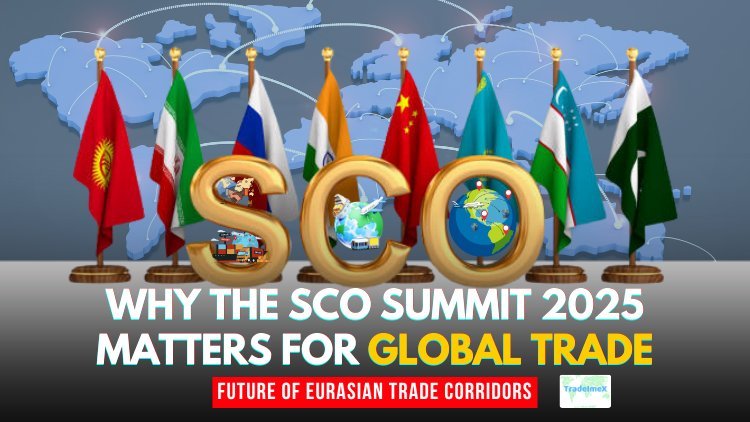
The Shanghai Cooperation Organisation, or Shanghai Pact, an Eurasian political, economic, international security and defence organization established by China and Russia in 2001. The SCO currently comprises eight Member States (China, India, Kazakhstan, Kyrgyzstan, Russia, Pakistan, Tajikistan and Uzbekistan). It is the world’s largest regional organization in terms of geographic scope and population, covering approximately 60% of the area of Eurasia, 40% of the world population. As of 2021, its combined GDP was around 20% of global GDP.
The SCO is the successor to the Shanghai Five, formed in 1996 between the People’s Republic of China, Kazakhstan, Kyrgyzstan, the Russian Federation, and Tajikistan. In June 2001, the leaders of these nations and Uzbekistan met in Shanghai to announce a new organization with deeper political and economic cooperation. In June 2017, it expanded to eight states, with India and Pakistan. Iran joined the group in July 2023. Several countries are engaged as observers or dialogue partners. The SCO is governed by the Heads of State Council (HSC), its supreme decision-making body, which meets once a year. The organization also contains the so-called Regional Anti-Terrorist Structure (RATS).
In 2001, the annual summit returned to Shanghai and the group was institutionalized. The five member nations first admitted Uzbekistan in the Shanghai Five mechanism. On 15 June 2001, all six heads of state signed the Declaration of Shanghai Cooperation Organisation, praising the role played thus far by the Shanghai Five mechanism and aiming to transform it to a higher level of cooperation. From 2001 to 2008, the SCO developed rapidly, establishing a number of permanent bodies and adhoc initiatives dealing with economic and security matters. In July 2015, in Ufa, Russia, the SCO decided to admit India and Pakistan as full members. In June 2016 in Tashkent, both signed the memorandum of obligations, thereby starting the process of joining the SCO. In June 2017, at a summit in Kazakhstan, India and Pakistan officially joined SCO as full members.
In 2004 the SCO established relations with the United Nations, the Commonwealth of Independent States in 2005, the Association of Southeast Asian Nations (ASEAN) in 2005, the Collective Security Treaty Organization in 2007, the Economic Cooperation Organization in 2007, the United Nations Office on Drugs and Crime in 2011, the Conference on Interaction and Confidence-Building Measures in Asia (CICA) in 2014, and the United Nations Economic and Social Commission for Asia and the Pacific in 2015. in 2018, SCO Regional Anti-Terrorist Structure (RATS) has established relations with the African Union‘s African Centre for the Study and Research on Terrorism (ACSRT). The United States applied for observer status in the SCO, but was rejected in 2005.
Regional Dynamics
Basically, it was felt that China created the SCO for curbing Russia’s dominance in the area. But, the heads of the member states point out that, against the backdrop of a contradictory process of globalisation, multilateral cooperation, which is based on the principles of equal right and mutual respect, non-intervention in internal affairs of sovereign states, non-confrontational way of thinking and consecutive movement towards democratisation of international relations, contributes to overall peace and security, and they collectively call upon the international community, irrespective of its differences in ideology and social structure, to form a new concept of security based on mutual trust, mutual benefit, equality and interaction. It is trying to provide an unique opportunity to take part in the process of forming a fundamentally new model of geopolitical integration. The SCO was not a platform for resolving bilateral issues, and its members were also reluctant to mediate disputes multilaterally. Due to the widely divergent agendas among member states, Indian commentators even called it the “Shanghai Contradiction Organisation”.
The SCO’s main achievement this far is to have offered its members a cooperative forum to balance their conflicting interests and to ease bilateral tensions. It has built up joint capabilities and has agreed on common approaches in the fight against terrorism, separatism and extremism. However, major shortcomings, such as institutional weaknesses, a lack of common financial funds for the implementation of joint projects and conflicting national interests have prevented the SCO from achieving a higher level of regional cooperation in other areas.
India’s Involvement
India has steadfastly used its diplomatic capital to campaign for strengthening cooperation and used the SCO platform to collaborate with regional counterparts. In 2018, Prime Minister Narendra Modi in Qingdao, China, coined the acronym SECURE to highlight the pressing regional challenges facing the SCO, where S stands for security of citizens, E – economic development for all, C – connecting the region, U – uniting the people, R – respect for sovereignty and integrity, and E for environmental protection.
India has been sensitising the influential members of SCO on Pakistan’s state-sponsored terrorism. The dreaded global and regional terror outfits, such as al-Qaeda, Islamic State of Khorasan Province (ISKP), Lashkar-e-Taiba (LeT), Jaish-e-Mohammed (JeM), Islamic Movement of Uzbekistan (IMU) to secure the SCO and greater Eurasian region from these radical extremist forces. The issue resonates with China, Russia and Central Asian Republics (CARs), which are facing increasing threats. Another common challenge to the SCO region is the illicit drug trade emanating from the Af-Pak region. In 2021, more than 80 per cent of opium and heroin supplies originated from Afghanistan via different routes to the global opium market. The greater involvement of terror outfits in the narcotic trade has sprung new geo-political challenges to the SCO. It has become a significant funding source for anti-state activities by the region’s dreaded terror groups and radical Islamists. India has been trying to garner support for putting an end to all these.
This year the summit which was held virtually at Delhi had the highlights
- The New Delhi Declaration was signed by the member nations, which states that the international community must come together to “counter the activities of terrorist, separatist and extremist groups, paying special attention to preventing the spread of religious intolerance, aggressive nationalism, ethnic and racial discrimination, xenophobia, ideas of fascism and chauvinism.”
- Joint Statements:
The leaders adopted two thematic joint statements – one on cooperation in countering the radicalisation leading to separatism, extremism, and terrorism and the second one cooperation in the field of digital transformation.
-
- New Pillars of Cooperation:
India has created five new pillars and focus area for cooperation in the SCO, which include,
-
-
- Startups and Innovation
- Traditional Medicine
- Youth Empowerment
- Digital Inclusion
- Shared Buddhist Heritage
-
- India’s Reservations on BRI:
India refused to be part of the BRI (Belt and Road Initiative) of the SCO members’ economic strategy statement, mentioning “interested member states’.India’s opposition to the BRI stems from its inclusion of projects in Pakistan-occupied Kashmir (POK), which India considers a violation of its sovereignty.
Conclusion
Last but not least, there continues to be a perception in the West that SCO is an anti-West forum. However, India’s growing economic and political stature at the global level in the era of multi-vector foreign policy has made New Delhi a potential player in turning SCO into a development oriented organisation in Eurasia rather than an anti-west alliance. That is why New Delhi has been stressing maintaining peace and security based on UN Charter provisions to ensure the collective prosperity of the region.
India has advocated win-win cooperation within the SCO for regional or trans-regional connectivity, regional security and defence collaboration, combating state-sponsored terrorism, and a peaceful, prosperous Afghanistan with an inclusive government and peaceful global order without rival blocks. The challenge for New Delhi, going forward, will remain one of using its substantial diplomatic capital toward making the Eurasian region a driver of economic growth and prosperity within the ambit of SCO.