
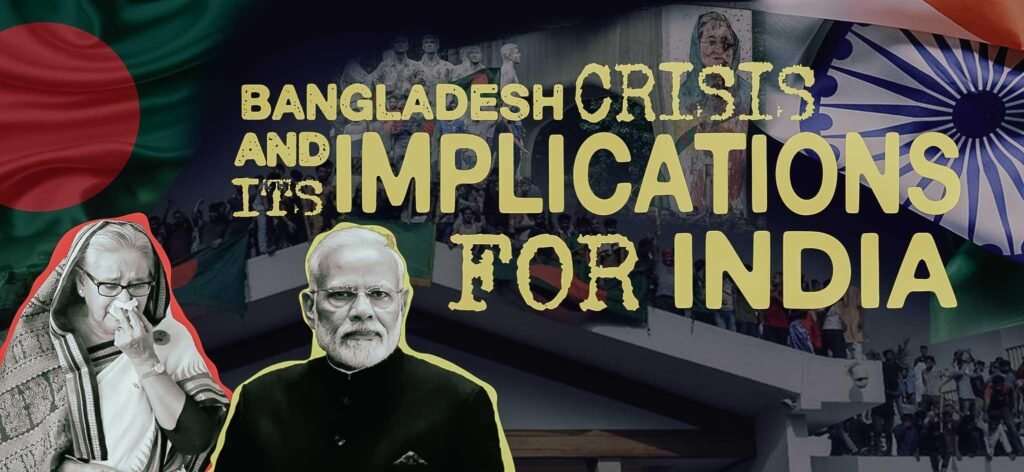
Political Changes in Bangladesh and its Implications on the North East Region of India:An Analysis of 2024, Regional Geopolitics
Abstract
Geopolitics examines how geographic features, resources and socioeconomic aspects influence regional politics.Geopolitics also includes the study of real-world decisions made by politicians, their political alliances, and other leaders in various geographic settings(Dijkink,2009).The recent reestablishment of political order in Bangladesh following Prime Minister Sheikh Hasina’s resignation marks a pivotal shift in South Asia’s geopolitical terrains. The study aims to analyse the geopolitical situations between India, Bangladesh, and neighbouring countries. This research endeavours to elucidate the consequences of Bangladesh’s political instability on India, focusing specifically on its North Eastern States while also scrutinising the geopolitical challenges that India faces. It also suggests how India should change its foreign policy in response.The study reveals that India and Bangladesh have deep historical, linguistic and cultural ties. They have cooperated for regional and sub-regional development. The research underscores the necessity for India to implement a comprehensive strategy in response to the evolving geopolitical dynamics in Bangladesh. Drawing from secondary data sources, this study offers valuable insights into geopolitical matters, catering to the interests of researchers, geographers, and policymakers.
Keywords: Geopolitics, resources, regional politics, Political Alliances, foreign policy
Introduction
Geopolitics is the study of how geographical factors and political processes interact. Both are constantly changing and influenceeach other.Geopolitics explores the outcome of these interrelationships. Geopolitics refers to international political behaviour influenced by geographic factors such as location, boundaries, topography, resources and population (Guo,2012). This study analyses political instability in Bangladesh and its impact on international relations, especially with India. In 2024 the departure of Bangladesh’s Prime Minister Sheikh Hasina is a current example of political instability in the neighbouring region of India.The political Upheaval is not limited to Bangladesh alone. Other neighbouring countries of India have also experienced political turmoil in the last few years, with dramatic shifts in power occurring in Afghanistan, Sri Lanka, Pakistan and the Maldives. Power vacuum, political unrest, and massive protests have led to significant geopolitical changes. This situation affects India and its “neighbourhood first” strategy. It is a challenge for administrators who must decide whether to take immediate action, wait to analyse the situation, maintain traditional neutrality, or intervene selectively (Kumar,2024).
India and Bangladesh have deep ties in history, language, and culture, and their bilateral relations have become a model for the entire region. Both countries have developed cooperation within BIMSTEC, SAARC, and IORA. Bangladesh’s strategic location is of immense significance for India, as well as its Act East Policy, Neighbourhood Initiative, SAGAR Doctrine, and Indo-Pacific Vision (MoEA, 2024). Bangladesh’s current socio-political unrest could impact relations with India and hamper the initiative, potentially affecting trade relations and hindering the movement of people, goods and services, and it can also influence Free Trade Agreements (FTA). Border disputes between Bangladesh and India have given rise to issues such as border killings, human trafficking and security concerns, which require effective border management and cooperation (Rahman et al., 2024). This analysis discusses regional geopolitics, challenges faced by India, particularly in the northeast region, and recommendations for adapting its foreign policy.
Literature Review
Geopolitical dynamics significantly shape the relationship between India and Bangladesh. India’s foreign aid to Bangladesh is influenced by various geopolitical factors, especiallytheincreasing involvement ofChina in that region. As a result, India has increased its aid commitments to maintain its regional influence (Nemova, 2016). Here are some researches on the geopolitical relations between India and Bangladesh –
Majumder, A.J. (2014), in his paper “Making Sense of India-Bangladesh Relations”,assessed concerns related to security and its impact on India-Bangladesh relations. It examines the dimensions of security competition and mutual perceptions. The study states that geopolitics greatly influences India-Bangladesh relations due to geographical proximity, which gives rise to security concerns and different core objectives and impacts mutual perceptions and policies.
Patnaik, S.S. (2019), in a study, titled “India’s Perceptions of Bangladesh and India-Bangladesh Relations”, finds that geopolitics significantly influences India’s relations with Bangladesh. It plays an important role, but perceptions formed by the media, education and border interactions also influence bilateral dynamics.Dutta, S. (2002) examined India-Bangladesh relations in his study “India-Bangladesh Relations: An Overview of Frontiers and Constraints”. The author highlights migration, revolution, border conflicts, and the dispute over the sharing of the Ganges. This study explained that India-Bangladesh relations are shaped by historical ties, economic relations, and geopolitical interests, with challenges such as migration, insurgency, border disputes, and trade imbalances influencing their dynamics.Kumar, A. (2014) explored the impact of Bangladesh’s domestic politics on its relations with India in a research paper titled “Bangladesh’s Domestic Politics and India-Bangladesh Relations”. The author discusses how domestic politics in Bangladesh, including socio-political and cultural factors, significantly impacts its relations with India. The research paper highlights different foreign policies in Bangladesh depending on the ruling party, which impacts the geopolitical dynamics between the two neighbouring states. Mehta et al. (2018) researched “Measuring Sustainable Development in India and Bangladesh”. This paper emphasises the importanceof cooperation for sustainable development between bothcountries andhighlights the potential for positive geopolitical relations between the neighbouring states.
Objectives
The specific objectives of the study are
- To understand the Geopolitical relations between India and Bangladesh.
- To assess the implication of political instability in Bangladesh on India’s northeast region and how India should adjust its foreign policy.
Study Area
Bangladesh became an independent country in 1971. Earlier, Bangladesh was known as East Pakistan and was a part of Pakistan. Bangladesh and India share a 4,096-km-long international border, making it the fifth-longest land border in the world. Five Indian states share borders with Bangladesh, namely- Assam, West Bengal, Mizoram, Meghalaya and Tripura. West Bengal shares the longest border with Bangladesh at a distance of 2,217 km, while Tripura shares 856 km, Meghalaya 443 km, Assam 262 km and Mizoram 318 km. (MapsofIndia.com, 2020).
Physiography of the region –The Sundarbans mangrove forest covers 140,000 hectares and is the world’s largest mangrove forest. Located on the delta of the Ganges, Brahmaputra and Meghna rivers, the forest stretches across India and Bangladesh. It is known for its diverse wildlife and is important in maintaining ecological balance (UNESCO). However, climate change and human activities have substantially altered the natural landscape and social structure. Historical and geographical ties between Bangladesh and India have led to border disputes, illegal migration and security concerns, which require practical cooperation and border management measures (Chiranjeevi, 2023).
Map 1
Data Used and Methodology
This study is mainly descriptive and exploratory. Secondary sources have been used to achieve the above objectives. This study references various books, magazines, newspaper articles, and research PDFs on geopolitics between India and Bangladesh. The study has extensively reviewed various journals to conduct research and present a comprehensive literature review. To illustrate the geographic location and characteristics of the India-Bangladesh borderland region, the present research work has utilised Geographic Information Systems tools such as ArcGIS Software, and various websites have been used for this purpose.
Result and Discussion
Regional Geopolitics: Political Upheaval in Bangladesh, 2024
The Northeast India and Bangladesh border region is influenced by interconnected ecological, socio-economic, linguistic, cultural, and political factors. This area encompasses diverse ecosystems that are crucial for local biodiversity and livelihoods. Nevertheless, these ecosystems face threats from climate change, which induces flooding and erosion, thereby impeding agricultural productivity and community sustainability (Barua et al., 2024).Geopolitical tensions arise from the region’s challenging topography, informal economies, and fragmented agricultural holdings. Enclaves in both countries lead to citizenship issues (Shewly, 2015), showing how geography affects policymaking. Ninety percent of Bangladesh shares its border with India, primarily in the Northeast, a region often referred to as the “India-encircled”. The northeast region is also closely linked to Bangladesh through trade activities (Murshid, 2011).
In 2024 Bangladesh Prime Minister Sheikh Hasina’s 15-year term ended amid widespread protests and violence. The crisis took a disturbing turn with communal violence and also had implications for India, including the risk of an influx of refugees in the northeast region of India.The geopolitical implications of this crisis go beyond immediate concerns due to Bangladesh’s strategic location and its ties with China. As a key defence supplier and major investor in infrastructure projects in Bangladesh, China is likely to increase its regional influence through these connections.Therefore, India needs to evolve its foreign policies and adjust its relations with other countries accordingly (Ganguly, 2024).
Bangladesh’s Political Instability and Its Implications on Northeast India.
Political instability in Bangladesh has far-reaching implications for India, particularly in the northeastern region. Understanding this connection is crucial for developing effective policies and fostering regional stability. Analysing the effects of Bangladesh’s political instability can shed light on the challenges and opportunities that arise for Northeast India, emphasising the need for strategic cooperation and proactive measures to address potential risks.
The 1947 partition of India led to significant migration between Bangladesh (then East Pakistan) and Northeast India, particularly in Assam and Tripura, which deepened cultural ties. Historically, Northeast India and the Bengal region were part of the same trade routes, fostering economic and cultural exchanges. Rivers like the Brahmaputra and Meghna, which flow through both regions, have played a vital role in linking their cultures. Many ethnic communities in Northeast India have close ties with communities in Bangladesh. For example, the Khasi and Jaintia tribes of Meghalaya have counterparts in Bangladesh’s Sylhet region (Swer and Talukdar, 2019). Besides this, folk traditions, cuisines, religious and ritual practices, and festivals alsoconnect and foster strong people-to-people ties on both sides of the borders of northeast India and Bangladesh. Like Durga puja and PohelaBoishakh (Bengali New Year) celebrated in Bangladesh and India in the states of West Bengal, Tripura, Jharkhand and Assam (Goalpara and Barak Valley) (Kapila D. Silva and Sinha, 2016). Besides this, the people of Bangladesh andIndia have similar languages, for example, Bengali, which is spoken in Bangladesh and northeast India, particularly in West Bengal, Assam, and Tripura. The borders between Assam, West Bengal and Tripura are porous, allowing people from Bangladesh to easily migrate into the adjoining northeastern states. This infiltration is changing the population dynamics and affecting the political and economic landscape of the region. These shared socio-cultural and linguistic features highlight the historical and ongoing interactions between Northeast India and Bangladesh, creating a vibrant, interconnected cultural landscape and cross-border trade.
The influx of unauthorised immigrants could escalate tensions in northeast India. India’s diplomatic relations with Bangladesh are entering a critical phase. To safeguard the security of its northeastern states, India must manage its strategic alliance with Bangladesh, avoiding any interference in internal affairs to prevent a deterioration in bilateral relations. Due to the geographical location of both countries, Northeast India and Bangladesh are interconnected in trade activities, such as Chittagong port, the region’s largest and most strategic commercial nexus. This port primarily benefits Assam and Tripura, with Tripura emerging as a key gateway to Southeast Asia. Some other initiatives, such as the Kaladan Multi-Modal Transit Transport Project and the Agartala-Akhtar Rail Link, underscore their important geopolitical relationship(Lamkang,2024). Northeast India, which serves as the gateway to the East, played a crucial part in India’s ‘Act East Policy’ to strengthen diplomatic and economic ties with Southeast Asia. Through participation in international forums such as ASEAN, India can help to integrate the region into broader trade networks. Given Bangladesh’s political shift in strategic focus, India has an opportunity to strengthen partnerships within BIMSTEC, particularly with Myanmar and Thailand. Recent investments from Japan have the potential to boost economic growth, while enhanced economic ties with Thailand, Vietnam and Singapore presented new trade opportunities ((Lamkang,2024).
Northeast India and Bangladesh were also connected by many developmental projects. The state of Tripura in India supplies electricity to Bangladesh through agreements. In 2016, Tripura began exporting 100 MW of electricity to Bangladesh from the OTPC power plant at Palatana, a gas-based facility with a 726 MW capacity. This power plant is the largest of its kind in northeast India (Rana, 2019). Due to the political turmoil in Bangladesh the implementation of strategic projects, such as the establishment of deep-sea ports and special economic zones designed to enhance trade within the Northeast region, may face potential consequences. (Lamkang, 2024).
Political Instability in South Asia: Effects on India
Political upheavals in South Asia, including political unrest in Bangladesh and instability in neighbouring countries, have significant implications for India’s strategic interests and regional stability. South Asia has experienced political upheaval and instability, such as the military coup in Myanmar, the shift of powerin Afghanistan’s politics, widespread protests in Sri Lanka and the political unrest in Bangladesh. These developments have significant implications for India as it faces challenges from the eastern front due to its geographical proximity and strategic interests in the region, impacting Indian investments (Financial Express, 2024, August 6).Political unrest in Bangladesh may affect Indian trade and interests. Trade relations between the two countries cover commerce, medicine, tourism, and business expansion. During Sheikh Hasina’s term, trade relations grew significantly, resulting in a trade surplus for India. Bangladesh is India’s biggest trading partner in the subcontinent, with a total turnover of trade reaching US$ 14.22 billion in FY23 (IBEF, March 2024).The political imbalance affects profits, the flow of goods, and the proposed free trade agreement (FTA) between India and Bangladesh. Indian exports to Bangladesh dropped to $11 billion in 2023-24 from $12.21 billion in 2022-23. India exports various products to Bangladesh, including textiles, machinery, agricultural goods, electric items, auto parts, iron and steel, plastic products, etc. However,56% of Bangladesh’s exports to India enjoy zero tariffs under SAFTA (GTRI, 2024, August 5).
Since 2016, India has provided $8 billion in loans to Bangladesh for infrastructure projects, including road and rail networks, shipping, and ports. The political turmoil in Bangladesh may disrupt India’s connectivity to parts of the Northeast and endanger existing bus routes and connectivity to the Chittagong and Mongla ports. India should focus on building relations with neighbouring countries and managing regional power dynamics(Financial Express, 2024, August 7).
Challenges for India:Ongoing crises in neighbouring countries pose challenges for India, particularly in the northeast region. There are also humanitarian concerns, such as the possibility of an influx of refugees and related social and economic challenges. Additionally, India faces diplomatic challenges and strained relations with neighbouring countries due to political instability and divergent strategic interests (Financial Express, 2024, August 6).Political turmoil in Bangladesh has led to a 23% decline in Bangladeshi tourists visiting India for medical and shopping purposes (The Economic Times, 19 August 2024).Any disturbance in India-Bangladesh relations could affect India’s ties with the Northeast, as the region is connected to mainland India solely through the narrow “Chicken Neck” between West Bengal and Assam, which is just 22 kilometres wide (Basu & Bose, 2021). The nature of Bangladesh’s new government could significantly impact India’s strategic interests, posing challenges to regional stability. India needs to monitor these developments closely.
India’s Strategic Approach
In response to these developments, India is expected to adopt a multi-faceted approach, including diplomatic engagement and strengthening ties with affected countries and international partners to address crises. Additionally, India will provide humanitarian assistance to alleviate suffering in neighbouring countries and enhance border security and intelligence capabilities to counter potential threats. The current regional instability presents significant challenges for India as a major South Asian player. Therefore, India must carefully deal with these complex situations, balancing its security concerns with humanitarian and diplomatic efforts to maintain regional stability (Financial Express, 6 August 2024).
India must engage strategically with Dhaka’s new political circumstances and emerging leaders to safeguard its interests. It needs to clarify its boundaries and safeguard its interests, as potential humanitarian issues could affect its resources and stability. The political turmoil in Bangladesh is important for regional dynamics, and India’s response must be cautious and proactive, including constructive engagement with the new Bangladeshi leadership. This crisis once again underscores the unpredictable nature of South Asian politics and the need for India to engage with various stakeholders while maintaining its strategic objectives. The coming months will be crucial in shaping the future of India-Bangladesh relations, and India will need to display agility and diplomatic skills while navigating these changes (Unjhawala, Y. T., 2024).
Conclusion
In Conclusion,the geopolitical landscape between Northeast India and Bangladesh exhibits a complex interdependence that has been significantly affected by recent political developments in Bangladesh. These changes present considerable challenges, particularly for India’s northeastern region, with potential ramifications for both territories due to possible impediments in crucial projects. In response to this evolving situation, Northeast India may explore alternative strategies, including enhanced cooperation with Southeast Asian nations and increased investment in regional infrastructure development. The current disruption in India-Bangladesh relations underscores the intricate nature of geopolitical dynamics in the area, emphasising the necessity for strategic adaptability on both sides to navigate future challenges effectively. This scenario exemplifies the delicate equilibrium of international relations and the importance of flexible approaches in addressing shifting political landscapes.
India-Bangladesh relations have historically been characterised by a strong bond rooted in shared history, culture, economic ties, and a multitude of other commonalities (MoEA, 2024). However, the recent unrest in Bangladesh has significantly impacted these relations.India will need significant foreign policy and diplomatic insight to deal with the situation arising from political unrest in Bangladesh, which could transform the geopolitics of the subcontinent(Mohan, 2024). India needs to understand Bangladesh’s changing scenario carefully. Both countries need to strengthen bilateral relations, support stability, and address shared challenges. As the situation stretches out, India and Bangladesh should carefully understand this change to maintain their positive approach to cooperation and friendship. Overall, the northeast India and Bangladesh border region presents a multi-faceted case for geographical study, requiring a holistic approach to address its challenges and opportunities.
Suggestions
Given the emerging geopolitical situation in Bangladesh, India should adopt a multi-pronged approach to deal with the challenges and potential implications for its national interests. Here are some key suggestions:
India should emphasise the importance of democratic institutions and processes in Bangladesh and urge all parties to respect the rule of law. India should increase border security to prevent infiltration. In terms of economic cooperation, India can further strengthen its economic ties with Bangladesh by focusing on trade, investment, and connectivity. India should build new alliances by evaluating the impact of the political tensions arising in Bangladesh on the development and stability of the geographical region.India should also adopt new methods, such as developing digital connectivity corridors to boost trade, technology exchange and e-commerce. From a geopolitical perspective, India should further strengthen and develop its strategic interests and relations with other countries, as Pakistan and China may seek to take advantage of the situation for their own benefit (The Indian Express, 2024). To sustain regional balance and turn aside Bangladesh from moving away from its long-established associations.India needs to work and develop cooperation with South Asian countries.
References
- Barua, P. and Kumar, A. S. (2024). Climate Change Impact on Migration Situation in Coastal Delta Belt of Bangladesh: A Qualitative Explorative Study. Journal of climate change, 10(2):51-68. doi: 10.3233/jcc240015
- Basu, P. and Bose, S. (2021) “In Search of the Sea: Opening India’s Northeast to the Bay of Bengal”. Special Reports, Published on Jun 21, 2021, Observer Research Foundation. https://www.orfonline.org/research/in-search-of-the-sea-opening-indias-northeast-to-the-bay-of-bengal
- Chiranjeevi, M. (2023). The Conflict Of Illegal Migrants And Transit Between India And Bangladesh. IJFMR Volume 5, Issue 5, September-October 2023. https://doi.org/10.36948/ijfmr.2023.v05i05.7874
- Das, A. (2024). How Sheikh Hasina’s ouster may impact India-Bangladesh trade ties. The Indian Express, 2024, August 6. https://indianexpress.com/article/explained/explained-global/sheikh-hasina-exit-bangladesh-protests-india-bangladesh-infra-links-9497111/
- Datta, S. (2002). Indo‐Bangladesh relations: An overview of limitations and constraints. Strategic Analysis, 26(3), 427–440. https://doi.org/10.1080/09700160208450057
- Dijkink, G. (2009). (Dijkink, 2009)in International Encyclopedia of Human Geography, 2009, Elsevier, Pages 453-457. https://doi.org/10.1016/B978-008044910-4.00778-1
- Ganguly, N., (2024). “How the Political Crisis in Bangladesh Could Affect the Indian Economy” Outlook Business. 8 August 2024. https://www.outlookbusiness.com/in-depth/how-the-political-crisis-in-bangladesh-could-affect-the-indian-economy
- Global Trade Research Initiative (GTRI) Brief Pdf. 5 August 2024. https://gtri.co.in/DisplayFeaturedInsight.aspx?ID=50
- Guo, Rongxing. (2012). Cross-Border Resource Management in Disputed Areas. Developments in Environmental Science. Volume 10, 2012, Pages 167-200. https://doi.org/10.1016/B978-0-08-098319-6.00005-4
- Kapila D. Silva; Amita Sinha (2016). Cultural Landscapes of South Asia: Studies in Heritage Conservation and Management. Taylor & Francis. pp. 159–162. ISBN 978-1-317-36592-1.
- Kumar, A. (2014). Domestic Politics of Bangladesh and India–Bangladesh Relations. Strategic Analysis, 38(5), 652–667. https://doi.org/10.1080/09700161.2014.941214
- Lamkang, L.A. (2024). “The Impact of Bangladesh’s Political Shift on North East India’s Geopolitics and Security”. Modern Diplomacy, October 5, 2024
- Majumdar, A. J. (2014). Making Sense of India–Bangladesh Relations. India Quarterly, 70(4), 327–340. https://doi.org/10.1177/0974928414545919
- Mehta et al., A. (2018). Measurement of Sustainable Development in India and Bangladesh. In: Lessons in Sustainable Development from Bangladesh and India. Comparative Studies of Sustainable Development in Asia. Palgrave Pivot, Cham. https://doi.org/10.1007/978-3-319-95483-7_4
- Mohan, C. R. (2024). How India needs to deal with the new Bangladesh: 5 challenges beyond 1971. August 6, 2024, The Indian Express.https://indianexpress.com/article/explained/explained-global/new-delhi-dhaka-challenges-9496876/
- Murshid, K.A.S. (2011). Transit and trans-shipment: Strategic considerations for Bangladesh and India. Economic and Political Weekly, XLVI (17), 23 April, pp. 43–51.
- Nemova, A.A. (2016). India’s strategic interests in South Asia and its aid to Bangladesh. VESTNIK RUDN INTERNATIONAL RELATIONS. Vol. 16, N. 4. – P. 688-699. doi: 10.22363/2313-0660-2016-16-4-688-699
- Pattanaik, S.S. (2019). India’s Perception of Bangladesh and Indo-Bangladesh Relations: Examining the Internal Dynamics in India. In: Ranjan, A. (eds) India in South Asia. Springer, Singapore. https://doi.org/10.1007/978-981-13-2020-0_2
- Rahman, M. S., & Islam, M. S.(2024). Bangladesh – India Border Conflict: Challenges and Opportunities. Interdisciplinary Journal of Management and Social Sciences, 5(1), 77–104. https://doi.org/10.3126/ijmss.v5i1.62665
- Rana, Md. Sohel. (2019). Transformation of Indo-Bangladesh Relations: From Insecurity to Cooperation in Northeast India. Strategic Analysis. 42. 559-577.
- Saran, S. (2024). With Bangladesh in turmoil, why India should exercise caution. The Indian Express. 2024, August 6. https://indianexpress.com/article/opinion/columns/with-bangladesh-in-turmoil-why-india-should-exercise-caution-9496925/
- Shewly, Hosna (2015). Citizenship, abandonment, and resistance in the India–Bangladesh borderland. Geoforum, 67. http://dx.doi.org/10.1016/j.geoforum.2015.10.008
- A. and Talukdar, A. C. (2019). “Cross-Border Trade Linkages between India and Bangladesh: A Study of Border Hats in Khasi-Jaintia Hills along the Meghalaya sector of the International Border with Bangladesh”. Remarking An Analisation, VOL-3 ISSUE-10 (Part-1) January 2019, P: ISSN NO.: 2394-0344, RNI No.UPBIL/2016/67980. https://www.socialresearchfoundation.com/upoadreserchpapers/5/254/1912070717391st%20armstrong%20swer.pdf
- Unjhawala, Y. T. (2024). “How India must respond to the crisis in Bangladesh” The Hindustan Times. Aug 13, 2024. https://www.hindustantimes.com/opinion/how-india-must-respond-to-the-crisis-in-bangladesh-101723564304859.html
- https://timesofindia.indiatimes.com/blogs/voices/india-and-bangladesh-crisis-uncertain-future-trajectory-of-security-economics-and-regional-geopolitics/
- https://www.drishtiias.com/daily-updates/daily-news-analysis/bangladesh-s-political-upheaval-and-its-impact-on-india
- https://www.ibef.org/indian-exports/india-bangladesh-trade
- https://www.mapsofindia.com/answers/geography/which-states-share-boundaries-with-bangladesh/
- https://www.mea.gov.in/Portal/ForeignRelation/Bilateral-Brief-Bangladesh-February-2024.pdf
- https://economictimes.indiatimes.com/news/economy/foreign-trade/bangladesh-unrest-not-likely-to-impact-indias-overall-trade-balance-sp/articleshow/112312117
- https://whc.unesco.org/en/list/798/
- https://www.financialexpress.com/policy/economy-bangladesh-crisis-how-is-the-indian-economy-affected-by-the-political-turmoil-3576580/
- https://www.mea.gov.in/bilateral-documents.htm?dtl/37897/