
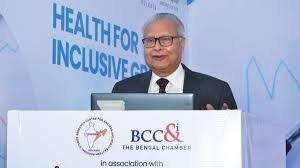
Ballygunje Kolkata 700019

Report on Health for Inclusive Growth_reviewed-17TH DEC 2021


Transcription

Opening Session

  1. In the opening session, Air Chief Marshal (Rtd.) Arup Raha said that the progress of any nation or any society is determined by the quality of life that the people enjoy. Two important services—good education system and robust health care system—that the nation provides to its people determine the standard of life. Good education system makes new generations mentally healthy and economically productive, and a robust health care system keeps nation healthy. Thus, a combination of good education system and strong health care system help a nation to grow. Education system builds character and provides vocational skill set that makes a nation productive. Robust healthcare system, including health infrastructure, help a nation to progress. This pandemic has proved the significance of healthcare system, and the quality of healthcare system depends on research and development, medical education, and environmental aspects.


  1. It has been pointed out that focus on healthcare is necessary to get a healthy life. In the last few years, health has been globally recognized as an important issue of development and well-being. Health is one of the major sustainable development goals of the United Nations. Integrated implementation of policies is required to achieve the goal of 2030, which focuses on the eradication of poverty. The speaker has identified that the improvement of health infrastructure helps to eradicate poverty. The strong link between income and health has also been pointed out. Economic equity has a connection with health. Mr. Abraham George Stephanos suggested that healthcare needs to be a right, not the privilege. It has been recommended that in a country like India, where sizable number of population lives in the rural and semi-urban areas and where resources are limited, emerging technologies, like Artificial Intelligence and machine learning, may help to improve telediagnosis, tele treatment or telesurgery to extend medical reach. Improvement of health is a responsibility of the corporates. In 2018, the global reporting initiative adopted new standards where companies have to report on their initiative for the promotion of workers’ health (from free health screening in the work place to occupational health and safety requirements). As an example, it has been referred that The Tata group has already taken initiatives to improve health of its employees and their families.


  1. Although North East (NE) does not significantly contribute in India’s development, the possibility of economic development in the North East is quite high because the North East has great potential. It has been suggested that we can achieve sustainable development by making the quality healthcare system accessible to all. Therefore, health is a core element of the United Nation’s sustainable development program. To make lives healthy and for human well-being, the development of health sector is inevitable. Furthermore, Mr. Aniruddha Lahiri suggested that clean water, green spaces, and sanitation can improve the quality of lives and reduce the rate of mortality. These factors are also crucial for mental health. The COVID pandemic has made devastating impact on the global economy. After the outbreak of COVID, millions of workers compelled to migrate to their hometowns and villages. As a result, manufacturing sector has experienced a chronic shortage of labor, which has slowed down the growth the nation’s economy and restricted government’s ability to spend more on public health. Mr. Lahiri enquired whether technology could solve this problem.


  1. It has been pointed out that before the outbreak of COVID 19 pandemic, nobody used to care about the health education and health care system. However, the COVID pandemic has worked as an eye-opener and shown how important healthcare is. Technology can immensely help us to get rid from this pandemic. Indeed, economy and healthcare are integrally linked with one another.  


  1. Dr. Sangita Reddy said that since the outbreak of COVID pandemic, healthcare has become the core issue in our lives, and people have started realizing the importance of healthcare. Innovation and inclusive healthcare system have emerged after the outbreak of COVID 19, about which we were unknown earlier. Vaccinations and other medical activities have immensely helped India to recover from the shock of COVID 19 pandemic. Inclusive growth has been emphasized mainly after the outbreak of COVID, and the role of healthcare is very important for the inclusive growth. The government initiatives, such as Ayushman Bharat, are playing a very significant role in the healthcare service. Longevity has been increasing due to improvement of medical science. As a result, India is now healthier than before, and common people has now more access to healthcare facilities than earlier. Nevertheless, Dr. Reddy suggested that India needs to upgrade its health infrastructure to tackle medical challenges. Better prevention must be the issue of priority than treating the diseases. Furthermore, Dr. Reddy recommended that public and private nexus in the healthcare system can improve the healthcare service. Besides advanced medical technology, such as robotic surgery, India has been working on population health model (based on proto health model) for the betterment of medical facilities in the rural areas. This system empowers individual for the better management of health-related problems. 

Keynote Panel: Health for Inclusive Growth 

  1. In the keynote panel, it has been discussed how to improve medical infrastructure and facilities and make them accessible to every individual of West Bengal. Mr. Narayan Swaroop Nigam suggested that we need to use our finite resources tactfully to improve our efficiency. One of the main purposes of economic and medical development is to increase efficiency. To improve public health and disseminate medical facilities, the Government of West Bengal has introduced several schemes, like Swastha Sathi. West Bengal Government has increased the number of health centers (from ten thousand to fifteen thousand) and been trying to make the medical system smart to tackle medical challenges. West Bengal presently has the capacity of 85,000 beds, which are free of cost, in the government health sector. West Bengal Government has introduced Swastha Sathi, where every family is eligible to enjoy health schemes worth Rs. 5 lakhs. All these initiatives are making great impact on the lives of the people of Bengal. West Bengal Government has been doing its best to provide healthcare facilities to the poorest people of Bengal. The speaker highlights how technology can be used to deal with medical challenges; for example, West Bengal is presently no. 2 in telemedicine. Thus, technology is playing a crucial role in distant medical treatment. It has been confirmed that despite budgetary constraints, West Bengal Government is committed to continue its health schemes and provide good healthcare to the people of West Bengal.


  1. India has to reduce economic inequality. The role of health has become more critical than earlier. Digitization to interoperability and the digitization of health information are very critical today. It has been suggested that we need a platform to allow interoperability. Technology and automation can play a crucial role in the reduction of cost in healthcare. Nevertheless, we don’t have enough trainedmedical personnel, who are proficient in using medical technology. Virtual consultation, home health care, and telemedicine have become more critical today. Mr. Arnab Basu suggested that we need proper technology infrastructure, mobile infrastructure, and internet infrastructure to carry out virtual consultation, telemedicine, and other technology related medical facilities. Home healthcare is very important because we do not have enough beds in hospitals. India needs frugal innovation to improve its healthcare facilities. Micro innovations have become very effective in the pandemic. Cyber security is also important in the healthcare. 


  1. Poverty is a cause of degradation of public health; therefore, eradication of poverty is essential for the improvement of public health. Health of population is a determinant factor in nations’ growth. Professor K. Srinath Reddy suggested that the implementation of universal health coverage is necessary for the wellbeing of every people. Nevertheless, the universal health coverage is impossible without adequate financing. The reduction of out-of-pocket expenditure is required for sustainable growth. Public financing is necessary for the improvement of healthcare sector. Investment in health is an important issue. It has been recommended that we need to emphasis on primary care, such as vaccination. Planning for health care system is very important to make the society healthier. Additional financing is required to deal with healthcare deficit. Financing is required for primary healthcare also. Private healthcare has to work in primary sector to serve the people.


  1. Health insurance is very important in the healthcare. COVID has shown the importance of health insurance. There are schemes, like Ayushman Bharat, however, people are unwilling to register. Health insurance comprises only 0.29% of our economy. High premium rate is one of the reasons of people’s unwillingness to health insurance. It has been suggested that we need to encourage people to embrace insurance. There are various types of policies, based on age, budget, and other parameters. There are also schemes for COVID, like Corona Kavach. Insurance companies are trying their best to reach out to the people. 


  1. Institutionalization of treatment is not enough. Therefore, we have to focus on persons at home. Notably, we are not focusing on best of healthcare for everyone. All doctors have to work stringently to provide quality service. Not only doctors provide medical service, but there is an eco-system that runs the heath system. Standardized platform is required for inclusive growth. 


Day 1 Session 1 – Vaccine Economy

  1. During session one, Mr. Sayantan Chatterjee highlighted on the healthcare economy and how economies responded to the pandemic under uncertainties. Vaccination helped the nations to face the challenges of pandemic and unlock their economies. Equitable distribution of healthcare service, such as vaccination, is an important issue and how to sustain the process of equitable distribution is equally important. Governments should have the right economic mindset to allocate fund for healthcare. Economic inequality is one of the biggest problems in the process of equitable vaccination. For example, high-income countries are thinking of booster dose, whereas low-income countries have not yet completed their first dose. Therefore, we have to deal with vaccine inequity effectively. More investment and government involvement is required to make vaccination accessible to all. The vaccination has to be innovative and inclusive.


  1. Dr. Niranjan Mishra have emphasized that the impact of vaccination on mortality reduction and population growth is immense. We need to work a lot to ensure financing, provision, equitable distribution, and administration of vaccines to all population. In Africa, vaccine is not accessible to all population, less than 20%, so new mutants of virus developed in Africa. Dr. Mishra pointed out how, in the 20th century, the development and progress of molecular biology, microbiology, and immunology led to the development of vaccines. After the outbreak of COVID 19 Pandemic, we have developed vaccines in a very short period. At present, there are 28 COVID vaccines in the world.  Socio-economic impact of pandemic is severe. The UN has rightly identified that the COVID 19 pandemic is much more than a health crisis because it is likely to increase poverty and inequality. Therefore, sustainable development goals are needed to achieve more urgently. Mass vaccination can help us to tackle this pandemic. Pandemic has shown the importance of the equity in healthcare. The speaker discussed how vaccines were developed in India and how vaccination process has been carried out in India, especially in Odisha. He says that 87% of the total population in Odisha received 1st dose of vaccine, and 52% of the total population has received 2nd dose of vaccine. Bhubaneswar was the first city that achieved 100 percent vaccination in September 2021. However, no village of Odisha has so far completed 100% vaccination of either dose. There were mobile vaccination centers in Bhubaneswar to ensure proper and equitable vaccination. Dr. Mishra demonstrated how health workers were vaccinated during pandemic. The statistics demonstrated how vaccination reduced the rate of infectivity in India. Initiatives, like ‘Har Gar Dastak Tikakaran Abhiyan’, played a very effective in the progress of vaccination. As a result, 100% first dose of vaccination achieved in December 2021.

Day 1 Session 2 – Healthcare in North East 

  1. Health tourism is an important issue. Act East policy has made the North East the gateway of India. India has to make its health infrastructure more appealing to Bangladesh, Myanmar, and Nepal. It can contribute to the Act East policy. Indeed, medical tourism can positively contribute to the economic growth of North East.


  1. In the second session, Prof. Sandra Albert talked about Tuberculosis (TB) and the bio-medical approach. It has been pointed out that Meghalaya government has taken several initiatives to eradicate TB. According to Prof. Sandra Albert, improved wages and water safety are important for the eradication of TB. In Meghalaya, under five mortality rates, in TB, is 40%, whereas neo-natal mortality rate is 19.8%. It has been pointed out that women education can play a significant role in declining the rate of infant mortality. Furthermore, Prof. Sandra Albert identified that the rate of vaccination in Meghalaya is much lower. Surprisingly, many health workers, including doctors, are reluctant to take vaccine. Social media is playing a significant role is spreading the rumors related to vaccine, which is making people reluctant towards vaccine and slowing down the rate of vaccination. Academic programs like Master of Public Health have been introduced in IIPH-Shillong to increase consciousness about public health and to improve it. Likewise, Bachelor of Public Health was also introduced. Meghalaya has started emphasizing on the study and research of zoonotic and vector borne diseases to prevent any future public health catastrophe. 


  1. The rate of development is very slow in the North East. However, in last five years, Assam had developed in many areas. Development of healthcare infrastructure is quite slow due to difficult terrain and poor connectivity, and COVID has multiplied these problems. Due to poor infrastructure and scarcity of health workers, most of the North East states are depended on Assam for healthcare service. During the nationwide lockdown, tertiary healthcare facilities were hampered in the North East. During the lockdown, primary healthcare preventive services, such as antenatal check-up, nutritional supplementation, and child immunization, were massively compromised as every health professional (from doctor to nurse) was busy with tackling COVID 19. Due to budgetary constraints, during the pandemic, out of pocket expenditure among the population has increased a lot. In 2018, special forum was created in the NITI Aayog to promote sustainable economic growth in the North East. Nevertheless, nationwide lockdown, unemployment, and other socio-economic restrictions related to COVID 19, have significantly slowed down the pace of development in North East. Therefore, the states are trying their best to restore normalcy. Prof. Swati M. Patki suggested that infrastructure and connectivity development is required to accelerate the economic development in the North East. Besides Centre-State collaboration and massive vaccination drive, community participation is another major achievement during the pandemic.


  1. The rate of the use of tobacco in the North Eastern states is extremely high, above the national average. However, in Sikkim, there is a significant decline of tobacco use. Nevertheless, in Tripura and Assam, the rate of tobacco consumption has increased. In Mizoram, the use of Tobacco is very high. In Tripura and Mizoram, there is no much difference in gender gap in tobacco consumption. In Mizoram, the use of tobacco by minor is highest in the North East and in India. In Manipur, relatively elder age group consumes tobacco compared to the other North Eastern states. Exposure to passive smoking is very high in Mizoram. The use of non-tobacco products are also extremely high in North East. In the North East, smokers spend around Rs. 1000 per month. Thus, they spend a lot of money on tobacco. Government has been taking steps to make the North East free from tobacco. Tobacco free institutions and tobacco control chapters in schoolbooks are the examples of such initiative. Dr. Jane R. Ralte suggested that we need proper institutional framework to deal with the challenge of growing use of tobacco. Government and various agencies have been making efforts, in the form of youth related activities, legal initiatives, and political and bureaucratic initiatives, to make the North East free from Tobacco.


  1. Dr. Manoj Patki has discussed the relation between the infant mortality rate and economic growth. The rate of infant mortality has declined in the Manipur, Mizoram, and Nagaland. Multi-sectoral approaches—female education and nutrition—have been recommended to reduce the child mortality rate. Information inequality is a problem, which is needed to deal with to tackle the challenges of child mortality. It has been identified that life expectancy has direct link with per capita government spending, and life expectancy can improve economic growth and can contribute to nation’s economy. Dr. Manoj Patki said that small increase in public health expenditure can significantly reduce the out-of-pocket expenditure. Notably, life expectancy and mortality rates are responsible for around one third of economic growth. To achieve inclusive growth, we need to increase labor productivity, expand market, improve environment for investment, and invest in human resources. It has been suggested that the North East can improve its economy by using its natural resources, tourism, and textile. The Government of India has launched Northeast Rural Livelihood Project to improve rural livelihood in four North Eastern states, Mizoram, Nagaland, Tripura, and Sikkim.

Day 1 Session 3 – Where do we stand on ‘Health for All’? 

  1. Although we have not yet achieved health for all goals, we have done many things to achieve that goal. To achieve millennium development goal, India adopted national policy in 2002. National rural health mission and other initiatives have been taken to meet the goal. National health policy of 2017 indicates that India is close to achieving its goal related to healthcare. India has also adopted policies to meet the sustainable development goal 2030. Dr. K. Madan Gopal said that rural healthcare system is quite structured, which has strengthened during the pandemic. However, our primary healthcare goals are not sufficient to meet the SDG goal. Therefore, India is now implementing comprehensive primary healthcare program, and under the primary healthcare program, the number of packages has increased from six to twelve. 1.5 lakhs health and wellness centres are likely to be functional by December 2022. Ayushman Bharat takes care of secondary and tertiary healthcare of the population. NITI Aayog has embraced the policy of competitive federalism and encouraged the states in achieving certain healthcare targets.  Moreover, the NITI Aayog is working at district level. If changes occur in the district level, it may work in the block level. Changes in district level may help us to achieve the SDG goals.


  1. The lesson that we have learned from COVID is the massive national mobilization. Indeed, India has done well in the first and second wave of the pandemic. India has become the hub of vaccine. We need a good public health system to fight against any pandemic, so we must invest in health sector and healthcare system. The importance of universal health coverage has been emphasized. It has been pointed out that we are good in policymaking, but not in implementation; therefore, there is a big gap between policy and implementation. India spends only 1.3 % of its GDP in health sector, whereas 3% is required. Notably, there is a lack of capacity in the State level. Our health statistics is weak, so the local evidence base is poor; instead of depending on data, we rely more on international agencies and expert opinion for policy formulation. The area of our occupational health and industrial accident is also not in a good shape. Although our healthcare system has achieved a lot, we still need to improve many things. It is suggested that we need to concentrate more on primary care and general practice. It is important to ensure that the specialist care should only be available by referral from general practitioner or medical officer. We need to assign primary care doctor with minimum standard time, from 6 to 10 minutes, for each doctor to see a patient. Outcome monitoring is also important. Health department has to use technology strategically to improve healthcare and appoint chief technology officer to incorporate new technology in the healthcare system in a proper way. Medical officers need to use emerging medical technology to increase productivity.  Medical human resource is limited, and to deal with it, we must create permanent positions for health staff. We must deploy trained health workers nationwide. Prof. Dileep Mavalankar has recommended for giving Arogya chakra to the health workers. Quality care is fundamental in healthcare. There must be a balance between the quality and cost because not everyone can afford top quality at high cost. We must focus on prevention of diseases rather than treatment.


  1. COVID has forced the government to focus on health sector. Thus, COVID has indirectly contributed for the improvement of healthcare. Urban areas’ healthcare challenges are different from that of rural areas. Private sectors work mainly in the urban areas. Therefore, rural areas are neglected by the private sector. Furthermore, mal-distribution of resources is a challenge to public health. Wrong people are appointed in wrong places. For instance, it is wrong to expect that a cardiologist will treat a patient of neurology. Therefore, proper training is needed to provide to the doctors and other health professionals to deal the pandemic in a proper manner. Trained professionals are required to tackle public health challenges. Odisha has done something better in healthcare despite facing several challenges.


  1. Dr. Ashish Banerji, one of the panelists of the session has pointed out several challenges of the healthcare system. Many government colleges lacked HDU, cardiac ICU, neuro ICU. It is suggested to improve emergency care; each year around 30,000 deaths occur all over India due to snakebite. Proper emergency care treatment can reduce the number of deaths related to snakebite. For the improvement of healthcare services, we need to train more doctors in emergency medicine. Recruiting lakhs of trained para-medics is a demand of the hour. Notably, in the non-emergency area, government schemes are not viable and the offered packages are very low. Specially trained billing assistances are also required to recruit in the hospitals. Dr. Banerji illustrated that there is no collaboration between government agencies and private hospitals, so the packages are determined without carrying out enough discussions. Furthermore, the hospitals have not been approached for PPP. 

Day 1 Session 4 – Role of Corporates in Healthcare

  1. Worldwide 71% death occurred because of non-communicable diseases (NCD). The use of tobacco and alcohol and lack of physical activities also contribute to NCD. Deaths due to work-related health conditions, such as coronary disease, stroke, heart attack, and ischemic heart disease, have been increasing every year. South Asians, notably Indians, are more vulnerable to the heart related diseases than the westerns due to an underlying genetic disposition to metabolic syndrome, hypertension, and cardiomyopathy. Increasing number of red meat consumption, tobacco smoking, and professional stress also contribute to the disease. Health promotion and health protection are the two ways to take care of the health of the workers. Health promotion focuses on doing exercise, growing consciousness of diseases, biometrics, and nutrition. Mental health has been becoming a matter of concern for all of us. Notably, after pandemic, 1 person out of 3 persons suffers from mental anxiety; in pre-COVID situation, it was 1 out of 4. Yoga and meditation can significantly reduce mental stress and improve mental health. As health workers are vulnerable to various diseases, we need to vaccinate all of them properly. Long working hours amplify health related problems. Health workers are vulnerable to occupational health hazards, like HIV, hepatitis, radiation related problem, stress, etc. Dr. T. Rajgopal said that corporates need to work more to make their people healthy and productive.


  1. Prof. Manoshi Roychowdhury discussed the prospects of healthcare economy. Notably, healthcare is one of the largest sectors in Indian economy, both in terms of revenue and employment. There are several factors—ageing population, growing middle class, lifestyle diseases, growing importance of public-private partnership, adoption of digital technologies—that are dominating healthcare. Besides problems, COVID 19 brings new healthcare opportunities in India. Speaker has identified key areas of investment in the healthcare sector. They are hospital and infrastructure, health insurance, pharmaceutical and biotechnology, medical devices, medical tourism, and telemedicine and technology related health services. The pandemic has boosted-up India’s healthcare economy in multiple ways, from the development of vaccines to medicine production. Strong demand, attractive opportunity, rising work force, and strong government support can help to grow the healthcare economy in India. In 2020, government allotted 35 lakh crore for COVID. India has immense capacity of producing vaccine for its own population and the other developing countries, which has substantially increased the business opportunities. Government has taken several initiatives, such as strengthening telemedicine service and developing vaccines, to tackle COVID and improve healthcare. In July 2021, the Ministry of Tourism, Government of India, has introduced medical tourism board to promote medical tourism.  The government has also planned to introduce credit incentive program worth Rs. 500 billion to boost healthcare infrastructure. Prof. Roychowdhury reminds that corporates can play a significant role in the development of healthcare. Instead of focusing on profit making, corporates should try to build a healthy nation.


  1. It has been highlighted that the corporates have been playing a constructive role in the healthcare sector. Corporates have contributed to Indian health system and generated employment for the skilled and semi-skilled workers. Furthermore, corporates have made working environment better. Corporates have also been playing a key role in medical education, especially at the post-graduation level.  Moreover, they have made advancement in the medical facilities from organ transplant to robotic surgery. The contribution of corporates to public health sector can be well observed in the pandemic. Corporates have played a very crucial role in the vaccination program also. Without active participation of corporates such high number of vaccinations could not have been carried out. Furthermore, corporates are playing a proactive role in introducing artificial intelligence in the health care sector. Moreover, they can strengthen healthcare facilities by massive investment. Corporate process is faster than government, and corporate sector functions more efficiently than the government sector. Furthermore, corporates can significantly contribute to the PPP model. 


17th December 2021 (Day 2) – HealthTech: Tech for Saving Lives


Day 2 Session 1 – A Focus on Achieving Equity with Telehealth

  1. The pandemic has catalyzed the business model. For the first time, we have experienced how healthcare crisis led to economic crisis. There are some winners and losers of pandemic. Tech companies are winner of healthcare crisis because the crisis helped them to grow faster and bigger. In India, 70% of healthcare infrastructure is limited to 20 cities. Healthcare has become a matter of national interest. Telemedicine can provide equity treatment to the patients. Diagnostic companies have to play crucial role in telemedicine service. Telemedicine has improved globally. Emerging economies may embrace telemedicine in providing medical facilities to great number of people. Moreover, transparency is a very important issue in telemedicine, about which we need to take care. 


  1. We need to bridge the gap between the caregivers and patients. Telemedicine can bridge this gap in the remote areas. In the developing countries, like India, there is a trust deficit about telemedicine. Patients in the rural areas still prefers to visit doctors physically. However, technology, in the form of telemedicine, may help us to deal with these issues. Remote consultation can solve the problem of doctor scarcity. However, People want to hold their old habit of visiting doctors, and it is wrong to expect that patients would change their habits overnight. Perception problem is very huge. Mr. Anirban Lahiri suggested that patients’ education is also important to make telemedicine successful. Therefore, we need to educate the patients about telemedicine so that they can exploit the advantages of telemedicine. Furthermore, Mr. Lahiri suggested that telemedicine can be effective by providing medical education and medical information. The dissemination of information is important for good telemedicine service. Experts can greatly contribute to telemedicine by their knowledge. Experts from different areas can easily provide their valuable information in telemedicine, which will surely improve the telemedicine service. We need to provide good infrastructure to the doctors so that they can deliver the best outcome in telemedicine.


  1. Video consultation has been becoming more popular in post-operation medical follow-ups, and both doctors and patients are comfortable with it. How to use technological infrastructure is important for the practitioner. Flow of informational and scientific knowledge is important in telemedicine. We need to focus on the delivery of knowledge for better treatment. Quality of treatment in telemedicine has to be assured. We have to go a long way to improve our telemedicine infrastructure. Tele-ICU has been introduced in some hospitals in India even before the outbreak of pandemic, and the Tele-ICU has become very successful. The speaker has highlighted that lot of devices are now available for telemedicine. From Patients perspective, telemedicine has to be effective. Mode of payment is a challenging issue in telemedicine. It is needed to clarify the mode of payments in telemedicine whether patient will solely pay or insurance company will pay along with the patient. It has been identified that the digital payment can play a crucial role in telemedicine service.


  1. Many people say that there is hardly any equipment in telemedicine to treat patients. If we only connect doctors with patients through video its will be difficult for patient to use the facilities of telemedicine. We need to bridge the gap between the access of technology and treatment. Long distance is obviously a big problem in telemedicine. Patients may face difficulty to send their medical reports. Sending prescription and other documents may be difficult for both the patient and doctor. Therefore, we need proper platform to promote telemedicine. Paying payment is also a matter of problem. In last five years, many changes have taken place in telemedicine. Still there is no regulation regarding telemedicine in India. Therefore, strong regulation is required.    


Day 2 Session 2 – Technology Empowering Paramedics

  • Dr. Sanjay Kapoor said that as technology has been improving rapidly, we have to use the technology to improve our paramedics, who are the essential part of healthcare system and responsible for monitoring the patient, data collection, making digital record, etc. We need to ensure the service of first-aid in all over India. Therefore, we need to include it in our curricula and train everyone about first-aid treatment from school level. In India, there is a growing demand of paramedics, and the government has been playing a proactive role in recruiting the paramedics. Notably, the Tata hospitals provide better training to the paramedics and confer diploma after the end of the training program. India has to create more institutes for the paramedics to meet the growing demand. Paramedics can somehow relief the burden of doctors and pathologists. Hence, they need to train in a proper manner. A well-trained paramedic can save both valuable time and resources. One needs to keep in mind that the paramedics should be trained in such a manner so that they feel comfortable of handling medical technology and sophisticated medical devices. Every nurse should be proficient in computer for better nursing service. Nurses should be trained of barcoding of samples for better handling of patients’ samples.


  • Doctors and the trained paramedics are the backbone of medical system. Without paramedics’ assistance, doctors cannot provide better medical service. In Kerala disaster of 2018, several health workers provided their service both physically and via technology (WhatsApp). Paramedics work in an excellent manner to treat road accidents and critical cases of Delhi-Jaipur highway. Paramedics can play a crucial role in the survival of patients in traffic jam. Air-ambulance is essential for timely organ transfer and transplantation, and the presence of paramedics is essential in the air-ambulance for treating the critical patients.


  • Paramedical science is a branch of medical science. Its goal is to provide critical and emergency service. Paramedics are someone who assists doctors in medical service, and the area of paramedics spans from radiology to phlebotomy. The number of paramedics has been increasing in a significant manner. It is noteworthy that paramedics are now using automated technologies to provide medical service to the patients. Paramedics provide essential service from medical analytics to post analytics. They are responsible for taking care of containers that contain bio-specimen of the patients. They labelled barcode on the containers to recognize the samples digitally. Furthermore, in the OT, paramedics handle critical medical machineries, from laparoscopy to non-invasive surgery to endoscopy. Thus, paramedics use sophisticated technology efficiently to produce better outcome. 


  • Sr. Santa Sahoo said that paramedics play a key role in distributing proper information to the doctors and the patients. Digitalization of medical data is now an essential part of nursing training. Customer digitalization is also a part of nursing training. Passing the correct information in a very short time is an important element of today’s nursing service. Mock drills are very important for the improvement of nursing service. 


  • By 2027, India will be the world’s most populous country. India needs more paramedics to serve healthcare sector. NITI Aayog says that by 2022-23, India will need 15 lakhs more healthcare workers. There is a huge gap between the demand and supply of healthcare workers. The un-proportionate deployment of healthcare workers in the rural and urban areas is a problem, and technology may help us to make-up the scarcity of medical human resources. Health workers have to deploy in the rural areas where they can serve the needy, using medical technology.


  • It has been recommended that technology has to be used to train paramedics from their student life. We need to train the paramedics properly to make them proficient in using the medico-technological platforms; moreover, we need to assess their ability of using the sophisticated medical technology. Emergency calls and dispatch are the issues about which paramedics have to be trained. 


  • Mr. Bharat Sharma pointed out that we have enough resources, but we do not use our resources in a proper manner. Paramedics should digitally process medical data and register a case summary before admitting patients so that treatment can be started quickly without wasting time, which can reduce the cost of primary health care. Paramedics should upgrade themselves, through remote training, about the use of PPE and other emerging medical technologies. It has been suggested that we need to deploy paramedics in the rural areas with proper training so that they can serve the patients of the underdeveloped areas.

Day 2Session 3 – Technology Advancements in Healthcare

  • In the highly technical third session, Dr. Sanjay Mehrotra had discussed about Aortic Stenosis (AS). Congenital abnormality, rheumatic fever, and age-related calcification may lead to Aortic Stenosis.  Shortness of breath, angina, and fatigue are the most common symptoms of the AS. Generally, 4 to 5% of the people who suffered from Aortic Stenosis are more than 75 years old. The expert opined that the high-risk patients are difficult to treat. Strikingly, 40% of the patients who required valve replacement are not offered treatment. Thanks to Alain Cribier, a genius doctor, who successfully conducted first human transcatheter valve implantation in 2002, now we can transplant valve. TAVR (transcatheter aortic valve replacement) is now available in more than 65 countries, and around 2,50,000 TAVR have been done globally. The speaker said that the risk of surgical valve replacement increases with age and comorbidity. TAVR is much better than surgery because it is less risky. There are several challenges—longer training, affordability, and high cost—of TAVR in India. However, many people can’t afford the TAVR in India. India presently has 400 cath-labs, whereas the United States has 1400. By 2025, India will have 1700 cath-labs. By 2025, India will be able to conduct around 4,000 TAVR cases. Overall, the future of TAVR is quite good as it is an excellent emerging technology, which can substantially help the heart patients.


  • Dr. Ashis Pathak talked about the multi-dimensional advancements made in neurosurgery. Neurosurgeons cannot perform well if they are not supported by advance medical technology. For example, to treat head injury, earlier we had to rely only on X-ray of brain, but now, thanks to advanced medical technology, in the form of MRI or CT scan, we can effectively treat any case of brain injury. It would not have been possible at all without the advancement of medical technology. Thus, modern technology has helped us to treat critical cases of neuro more accurately. Diagnostic advancements can be observed in the form of radiology, intraoperative localization, and therapeutic diagnostics. For example, the minor abnormality that cannot be identified in digital angiogram can now be identified in 3D imaging. Because of technical advancements, now we can treat Moyamoya disease, a rare blood vessel disorder, by doing the bypass surgery of brain to normalize the blood circulation in the brain. The technology of imaging has now integrated with neuro navigation (GPS system of brain), which has immensely helped the neurosurgeons to examine the exact location of the brain in more details. Future of robotic surgery in neuro surgery is limited compared to the other areas of specialization. Artificial intelligence has been used in the area of neuro surgery in a growing manner. Overall, the area of neurosurgery has been revolutionized by the advancement of medical technology.


  • The use of Proton Beam Therapy (PBT) in oncology has also been discussed in the third session of HealthTech. In the developing countries, like India, premature mortality in cancer is three out of four persons. The speaker apprehends that in next two decades, 2020 to 2040, the number of cancer patients will increase substantially. There are several types of treatment of cancers, such as radiation treatment, VMAT, Tomotherapy, and proton therapy. Notably, India is in the forefront of adoption of new technology in cancer treatment. In helical tomotherapy, several body parts can be affected by radiation, and it may disfunction patient’s fertility. On the other hand, the PBT is patient friendly and less toxic. Furthermore, PBT reduces the side effects and improves the possibility of survival and the quality of life of patients. Therefore, PBT is safer than helical tomotherapy. Moreoever, PBT is safer than other types of radiation-based cancer treatment.


  • Prof. Amit Dinda discussed various dimensions of the application of Nanotechnology. Nanotechnology is used everywhere from food technology to chemical engineering, and the mass application of nanotechnology has been growing day by day. Economies related to nanotechnology are also growing. The uses of Nanomedicine and nanocarrier for bio-molecular delivery have been increasing day by day. One may note that doctors are using nanogel to treat ischemic injury and nanomedicines to diagnose and treat thrombosis. The use of nano patch, which can be use in the areas of ischemic or infraction, is under trial.


  • T-cell targeted therapy in autoimmune diseases has also been discussed in the third session. Genes and environmental factors are responsible for autoimmune diseases, which can be treated through T-cell therapy. T-cell therapy has been used to treat arthritis and skin diseases, like psoriasis. Significant advancement has been achieved so far in T-cell therapy. 

Leave a Comment

Your email address will not be published. Required fields are marked *