
Belt and Road Initiative and Free and Open Indo-Pacific
Shino Watanabe
Sophia University, Japan
Introduction
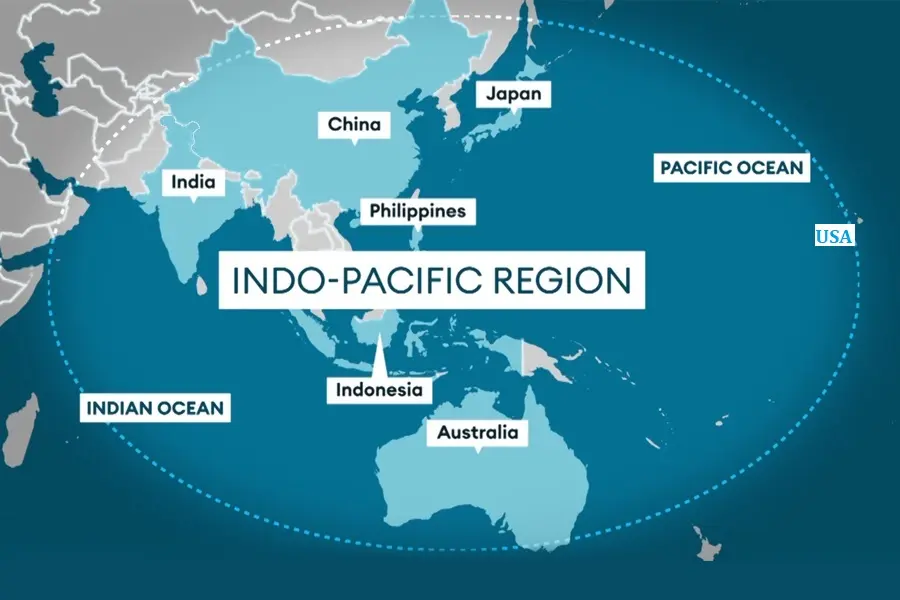
The Indo-Pacific region has attracted growing attention politically, economically, and strategically with the rise of new initiatives. The Belt and Road Initiative (BRI) and the Free and Open Indo-Pacific (FOIP) Vision are the primary driving forces behind the dynamic relationships among the countries in the region. In June 2019, ASEAN countries adopted “ASEAN Outlook on the Indo-Pacific” at the ASEAN senior officials meeting held in Bangkok. It was a concerted response to the BRI and FOIP.
What are the challenges for the region under these initiatives? How do the BRI and FOIP coexist in the region? This paper seeks to highlight some constraints of these initiatives and the challenges faced by Prime Minister Shinzo Abe and President Xi Jinping.
Sino-Japanese Relations
Sino-Japanese relations have been improving since 2018 amid US-China trade friction. The turning point was Abe’s visit to China from October 25th to 27th in 2018. It was the first official visit by the Japanese prime minister in nearly seven years, excluding his attendance at multilateral meetings in China. This visit to China commemorated the 40th anniversary of the Treaty of Peace and Friendship between Japan and China, which was signed on August 12th, 1978. In his summit meeting with Xi, Abe expressed his desire to bring bilateral ties to a new level.
Abe’s visit was a remarkable achievement in bilateral relations. It had been challenging for them to hold a summit meeting at the initial stage of their administrations. They came into power at almost the same time in late 2012. Xi became General Secretary of Central Committee of the Chinese Communist Party (CCP) in November 2012 and Chinese President in March 2013. Abe took office as his second term in December 2012 (his first term was from September 2006 to September 2007). Because Japan-China relations had been severely strained in those days, it was not until November 2014, almost about two years after Abe became Prime Minister, when he had the first summit meeting with Xi. However, they held the meeting on the sidelines of the APEC summit in Beijing. Xi was the host of the APEC summit, and thus had no option but to meet with Abe.
They had met each other once or twice a year since November 2014, but all the summit meetings had been held on the sidelines of multilateral meetings such as APEC and G20 before October 2018. The bilateral relations improved to the extent that top leaders were able to see each other and talk at least on the sidelines of other occasions. They agreed to improve their relations further at each meeting. The situation was unusual for the leaders of the most important trading partners, however.
In this regard, the summit meeting in October 2018 deserves special mention in that Abe mainly visited Beijing for it. Good momentum continues in bilateral relations as of today. When Chinese Vice President Wang Qishan had a meeting in Beijing with Japan’s national security chief, Shigeru Kitamura, on December 6th this year, Wang mentioned that Xi would make his first state visit to Japan in the spring of 2020.[1] Xi’s visit may further improve bilateral relations.
Major Challenges
While Sino-Japanese relations have improved over the past two years, both leaders continue to face challenges internally and externally. This paper highlights some of the domestic and international constraints they have.
Xi’s Challenges
The top priority for Xi is how to make BRI sustainable and successful. China has contributed to developing hard and soft infrastructure in the region, enhanced its connectivity with and within the region, and boosted trade and investment between itself and the BRI countries. China’s increasingly active engagement in infrastructure development, however, invited a new type of concern. China’s engagement with some democratic countries in the region through the BRI turned out to be counterproductive over the past few years.
Sri Lanka suffered from a ballooning amount of debt to China, and China Merchants Port Holdings Company took over Hambantota Port in December 2017. The case became a wake-up call, and the rapidly increasing amount of debt to China received attention both in Sri Lanka and overseas, which caused a “China’s debt trap” thesis in recipient countries and beyond.
Nowadays, developing countries are worried about receiving Chinese loans and investments. Growing Chinese loans in other countries such as Laos and Cambodia cause concerns over high reliance on foreign debts and the potential instability of international finance among policymakers in the world. China’s outward investment to BRI countries in 2018 dropped to 17.8 billion dollars, an 11.3% decrease from the previous year.[2]
Moreover, pro-China leaders in Asia lost elections one after another in 2018. In May, the pro-China prime minister of Malaysia, Najib Razak, was defeated by the opposition party leader, Mahathir bin Mohamad, and Mahathir became the new prime minister. He once suspended a China-funded East Coast Railway Link project but resumed it after he succeeded in extracting a concession from China to cut down costs. In Pakistan, pro-China prime minister Nawaz Sharif resigned after a corruption probe, and the opposition leader, Imran Kahn, became prime minister in August. The new administration announced a reduction in Chinese loans. In the Maldives, the incumbent pro-China president, Abdulla Yameen, lost power, and the opposition leader, Ibrahim Mohamed Solih, became president in September. China was forced to review its projects in these countries under pressure from the new administrations. These leaders’ close relations with China turned out to be a cause of their defeat.
In this light, Chinese leaders began to pay closer attention to such repercussions from outside. How to make the BRI successful and sustainable is one of the top priorities for Xi. At the Second Belt and Road Forum convened in Beijing in April 2019, Xi stated that China would promote high-quality economic cooperation under the BRI. He mentioned that China “will adopt widely accepted rules and standards and encourage participating companies to follow general international rules and standards in project development, operation, procurement and tendering and bidding. The laws and regulations of participating countries should also be respected . . . .We also need to ensure the commercial and fiscal sustainability of all projects so that they will achieve the intended goals as planned.”[3]
We should note that this comment by Xi overlaps with the four conditions for cooperating with the BRI that Abe made clear in June 2017: 1) open infrastructure for use by all; 2) transparent and fair procurement; 3) economically viable projects, and 4) the soundness of the debtor nations’ finances. The comment seems to imply China’s willingness to make some adjustments on the BRI, but how these would materialize in concrete terms requires a reality check.
At the same time, whether and how the Xi administration adjusts the BRI depends on the many internal and external challenges that Xi faces. The biggest challenge for Xi at this moment is the US-China trade disputes, which is indeed the top concern for the region and a serious threat to the world economy. In May 2019, the two countries were reportedly close to a comprehensive deal, but they failed to do so at the last moment.
On October 11th, the US and China reached a preliminary agreement, but it was far from a comprehensive deal that could end the disputes. The deal focused on relatively easy issues. While the US suspended plans to raise existing tariffs on $250 billion in Chinese products from 25 percent to 30 percent, which was scheduled to take effect on October 15th, China agreed to buy American agricultural products such as pork and soybeans worth $40 to $50 billion and improve the transparency of its currency policy. China also decided to open its market of financial services to foreign banks and companies. In return, the US would consider removing China from the list of currency manipulators.
It was not until December 13th that both sides finally reached the phase one agreement at the last moment. The US agreed not to impose tariffs on an additional $160 billion in Chinese products, which were set to take effect on December 15th and cut the 15% tariffs on $120 billion in Chinese imports into half (7.5%), the US will maintain the current 25% tariffs on $250 billion in Chinese imports.
The next phase of negotiations will be a more difficult challenge for Xi, however. Although both countries concluded a last-minute deal, China will be unlikely to accept to make substantive policy reforms that will satisfy Trump. Structural issues, including the Chinese government subsidies and forced technology transfer to Chinese companies, elimination of punitive tariffs on each side, and the US export ban on Huawei will be hard to resolve in the foreseeable future. Thus, the current deal is unlikely to end trade disputes. Now that China is one of the most critical issues in the upcoming US presidential election, how the presidential race evolves will be the wild card to shape the course of the bilateral trade negotiations.
Moreover, with the ongoing trade disputes, the outlook for the Chinese economy is grim. High economic growth has legitimized the rule of the CCP since China adopted the Open and Reform Policy in December 1978. Thus, the Chinese economic slowdown is a serious concern for the Xi administration. The Chinese economy grew 6.2 percent in the second quarter of 2019, the lowest growth rate since the first quarter of 1992, slowing from a 6.4 percent growth in the previous first quarter. The growth rate in the third quarter, from July to September 2019, could be below 6 percent.[4]
China lowered its growth target for 2019 down to the 6–6.5 percent range while its growth rate was 6.6 percent last year. During the Central Economic Work Conference held in Beijing from December 10–12, China reportedly approved the economic growth target of “around 6%” for 2020. It was further downgraded from the “6% to 6.5%” target for 2019.[5] Continuing tension between the world’s two largest economies would severely affect the state of the world economy.
Furthermore, the anti-extradition bill protests in Hong Kong have been a difficult challenge for Xi and the CCP regime. People in Hong Kong started to protest against and demand the withdrawal of the bill that would allow extraditions from Hong Kong to mainland China to begin on June 9. Although the chief executive, Carrie Lam, withdrew the bill, protests continue as of today. Now that people in Hong Kong realize that they can win a political concession from the CCP with their protests, they are unlikely to be satisfied with Carrie Lam’s resignation.
On November 28th, Trump signed the Hong Kong Human Rights and Democracy Act into law. The law supports pro-democracy movements in Hong Kong and allows the US to impose sanctions and travel restrictions on those who violate human rights in Hong Kong. How Xi deals with the protests will reshape politics in Hong Kong, China’s “one country, two systems” policy, and the overall Sino-US relations.
Last, but not least, the presidential election will take place on January 11th, 2020, in Taiwan. While the Xi administration seeks to avoid the reelection of the current president, Cai Yingwen, protests in Hong Kong may assist in Cai’s reelection. In sum, Xi faces many difficulties, both internally and externally, at this moment. How the BRI evolves will be a product of such challenges.
Abe’s Challenges
Abe also faces difficult issues. Japan’s Free and Open Indo-Pacific (FOIP) Vision, a potential framework for enhancing cooperation among like-minded countries in the region, could play a significant role in maintaining the regional order in the Indo-Pacific. There remain uncertainty and vagueness in the concept of FOIP, however.
First, it is not necessarily a fully developed and matured concept. FOIP was renamed as a vision, not a strategy, in November 2018, when Abe mentioned it at a press conference with Prime Minister Mahathir. It was reportedly a reflection of concerns voiced among ASEAN countries that they were reluctant to endorse FOIP as a strategy that could imply competition with China. Indeed, FOIP suffers from such misperception.
FOIP was first mentioned by Abe during his keynote speech at the Tokyo International Conference on African Development (TICAD), held in Nairobi in August 2016. He mentioned, “Japan bears the responsibility of fostering the confluence of the Pacific and Indian Oceans and of Asia and Africa into a place that values freedom, the rule of law, and the market economy, free from force or coercion, and making it prosperous.”[6] This indicates that FOIP seeks to safeguard rule-based international order in the Indo-Pacific, but it does not exclude or counter against any specific country.
In this regard, Japan does not plan to exclude China from Japan’s FOIP. Japan-China economic cooperation in a third country merits attention. Before Abe’s visit to Beijing, the first meeting of the Japan-China Committee for the Promotion of Japan-China Business Cooperation in Third Countries was held in Beijing on September 25th. Taking advantage of Abe’s visit in October, the Chinese convened the Japan-China Forum on Third Country Business Cooperation in Beijing, and 52 memoranda of cooperation were signed between companies and organizations at the forum.
Abe and Xi both hope to enhance business cooperation in third countries. This is particularly significant for Japan because the Japanese government decided to end the adoption of all new official development assistance (ODA) programs to China as of the 2018 fiscal year.[7] As of now, however, we have not seen significant developments in concrete terms.
It would be a significant step forward if Japan and China can come up with and start any third country cooperation project in a third country. If this materializes, it would indicate that FOIP and the BRI do not necessarily conflict with one another, even though each side may be reluctant to endorse the other’s initiative openly.
While China can mobilize its state-owned enterprises (SOEs) to participate in the BRI, it is increasingly difficult to do so because of SOEs’ emphasis on commercial merits. It is much more difficult for the Japanese government to encourage Japanese companies to start economic cooperation with Chinese counterparts in a third country. Thus, attracting private capital to Japan-China third country cooperation is a challenging task for the Japanese government.
At the same time, Abe also suffers from the Trump administration’s trade policy. Trump has urged Japan to reduce the trade imbalance with the US. Japan and the US made a bilateral trade deal on October 7th, 2019.[8] Japan agreed to lower tariffs to the Comprehensive and Progressive Agreement for Trans-Pacific Partnership (CPTPP) levels. Japan decided to gradually lower tariffs on beef from 38.5% to 9% by fiscal 2033, pork from 482 yen to 50 yen per kilogram by fiscal 2027, and wine from 15% or 125 yen per liter to zero (by year seven of the agreement), among others. In return, the US will lower tariffs on Japanese industrial goods. For instance, the US will eliminate tariffs on fuel cells (now at 2.7%), glasses and sunglasses (2 to 2.5%), and air conditioner parts (1.4%) once the trade agreement takes effect.[9]
Japan intended to eliminate the US tariffs on imports of auto parts and industrial goods but failed in vain. Although the current deal was still a tough one for Japan to make, Trump has not satisfied with it, because he believes that essential items, including rice and fishery product are left for a later phase of negotiations. Trump is likely to apply further pressure to Japan. Given that Abe has maintained exceptionally good relations with Trump, how to satisfy Trump’s claims will continue to be a source of anxiety for Abe. In sum, the Trump administration’s Asia policy, particularly its emphasis on economic statecraft, has created uncertainty over the state of the economy in countries in the region and their relations with the US.
Conclusions
This paper seeks to highlight the challenges Japan and China face in their efforts to promote the FOIP and the BRI, respectively, in the Indo-Pacific. While BRI has enormous potential to dramatically change the political and economic landscape in Asia and beyond, it may be at a significant turning point now. Whether Xi can adjust it to accommodate domestic constraints and international concerns has yet to be seen.
Meanwhile, Japan’s FOIP has not been fully crystalized as concrete projects and proposals. It is a flexible initiative through which Japan can cooperate with essential partners in the region, such as India and Australia, in addition to the United States. In this light, Trump’s Asia policy could be an essential factor in shaping the FOIP. How the 2020 presidential race evolves will shape the US policy toward Asia and thus significantly affect the stability of the region.
[1] Tsukasa Hadano, “Xi Jinping set to make first state visit to Japan in April: Mention of specific month comes with Abe security chief in Beijing,” Nikken Asia Review, December 7th, 2019.
[2] Ministry of Commerce of People’s Republic of China, National Bureau of Statistics of People’s Republic of China, and State Administration of Foreign Exchange, 2018 Statistical Bulletin of China’s Outward Foreign Direct Investment, China Statistics Press, 2019, p.17.
[3] “The complete text of President Xi Jinping’s speech at the Belt and Road Forum for International Cooperation 2019,” April 26th, 2019, http://www.cpecinfo.com/news/the-complete-text-of-president-xi-jinping-speech-at-the-belt-and-road-forum-for-international-cooperation-2019/NzAwMQ.
[4] Kevin Yao and Stella Qiu, “China’s Growth Could Slip Below 6%, Analysts Warn, As Trade War Takes Toll,” Reuters, September 19th, 2019, https://www.reuters.com/article/us-china-economy-growth/chinas-growth-could-slip-below-6-analysts-warn-as-trade-war-takes-toll-idUSKBN1W40WV.
[5] Issaku Harada, “China seen targeting “around 6%” growth in 2020: Government signals stimulus to shore up economy amid trade war,” Nikkei Asian Review, December 13th, 2019.
[6] “Address by Prime Minister Shinzo Abe at the Opening Session of the Sixth Tokyo International Conference on African Development (TICAD VI),” August 27th, 2016,
https://www.mofa.go.jp/afr/af2/page4e_000496.html.
[7] The fiscal year starts in April in Japan.
[8] Satoshi Sugiyama and Reiji Yoshida, “Tokyo touts pact with the US, but trade experts highlight lack of strong commitments,” The Japan Times, September 26th, 2019.
[9] Rintaro Tobita, “Japan parliament approves US free trade pact: Agreement takes effect on January 1st and will slash tariffs on US beef,” Nikkei Asian Review, December 4th, 2019.