
Whither Indo-Pacific?
Baladas Ghoshal
Secretary General, Society for Indian Ocean Studies; Former Professor and Chair in Southeast Asian Studies, Jawaharlal Nehru University, New Delhi
*
The main hypothesis in this paper is that for India’s construct of Indo-Pacific as an open, free, inclusive and a rule-based order ensuring freedom of navigation, both in air and sea-lanes of communication, to come into fruition and acceptable to its major stakeholders, it has to move beyond its current thrust of geo-politics to geo-economic, transforming the region into an economically integrated one. For, geo-political congruities and convergences are transitory and may change with shifting national interests of its member countries resulting in new threat perceptions and new strategic configurations. On the other hand, economic integration creates larger stakes and more enduring and offers greater opportunities for its sustenance. The precursor to Indo-Pacific construct was Asia-Pacific, a geo-economic concept, essentially comprising of ASIAN plus 3, China, Japan and South Korea and supported by the United States till the time Washington perceived Beijing as the leading competitor and a rival, leading to strategic uncertainty and trade war between the two, approximated both geo-political and geo-economic region, but its major shortcoming was that its expanse stopped at the border of Myanmar. India, the second largest country in Asia and a growing economic power, was excluded from it, making a mockery of Asia, a geographic unit, and emphasizing only its Pacific link, more so because of the US role in that construct.
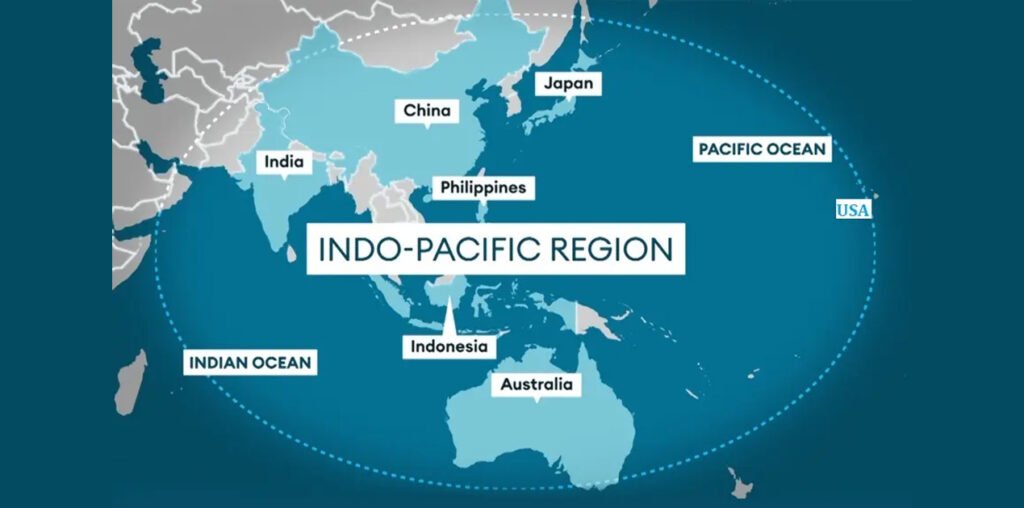
The Indo-Pacific is a much broader geo-political construct and refers to the maritime space stretching from the littorals of East Africa and West Asia, across the Indian Ocean and Western Pacific Ocean, to the littorals of East Asia. Apart from Australian and Indian scholars, the term was picked up by Japan’s Prime Minister Shinzo Abe, as reflected in his speech to the Indian Parliament in August 2007 that talked about the “Confluence of the Indian and Pacific Oceans” as “the dynamic coupling as seas of freedom and of prosperity” in the “broader Asia”. From 2010 onwards, the term Indo-Pacific began to be used by the Indian government and scholars to indicate New Delhi’s broad strategic and economic interests in a region of its extended neighbourhood and what can possibly constitute a ‘security complex’ in the words of Barry Buzan, the British strategic thinker. Whereas in the past and particularly during the period of Cold War period, each regions in Asia had its own security complexes and they did not intersect with each other, but the rise of China as an economic giant and a rising military power and the consequent shift of international politics and relations to Asia as the fulcrum changed all the old ideas of security complexes and turned the whole region of Indo-Pacific as one security complex in which not only countries that are part of the region that has stakes in peace and stability of the region but also countries that are adjacent or outside the region. While Indian leaders and officials have been using the term Indo-Pacific for some time now, it was left to Prime Minister Narendra Modi to articulate the vision more precisely. Delivering the keynote address at the Shangri-La Dialogue in Singapore in 2018. Modi placed this region at the heart of India’s engagement with the world, particularly the Indo-Pacific, which encompasses many of the world’s most dynamic economies, will be undergirded by a positive impulse which seeks to enhance trade and cooperation. India’s outreach to the region to its East is defined by three Cs –Culture, Commerce and Connectivity of which the last two aims at New Delhi’s greater integration with the region and provides access to its value chains.
*Part of this paper is based on an earlier paper published in National Security, Journal of the Vivekananda International Foundation
That takes me to the second hypothesis: the RCEP (Regional Comprehensive Economic Partnership) together with the Comprehensive and Progressive Agreement for the Trans-Pacific Partnership (CPTPP) fill the gap in turning the construct of Indo-Pacific from a geo-political into a geo-economic concept and provide the base for better regional integration. India joining the RCEP (Regional Comprehensive Economic Partnership) would have ensured that process and enabled New Delhi to be part of the regional value chains. The RCEP brings together the 10 countries of ASEAN in South East Asia, along with Japan, South Korea, Australia, New Zealand, and China and until recently— India. These 16 countries account for over a third of world GDP and trade, and are collectively growing at a rate that is double the rest of the world. The Indian economy is large, but the rest of the RCEP is eight times its size. It is by far the most attractive market in the world today, and will be for the next 20 years. India was negotiating since 2012 with the ASEAN countries for concessions on the service and investments sectors where India has a comparative advantage in relation to goods where ASEAN has reaped greater benefits from its FTA with India. There is also some concern in New Delhi that with lower tariffs under RCEP, Indian market will be flooded with Chinese goods in a situation where it has already a huge balance of trade with Beijing. Indian negotiators have worked hard to ensure a long enough on-ramp to ease Indian industry and farming into a free trade zone. Although the details of the negotiations are still unknown, there are reports that there were sufficient safeguards against Chinese goods flooding the market and long delays built into the potential import of many products. Without India in RCEP, Indo-Pacific will again revert to Asia-Pacific turning its back towards New Delhi, unless India strengthens its position within the grouping by reviewing the existing FTAs with ASEAN, Japan and South Korea and signing new ones with Australia and New Zealand, and in the meantime improving its economic efficiency and productivity that can compete with the others.
Whither Indo-Pacific
Notwithstanding the desire of each and every country to look for a mechanism that can guarantee peace, prosperity and the rights of nations in the region to pursue and secure global commons, there is no consensus as how these would be achieved and what kind of institutional structure or grouping that would be suitable or acceptable to all. Each country is trying to define the Indo-Pacific construct in their own way that can serve their own political, economic and security interests within a broader region. And the number of countries who are subscribing to this construct of Indo-Pacific are gradually increasing, The driving force behind the growing use of the Indo-Pacific construct, however, is China’s rise and the consequent fall out of that development on the Asian geo-politics and the “more general westwards reweighting of power within Asia — from Japan to China, from the Chinese coast to the hinterland and outwards to India. It is best understood as a maritime counterpart (and in some eyes a counterweight) to the shifting forces across continental Eurasia. It encompasses the energy supplies, production chains, infrastructure and security connections — both state and non-state — that link the Middle East, West Asia and East Asia. It also incorporates US security and economic connections across the Pacific,” to quote Allan Gyngell, an Australian scholar on Indo-Pacific.
As we have mentioned earlier that Prime Minister Modi placed this region at the heart of India’s engagement with the world. India’s engagement with the region, which encompasses many of the world’s most dynamic economies, will be undergirded by a positive impulse which seeks to enhance trade and cooperation. He defined this region as stretching from the shores of Africa to that of the Americas, thereby incorporating the Gulf region and Indian Ocean island states left out of popular definitions. This is where India’s definition of the Indo-Pacific is much more extensive and comprehensive and differs from characterization of the region by the United States or Australia, for example, whose scope of Indo-Pacific mostly revolves around the management of the rise of China, and does not include the areas beyond India towards Pakistan, the Persian Gulf region or Central Asia where New Delhi has strong cultural, economic interests and strategic concerns. India’s concerns about Pakistan or Iran are not always shared by the United States or even Australia. For Modi, Indo-Pacific, is to be a ‘free, open, inclusive region’ in pursuit of progress and prosperity, and is not ‘directed against any country’, nor is it to be seen as a ‘grouping that seeks to dominate’. At the same time, he called for a common rules-based order for the region. Such an order must believe in sovereignty and territorial integrity, as well as equality of all nations, irrespective of size and strength. These rules and norms should be based on the consent of all, not on the power of the few. Another element of the concept of Indo-Pacific is the freedom of navigation, unimpeded commerce and peaceful settlement of disputes in accordance with international law. “When we all agree to live by that code, our sea lanes will be pathways to prosperity and corridors of peace. We will also be able to come together to prevent maritime crimes, preserve marine ecology, protect against disasters and prosper from blue economy,” said Modi[1]
Since Indo-Pacific is essentially a maritime concept, Modi focused on the importance of naval diplomacy, praising the Indian navy for building partnerships in the region through training, exercises and the conduct of goodwill missions, along with humanitarian assistance and disaster relief. He mentioned particularly of Singapore, which had been hosting the longest un-interrupted joint naval exercise with India, now in its 25th year, and mentioned the extension of this to a trilateral exercise, which now taken the form of SITMEX with Thailand joining India and Singapore. The first exercise was held in the Andaman Sea in September 2019 as part of the security and safety of Indo-Pacific Sea lines. “The Indo-Pacific region is vital for us and we want to further enhance our maritime participation and engagement in the region in accordance with our doctrine of SAGAR (Security and Growth for All in the Region) “India’s Defence Minister Rajnath Singh said while making the announcement at the conclusion of the 4th India-Singapore Defence Ministers Dialogue (DMD) in Singapore in November 2019. The SITMEX exercise underscores the shared responsibility of the three countries to work together in keeping sea lines of communication open and strengthens interoperability among them. During Modi’s visit to Indonesia recently, India signed a Comprehensive Strategic Partnership, and arrived at a common vision for maritime cooperation in the Indo-Pacific.[2] Modi declared that New Delhi will start a new tri-lateral exercise with Singapore soon and wants to extend it to other ASEAN countries. India has also strategic partnership with Vietnam to build mutual capabilities and has upgraded its defence cooperation, training and military exercises. India conducts Malabar Exercise with the United States and Japan. A number of regional partners join in India’s Exercise Milan in the Indian Ocean, and participate in RIMPAC in the Pacific. Modi’s articulation of India’s vision provides a concrete template for the rules of engagement with the countries subscribing to the idea of Indo-Pacific. If this region is to fulfil its potential, it needs to move towards terms based on transparency and willingness of major players to build relationships based on equality. In its absence, alliances will be based on strategies of containment. This will kill the aspirations of people in the Indo-Pacific region. In the midst of the contrasting perspectives, with ASEAN and India as ‘the backbone’ of maritime cooperation, ASEAN-led mechanisms such as the East Asia Summit (EAS) and the Treaty of Amity and Cooperation (TAC) could be coupled with the Indian Ocean Rim Association (IORA) to ‘bridge and integrate’ the Indian and Pacific oceans.
ASEAN Views on the Indo-Pacific
ASEAN views the Asia-Pacific and Indian Ocean regions, not just as contiguous territorial spaces but as a closely integrated and interconnected region, with ASEAN playing a central and strategic role. ASEAN’s outlook of the Indo-Pacific is not very different from its attitude towards China’s Belt and Road Initiative, which was announced in 2013 in Jakarta (the 21st century Maritime Silk Road and the Asian Infrastructure Investment Bank).[3] In 2017 ASEAN and China issued a joint statement expressing their mutual interest to deepen cooperation on infrastructure connectivity, an acceptance of Belt and Road’s potential contribution. This was followed in 2018 by a strategic partnership vision 2030. The synergy of China’s Belt and Road and ASEAN’s Master Plan for Connectivity was cited in both documents. Last April, leaders of the ten countries attended the second Belt and Road Forum in Beijing, cementing support for China’s initiative.
Strategic Environment in the Indo-Pacific Region and ASEAN’s Threat Perception
Strategic environment in the Indo-Pacific region revolves around the spectacular rise of China, both economically and militarily, its assertiveness in defining its territorial and maritime space in a convoluted manner based on what it perceives as its historical rights even to the extent of transgressing other countries’ legitimate claims to their territories, maritime waters and their resources through various ways like intimidation, subterfuge and sometimes buying of countries and their leaders under its infrastructure and connectivity offensives garbed under its so-called Belt and Road Initiative. The most classic example of this strategy of establishing its hegemony in the region centers on its grab for practically the whole of South China Sea, where Beijing has already established its de facto control. The unanimous judgment of the Arbitral Tribunal at the Permanent Court of Arbitration at The Hague on 12 July 2016 had rubbished China’s absurd claims on practically the whole of South China Sea (SCS) with its so-called nine-dash line, based on history, and also censored its creeping occupation and aggressive actions to bolster those claims. The Tribunal ruled in favour of the Philippines against China’s claims calling the latter’s claims illegal and asserted that Beijing’s artificial island building is causing “irreparable harm,” concluding that Chinese claims of “such rights were extinguished to the extent they were incompatible with the exclusive economic zones provided for in the United Nations Convention on the Law of the Sea (UNCLOS),” in which both China and the Philippines are signatories to the treaty.[4] The court said that “there was no legal basis for China to claim historic rights to resources within the sea areas falling within” Beijing’s “nine-dash line.”[5] China’s response to the verdict was predictable, lashing out at the judges and experts who decided the case, calling them biased and anti-Asian, and angrily hitting out at what it described as an “ill-founded” ruling that was “naturally null and void, because the tribunal had ignored “basic truths” and “trampled” on international laws and norms.
Notwithstanding the PCA Ruling on South China Sea, it has emerged as a dangerous flashpoint and tensions remain quite high in the region due to two important factors – Beijing’s insatiable greed for land and territories, finding expression in occupation by stealth, artificial island-building, and militarization to scare others to stay away from the region; and the US-China rivalry for dominance over the region.
Rivalry between China and the USA
What made the security environment critical in the Indo-Pacific region is the rivalry between China and the United States, a resident power in the Indo-Pacific region with a vital stake in the freedom of navigation and over flight in South China Sea, and overall interests in the peace, stability and security of the region due to its treaty commitments for the security of Japan, Korea and the Taiwan. The most recent manifestation of that was starkly evident in the 18th Shangri-la Dialogue in last June at Singapore, where a war of words ensued between them. The US and China have locked horns over the waters, which Beijing is dangerously territorial over…While speaking at the Shangri-La Dialogue this year in Singapore, Acting US Defence Secretary Patrick Shanahan called China’s installation of surface in the waters to air missiles as “overkill”, and its actions over the disputed area “excessive.” “The greatest long-term threat to the vital interests of the states across the region, declared Shanahan, “comes from actors who seek to undermine rather than uphold the rules-based international order. These actors undermine the system by using indirect, incremental actions and rhetorical devices to exploit others economically and diplomatically and coerce them militarily. They destabilize the region, seeking to reorder its vibrant and diverse communities toward their exclusive advantage. ”In contrast to a free and open vision broadly shared by the region, he stated further, “some seem to want a future where power determines place and debt determines destiny; where nations are unable to make use of natural resources within their exclusive economic zones; where coral reefs are dredged and destroyed, with disastrous ecological and economic consequences; where fishermen’s livelihoods are in peril as they are denied access to waters they and their ancestors have fished for generations; where freedom of navigation and international over flight are restricted”. China can and, according to the US, should have a cooperative relationship with the rest of the region too, but behaviour that erodes other nations’ sovereignty and sows distrust of China’s intentions must end. Until it does, “we stand against a myopic, narrow and parochial view of the future, and we stand for a free and open order that has benefited us all, including China. The vision for a Free and Open Indo-Pacific articulated by Shanahan naturally garnered regional interest, as regional coastal states with competing maritime claims with China see it as an opportunity to counter-balance Beijing’s mounting presence and activities in the South China Sea, as well as shore up their defence capabilities. But, as one Southeast Asian commentator has noted: “. . . although robust on traditional security, it still fell short of economics despite mention of the BUILD Act[6]. Confusion between it and the Quad, and concerns about Beijing’s reaction also help dampen enthusiasm towards the U.S. strategy.”
In response to the American attack on Beijing’s aggressiveness as ‘overkill’ and ‘excessive’ China unabashedly defended its expanding strategic and military footprint in the region, while expressing its determination to “fight to the end, at all costs,” causing regional states, including American allies and China’s newfound friends, to find ways to avoid a great power conflict, which would inevitably drag the whole region into an irredeemably devastating conflict. Beijing issued a stern warning following the US Navy’s increased patrols through the Taiwan Strait. Speaking at Asia’s defence summit at the Shangri-La Dialogue in Singapore, China’s Defence Minister, Wei Fenghe has insisted that his country would “fight at all costs” if a war occurred with the US.[7] Although Fenghe said that both countries want to avoid a conflict, he warned against any country trying to interfere in Taiwan-China relations. He added: “If anyone dares to split Taiwan from China, the Chinese military has no choice but to fight at all costs.”[8] No attempts to split China will succeed. “Any interference in the Taiwan question is doomed to failure.” Wei Fenghe also offered a figurative olive branch to the US. Away from any talk of conflict between the two states, Fenghe also admitted that neither side wants conflict. He added that both sides “realize that conflict, or a war between them, would bring disaster to both countries and the world.” The Defence Minister also said that his country would not “attack unless we are attacked” as both states vie for dominance in the region. Speaking of tensions between the US and China, Fenghe also remained adamant that if Washington wanted to talk “we will keep the door open”
Weakness of ASEAN
In the crossfire between the United States and China, ASEAN finds itself in a helpless situation with very little leverage at its disposal because of lack of unity within it on the South China Sea issue. Some observers of ASEAN believe that It really never was and perhaps never could be a unified political/security body under the pressure of great power competition. A closer look at the ASEAN’s institution-building for dialogue and confidence building measures together with its much-vaunted and its centrality was possible and effective only when there were, firstly unity within the organization, and secondly, convergence of interests between the USA and China on the type of regional order they want to establish in the Indo-Pacific.. At the moment, not only there is no consensus on it between the two super powers, the organization itself is facing a crisis of relevance and its most formidable challenge for maintaining its “centrality” is “achieving a robust, binding COC with China”. If only ASEAN could become united in the face of China’s onslaught and is able to bring in a binding ‘Code of Conduct’ (C0C), it would definitely reinforce its political and security centrality in the region. But such an achievement would require ASEAN to be willing and able to take a united stand against ASEAN’s weaknesses together with the reality that China is an immediate neighbour to all of its members in some or the other, obviously, do not permit open confrontation with the latter, and therefore, is compelled to adopt a dual strategy, that of taming Beijing, on the one hand, through dialogue, confidence-building mechanisms under ASEAN-China framework and not joining any arrangements that it perceives to contain Beijing, like the Quad, the four nation, namely, the US, Japan, Australia and India, Initiative for defence and economic cooperation; and on the other, soft-balancing through bilateral defence cooperation with the US, Japan, Australia, Russia and India, in the process, building its own capabilities to deal with contingencies.
In view of the differing perspectives on the geo-political contours of Indo-Pacific, RCEP as an economic union between the participating countries can emerge as one among many wavelets that has influenced the thinking of the countries in the region in the evolution of an architecture that can manage the multi-dimensional conflicts that plague this region and maintain peace and stability. While the arguments against India joining RCEP are quite substantial and convincing
India’s engagement with the thriving commercial networks of Southeast Asia and southern China is the only way it can possibly develop an export-focused, job-generating manufacturing sector. Of course, it needs to operate in parallel with domestic reform—freeing up labour and land markets, and further reforming taxes. The government needs to open Indian industries up to competition, give them the tools to compete and then be confident that they will. RCEP can be a template for India to move forward its Act Asia policy. It can be integrated into “regional production networks”, or say, GVC operation in manufacturing. With low labour cost in the country and duty preferences in RCEP, India can provide a base for value chain supply of cheap component and parts to the assembled units in the trade block. Automobile and electronic industries are the areas, where India can gain prominence with the advantage of duty preferences and low labour cost. USA is the main exporter of agricultural products to China. With the imposition of high tariff on USA’s agricultural products by China as a retaliatory measure, India’s market accessibility of agricultural products in China will surge. For instance, China is the biggest importer of soybean in the world and USA is the biggest export of it to China. Given the USA exports shrinking due to high tariff by China, new space will be created for India’s export to China, owing to duty reduction under RCEP. India is the fourth biggest exporter of soybean meal in the world. A trade war will augur well for India’s exports of animal husbandry meat to China. China is the second biggest importer of chicken broiler meat in the world and USA is one of the biggest exporters of it to China. With the demand for USA chicken broiler meat receding due to high tariff, a new space will be generated for India’s exports of this item in China. Amidst the ongoing trade war, it will accrue a benefit to India by diversifying its exports to China along with export subsidies under RCEP.
India should have joined RCEP. The deal on offer was a reasonably good one and many of our fears had been allayed. Our farmers had been given protection from imports of agricultural products and milk (say from New Zealand). A quarter of Chinese products had been excluded, and for the rest a long period of tariffs was allowed from 5 to 25 years. The deal offered a unique safeguard from a sudden surge of imports from China to India for 60 of the most sensitive products. It is pertinent here to quote one of the leading proponents of RCEP, Guru Charan Das, author and corporate manager: “If much smaller countries in Asia – Vietnam, Thailand, the Philippines, Laos, Myanmar – can compete and have joined RCEP, why can’t India? Why does it need tariff protection, normally meant for infant industries? Why India’s companies are still infants after 72 years of Independence? No nation has become prosperous without exports; open economies have consistently outperformed closed ones. The $5 trillion target cannot be achieved without exports. The lesson from this fiasco is that India must act single-mindedly and execute bold reforms to become competitive. We can still join RCEP by March 2020. Consider this period a pause to get our house in order. It’s never too late to do the right thing.” [9]
[1] Ibid
[2] Shared Vision of India Indonesia Maritime Cooperation in the Indo-Pacific, 30 May 2018, available in https://www.narendramodi.in/shared-vision-of-india-indonesia-maritime-cooperation-in-the-indo-pacific–540290, accessed on 1 June 2018; Also see, Baladas Ghoshal, “New Vistas of Cooperation between India and Indonesia,” Economic Times (online edition), 29 May 208, Also available in https://economictimes.indiatimes.com/news/defence/view-new-vistas-of-cooperation-between-india-and-indonesia/articleshow/64372287.cms
[3] See, Lucio Blanco Pitio III, “Making ASEAN’s Case In The Indo-Pacific – Analysis,” Eurasia Review, 16 July 2019, available in https://www.eurasiareview.com/16072019-making-aseans-case-in-the-indo-pacific-analysis/, accessed on 3 August 20 July 2019
[4] See, Mike Corder & Jim Gomez, “Tribunal: No basis for China’s Vast South China Sea Claims,” World Politics Review, 12 July 2016, available in http://www.worldpoliticsreview/articles/19327/tribunal-on-basis-for-chinas-vast.south-china-sea-claims, accessed on 15 July 2016; Also see, Baladas Ghoshal, “What after the Tribunal Judgment on South China Sea,” Economic Times, 25 July 2016, also available in 2019 https://economictimes.indiatimes.com/blogs/et-commentary/what-after-the-tribunal-judgment-on-the-south-china-sea/
[5] Quoted in Ibid
[6] President Trump signed the Better Utilization of Investments Leading to Development (BUILD) Act into law on October 5, 2018. This landmark legislation will reform and strengthen U.S. development finance capabilities into a new federal agency to help address development challenges and foreign policy priorities of the United States.
[7] Speech at the 18th Shangri-La Dialogue by Gen. Wei Fenghe State Councilor and Minister of National Defence, PRC 2 June, 2019, available in https://www.iiss.org/…/2019/speeches/general–wei–fenghes–speech-plenary-4–final.ashx , accessed on 3June 2019
[8] Ibid
[9] Gurucharan Das, “Ten steps to $5 trillion: Lesson from RCEP fiasco is that India must execute bold reforms to become competitive,” Times of India, 3 December 2019, accessed on 4 December 2019